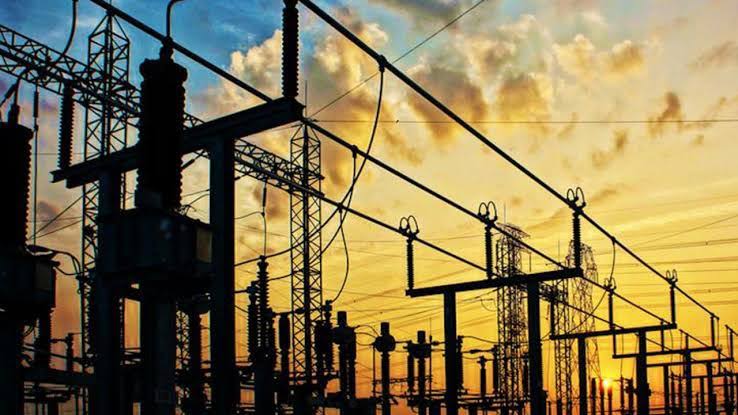
Residents and business owners in Amuwo-Odofin, Lagos, may experience a prolonged power outage lasting up to four months as authorities begin maintenance work on a major electricity facility in the area.
The planned outage is linked to repair and rehabilitation work on a 132kV substation at the Amuwo Transmission Station, which will be carried out by the Transmission Company of Nigeria in collaboration with Ikeja Electric.
In a statement shared on its official X account, Ikeja Electric announced that the project is scheduled to begin on March 19, 2026, at 10:00 a.m., and will run until July 30, 2026.
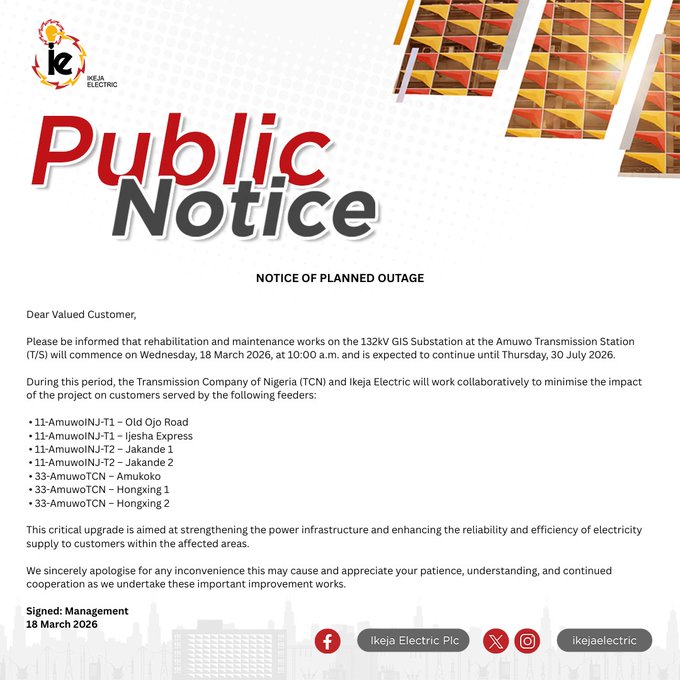
According to the company, the exercise is aimed at improving power infrastructure and ensuring more reliable electricity supply in the long term. However, residents have been advised to prepare for disruptions during the period.
Several feeders will be affected by the maintenance work. These include the 11-AmuwoINJ-T1 line, which serves areas such as Old Ojo Road and Ijesha Express, and the 11-AmuwoINJ-T2 line covering Jakande 1 and 2. The 33-AmuwoTCN lines supplying Amukoko, as well as Hongxing 1 and 2, will also be impacted.
Ikeja Electric stated that efforts would be made to reduce the effect of the outage on customers, while apologising for the inconvenience and asking for patience and cooperation as the upgrade is carried out.
This development comes shortly after the Eko Electricity Distribution Company announced a separate three-day planned power outage in the Lekki area earlier in March. That exercise, carried out between March 13 and 15, was part of upgrade work at the Lekki Injection Substation aimed at improving electricity supply in the district.
The situation reflects broader challenges within Nigeria’s power sector, where frequent outages are often caused by infrastructure maintenance, grid issues, and financial constraints.
Many of the country’s power generation companies are currently struggling under a heavy debt burden estimated at about ₦6.8 trillion. This has made it difficult for them to maintain operations, secure gas supply, and meet basic operational costs.
According to Joy Ogaji of the Association of Power Generation Companies, the growing debt highlights deeper financial problems across the sector. Industry data shows that as of February, power generation companies were owed trillions, raising concerns about their ability to sustain electricity production if the situation is not addressed.
- Tinubu Directs Ministers Planning to Run in 2027 to Resign
- Tinubu Sends Security Chiefs to Maiduguri Following Deadly Bomb Attack
- Court Drama as Sowore’s Lawyer Rejects Judge’s Order to Kneel
- Four Arrested in Oyo Over Alleged Cattle Theft
- FG Moves to Evacuate Citizens as Middle East Situation Worsens
- China Urges US and Iran to Immediately Stop Military Actions Amid Strait of Hormuz Crisis
- Nigerian Workers Call for Salary Increase and Tax Cuts Amid Economic Hardship