The internal crisis rocking the African Democratic Congress has taken another decisive turn, as the Federal High Court sitting in Abuja fixed April 14, 2026, for a substantive hearing in a suit that could ultimately determine who holds legitimate authority within the party. What might ordinarily be a routine court date has instead become a pivotal moment for a political platform that once positioned itself as a credible alternative to Nigeria’s dominant parties but is now struggling to hold itself together amid deepening divisions.
At the center of the unfolding legal drama is a dispute over leadership legitimacy, a conflict that has steadily escalated over the past months and now involves some of the most prominent figures associated with the party. With the 2027 general elections approaching, the timing could not be more critical. Rather than consolidating its base and expanding its influence, the ADC finds itself entangled in courtroom battles, factional rivalries, and administrative setbacks that threaten to erode whatever political capital it has built over the years.
The case, identified as FHC/ABJ/CS/1819/2025, is being presided over by Justice Emeka Nwite. The judge scheduled the April 14 hearing after ensuring that all parties involved had been properly notified, setting the stage for what is expected to be a highly contested legal showdown. The list of participants reflects the weight of the dispute, bringing together political heavyweights, institutional actors, and long-standing party figures whose interests and interpretations of party leadership sharply diverge.
The suit was initiated by Nafiu Bala Gombe, a former Deputy National Chairman of the ADC, who is challenging the authority of the current leadership structure. His argument centers on the claim that those presently presenting themselves as executives of the party lack the legal basis to do so. By seeking judicial intervention, Gombe is effectively asking the court to restrain the existing leadership from continuing to act in that capacity, a move that could significantly alter the party’s organizational framework if granted
Read more on: Army Counters Misinformation, Clarifies Circumstances Surrounding General Braimah’s Death
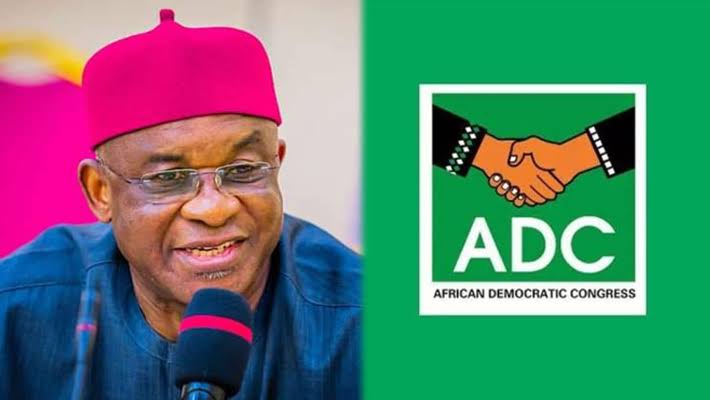
On the other side of the dispute are several notable defendants, including the ADC as a political entity, former Senate President David Mark, former Minister of Interior Rauf Aregbesola, the Independent National Electoral Commission, and Chief Ralph Nwosu, who has long been associated with the party’s leadership. The presence of these individuals underscores how far the crisis has escalated, transforming what might have been an internal disagreement into a full-blown institutional confrontation.
The journey to this point has been anything but smooth. Earlier in the proceedings, Justice Nwite had adjourned the case indefinitely, choosing to wait for guidance from the Court of Appeal on key issues surrounding the dispute. That decision temporarily stalled progress at the trial level, leaving the various factions in a state of uncertainty as they awaited further judicial direction.
Clarity appeared to come on March 12, 2026, when the Court of Appeal delivered its judgment. The appellate court instructed all parties to return to the Federal High Court for the determination of the substantive issues in the case. At the same time, it directed that the existing situation be maintained pending that determination. While this directive might have been intended to preserve stability, it instead introduced a new layer of contention, as the different factions began to interpret the meaning of maintaining the status quo in ways that suited their respective positions.
The ambiguity surrounding that directive quickly became a flashpoint. Shortly after the appellate ruling, the Independent National Electoral Commission reportedly removed the names of David Mark and Rauf Aregbesola from its official records, where they had been listed as the party’s National Chairman and National Secretary. This development was interpreted by some as a validation of Gombe’s position, while others viewed it as an administrative action that did not necessarily settle the underlying legal questions.
Read more on: Eight Family Members Killed in Late Night Attack on Bokkos Community
For the faction aligned with David Mark and Aregbesola, the removal of their names represented a significant setback, one they have moved swiftly to challenge. Their response has been twofold. First, they filed a motion asking the court to compel INEC to restore their names to its portal, arguing that their removal was inconsistent with the directive to maintain the status quo. Second, they raised preliminary objections aimed at dismissing the entire suit before it proceeds to a full hearing.
Their legal arguments touch on fundamental principles of judicial intervention in political party affairs. One of their primary contentions is that Nafiu Bala Gombe lacks the legal standing required to bring the case in the first place. According to their submission, Gombe had previously resigned from his position within the party as part of efforts to facilitate a broader coalition restructuring. If that claim is upheld, it could undermine his capacity to challenge the current leadership, potentially ending the case without a detailed examination of its merits.
Another key argument advanced by the Mark led faction is that the dispute falls squarely within the realm of internal party affairs. Nigerian courts have traditionally been cautious about вмешing in such matters, often declining to intervene unless there is clear evidence of constitutional violations or breaches of statutory provisions. By framing the issue in this way, the defendants are effectively urging the court to exercise restraint and allow the party to resolve its disagreements internally.
In a more assertive move, Rauf Aregbesola has also requested that the court award him fifty million naira as compensation for the inconvenience and expense of defending the suit. This request, while not uncommon in high profile litigation, adds another dimension to the proceedings and signals the intensity with which the defendants are contesting the claims against them.
While the legal battle unfolds in Abuja, the situation within the party itself continues to deteriorate. The ADC is no longer dealing with a simple two sided dispute but has instead fractured into multiple factions, each claiming legitimacy and pursuing its own vision for the party’s future. A third group, led by Don Norman Obinna and supported by the ADC State Chairmen Forum, has openly rejected both the Gombe and Mark factions, further complicating the already tangled web of alliances and rivalries.
Read more on: Bandits Trigger Panic, Demand 700 Cows and 1,000 Sheep
This fragmentation has had tangible consequences for the party’s operations across the country. Routine activities such as the organization of congresses have been disrupted, with competing factions laying claim to the authority required to conduct them. In states like Osun, disagreements over leadership have led to parallel structures and public exchanges of accusations, creating confusion among members and weakening the party’s organizational coherence.
The instability has also triggered a wave of defections. Some members, disillusioned by the ongoing infighting, have reportedly moved to the newly formed Nigeria Democratic Congress, while others have returned to more established parties such as the All Progressives Congress and the Peoples Democratic Party. These departures not only reduce the party’s numerical strength but also undermine its credibility as a viable political alternative.
Against this backdrop, the April 14 hearing takes on added significance. The outcome of the proceedings could shape the trajectory of the ADC in the lead up to the next general elections. If the court decides to grant Gombe’s request and upholds the actions that led to the removal of the Mark and Aregbesola faction from official recognition, the party could find itself entering the electoral cycle without a clearly defined and legally endorsed leadership structure.
On the other hand, if the court accepts the preliminary objections and dismisses the suit, it could provide the Mark led faction with the legal backing needed to proceed with its plans for restructuring the party. Such a development might help restore a degree of order, but it would not automatically resolve the deeper divisions that have emerged within the party.
Read more on: Boko Haram Attack Claims Senior Nigerian General in Borno
Beyond the immediate legal questions, the crisis within the ADC raises broader issues about the challenges facing emerging political movements in Nigeria. Building a sustainable alternative to entrenched political structures requires not only popular support but also strong internal cohesion and effective conflict resolution mechanisms. The current situation suggests that the party is struggling on these fronts, with disagreements escalating to the point where judicial intervention becomes the primary means of resolution.
As the legal teams prepare for the upcoming hearing, there is a sense that the stakes extend far beyond the courtroom. For party members, supporters, and observers, the case represents a test of whether the ADC can navigate its internal conflicts and reestablish itself as a credible force in Nigerian politics. For the individuals involved, it is a battle for legitimacy, influence, and control over the direction of the party.
What remains uncertain is whether any outcome from the court will be sufficient to heal the divisions that have already taken root. Even a clear judicial pronouncement may leave lingering grievances and unresolved tensions, particularly given the multiplicity of factions and the intensity of their disagreements.
In the end, the events leading up to April 14 reflect a party at a crossroads. Once seen as a platform capable of reshaping Nigeria’s political landscape, the ADC is now grappling with internal challenges that threaten its very existence. Whether it can overcome these obstacles will depend not only on the court’s decision but also on the willingness of its members to find common ground and rebuild a sense of unity.
For now, all eyes are on the Federal High Court in Abuja, where the next chapter in this unfolding saga is set to begin.
Read more on:
- U.S. Marks Plateau, Kano and 21 Other States as High-Risk Travel Zones
- Wike-Backed PDP Slams Makinde Over ADC Alliance Plans for 2027
- Trump Administration Petitioned by U.S. Lobbyists Over INEC’s ADC Decision
- Atiku, Obi, Kwankwaso Lead Opposition Protest Claiming INEC Bias
- World Bank Stresses Policy Reforms as Essential for Smarter African Growth