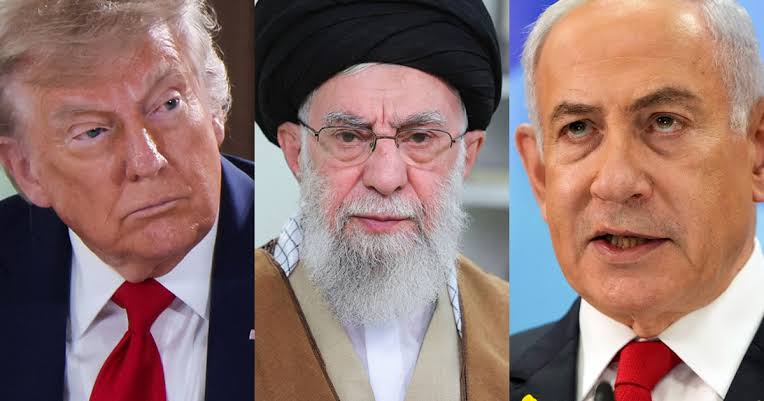
The Middle East has once again entered a deeply unstable and unpredictable phase following a series of rapid political and military developments that unfolded within hours of one another. A newly announced temporary ceasefire agreement between the United States and Iran has been met with cautious optimism in some diplomatic circles, but that optimism has been quickly overshadowed by a dramatic escalation in violence along Israel’s northern frontier with Lebanon.
While President Donald Trump confirmed a two week suspension of American military operations against Iran as part of a broader diplomatic push to reduce tensions, Israel simultaneously launched an intense wave of airstrikes targeting Hezbollah positions in Lebanon. The timing of these events has created confusion, concern, and debate over whether a broader regional de escalation is truly underway or whether the situation is simply shifting into a more complex and fragmented phase of conflict.
The contrast between diplomatic negotiations and military escalation has defined the day. On one hand, international envoys are preparing for high level discussions in Islamabad involving United States and Iranian representatives. On the other hand, Lebanese territory, particularly areas in and around Beirut and southern Lebanon, continues to experience sustained aerial bombardment that has left communities reeling.
A massive wave of airstrikes across Lebanon
Israeli military operations intensified sharply within hours of the ceasefire announcement involving Iran. According to Israeli defense sources, the Israel Air Force conducted one of its most concentrated series of strikes in recent months, aimed at Hezbollah infrastructure and operational sites across Lebanon.
Military officials described the operation as a rapid and highly coordinated assault involving dozens of fighter jets conducting multiple strike runs within a very short time frame. Reports indicate that approximately fifty fighter aircraft were deployed in the operation, releasing more than one hundred and sixty munitions across roughly one hundred identified targets linked to Hezbollah.
Read more on: Court Schedules April 14 Hearing in ADC Leadership Rift
The strikes were not limited to remote or isolated military installations. Several reported impact zones were located in or near densely populated urban areas, including sections of Beirut’s coastline and neighborhoods along the southern corridor of the city. In the southern regions of Lebanon, additional strikes targeted what Israeli officials described as rocket launch sites and storage facilities used for cross border attacks.
Lebanese emergency services reported a severe humanitarian impact. Civil defense authorities stated that hundreds of people were killed and more than a thousand were injured in the span of a single day, with hospitals struggling to cope with the influx of casualties. The scale of destruction prompted the Lebanese government to declare a national day of mourning, as rescue operations continued late into the night amid damaged infrastructure and ongoing security concerns.
Israeli leadership defended the operation, stating that the strikes were necessary to neutralize imminent threats posed by Hezbollah. Prime Minister Benjamin Netanyahu made it clear that Israel does not view the ceasefire agreement between the United States and Iran as applicable to its confrontation with Hezbollah in Lebanon. He stated that military operations would continue as long as Hezbollah remains capable of launching attacks against Israeli territory.
According to Netanyahu, the objective is to weaken Hezbollah’s operational capacity to a level where it can no longer pose a sustained military threat. Israeli officials have consistently framed Hezbollah as a central security challenge on Israel’s northern border, and they maintain that recent operations are part of a broader long term containment strategy.
Trump announces a temporary Iran ceasefire
The diplomatic dimension of the crisis was set in motion earlier in the week when President Donald Trump announced what he described as a historic but temporary pause in hostilities between the United States and Iran. The agreement reportedly suspends American bombing operations under a campaign previously known as Operation Epic Fury, just hours before an escalation deadline that had raised fears of a wider regional war.
Read more on: Army Counters Misinformation, Clarifies Circumstances Surrounding General Braimah’s Death
The ceasefire is intended to last for two weeks and is being positioned as a window for diplomatic negotiations aimed at reducing tensions and preventing further escalation. According to statements from the White House, the primary goal of the agreement is to create space for discussions on nuclear non proliferation, maritime security, and the broader structure of regional influence.
One of the central conditions of the agreement is Iran’s commitment to ensure safe passage for commercial and military shipping through the Strait of Hormuz. This waterway remains one of the most strategically important maritime routes in the world, and its stability is considered critical to global energy markets.
Another key focus of the negotiations is Iran’s nuclear program. The United States has reiterated that preventing Iran from acquiring nuclear weapons capability remains a top priority. The ceasefire is therefore being framed not as a resolution to broader tensions, but as a temporary step toward more comprehensive negotiations.
Perhaps most controversial is the approach to regional proxy groups aligned with Iran. The Trump administration has suggested that the strategy involves separating Iran from its allied militant networks across the region, including Hezbollah in Lebanon. In this framing, Iran is treated as the central actor, while proxy forces are viewed as extensions that can be addressed through separate military and political channels.
President Trump addressed the situation directly, stating that Hezbollah was not included in the ceasefire arrangement and implying that Israel’s actions were outside the scope of the agreement. His remarks underscored the fragmented nature of the current diplomatic approach, where different theaters of conflict are being treated independently rather than as part of a unified regional war.
Read more on: Eight Family Members Killed in Late Night Attack on Bokkos Community
Diplomatic talks begin in Islamabad under pressure
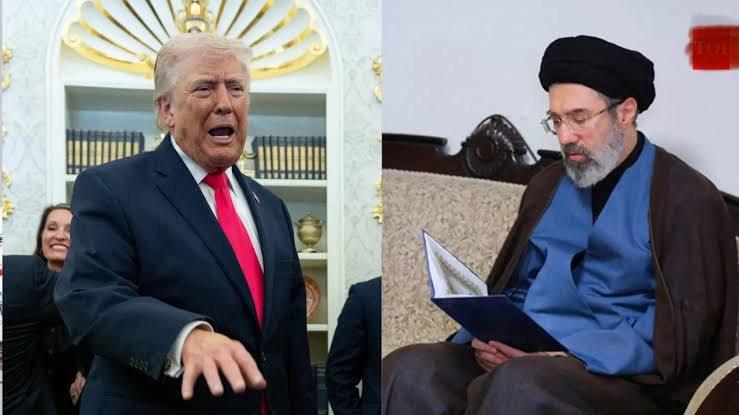
As diplomatic delegations arrived in Islamabad for planned discussions between the United States and Iran, the atmosphere surrounding the talks was already tense. The timing of Israel’s military escalation in Lebanon has raised questions about whether meaningful progress can be achieved while active hostilities continue in parallel.
Iranian officials have expressed concern that the ceasefire agreement does not fully reflect the realities of the broader regional conflict. In particular, Tehran has warned that it may reconsider its participation in negotiations if the violence in Lebanon is not addressed within the scope of the agreement. Iranian representatives argue that separating Hezbollah from the diplomatic framework undermines the coherence of any potential settlement.
At the same time, Israeli officials have signaled a willingness to engage in separate discussions with Lebanese authorities. Reports indicate that under pressure from senior United States officials, including Vice President J D Vance and special envoy Steve Witkoff, Israel has been encouraged to moderate its military activity and explore diplomatic channels aimed at reducing tensions along its northern border.
These efforts have reportedly led to preliminary planning for direct discussions between Israeli and Lebanese representatives. These talks, expected to take place in Washington, are intended to focus on long standing security concerns, border stability, and the future of armed groups operating within Lebanon.
Read more on: Eight Family Members Killed in Late Night Attack on Bokkos Community
The question of Hezbollah disarmament
At the center of the proposed Israel Lebanon dialogue is the issue of Hezbollah’s military capabilities. Israeli leadership has made it clear that any long term arrangement would require the full disarmament of Hezbollah. From Israel’s perspective, the continued existence of a heavily armed non state actor along its border represents an unacceptable security risk.
The Lebanese government, however, faces significant internal challenges in addressing this demand. While official statements indicate a willingness to restore state authority over all armed forces within the country, the political and military influence of Hezbollah remains deeply entrenched. Attempts to enforce disarmament without broad consensus risk triggering further internal instability.
Hezbollah itself has rejected the idea of direct negotiations under current conditions, insisting that any discussion must include a full Israeli withdrawal from contested areas and a halt to military operations. This position further complicates the possibility of reaching a comprehensive agreement in the short term.
A fragile moment with uncertain outcomes
Against this backdrop of competing interests and overlapping conflicts, the international community is closely watching developments across multiple fronts. President Trump has suggested that the coming day will be decisive in determining whether the diplomatic efforts in Islamabad and the ceasefire with Iran can hold under pressure.
Read more on: Bandits Trigger Panic, Demand 700 Cows and 1,000 Sheep
The situation remains highly fluid. On one level, there is a visible attempt to reduce tensions between major state actors through negotiated agreements and temporary pauses in hostilities. On another level, ongoing military operations involving non state groups continue to escalate independently of those diplomatic efforts.
The result is a fragmented conflict environment in which ceasefires, negotiations, and military strikes exist simultaneously but do not necessarily align. This raises serious questions about the durability of any agreement that does not fully account for all parties involved in the broader regional landscape.
Summary of key developments
The United States and Iran have entered a two week ceasefire period intended to create space for diplomatic negotiations focused on nuclear security and regional stability. Israel, however, has intensified military operations against Hezbollah in Lebanon, carrying out large scale airstrikes that have resulted in significant casualties and destruction.
Diplomatic talks between the United States and Iran are scheduled to begin in Islamabad, while separate discussions involving Israel and Lebanon are being prepared for Washington. Despite these efforts, disagreements over the role of Hezbollah and its military presence continue to threaten the possibility of a unified settlement.
The central question now facing the region is whether these parallel diplomatic and military tracks can converge into a coherent peace process, or whether they will continue to diverge, potentially deepening instability across multiple fronts.
Read more on:
- Boko Haram Attack Claims Senior Nigerian General in Born
- U.S. Marks Plateau, Kano and 21 Other States as High-Risk Travel Zones
- Wike-Backed PDP Slams Makinde Over ADC Alliance Plans for 2027
- Trump Administration Petitioned by U.S. Lobbyists Over INEC’s ADC Decision
- Atiku, Obi, Kwankwaso Lead Opposition Protest Claiming INEC Bias