In the aftermath of a deadly insurgent attack on a military installation in Borno State, the Nigerian Army has taken deliberate steps to address and correct what it describes as widespread misinformation surrounding the death of Brigadier General Oseni Omoh Braimah. The incident, which occurred in the early hours of Thursday, April 9, 2026, at the Benisheikh military base, has drawn national attention not only because of the loss of a senior officer but also due to the conflicting accounts that quickly spread across social media and informal news channels.
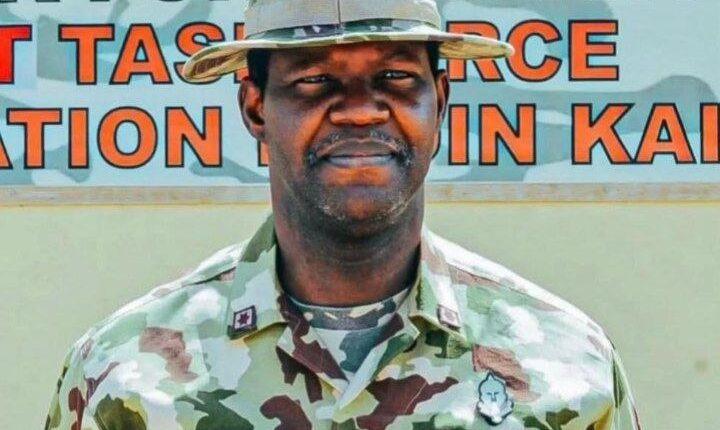
Brigadier General Braimah, who was serving as the Commander of the 29 Task Force Brigade under Operation Hadin Kai, was killed during a fierce confrontation with insurgents suspected to be affiliated with Boko Haram or the Islamic State West Africa Province. Reports of his death began circulating within hours of the attack, but alongside the news came a wave of claims that the military says were inaccurate, exaggerated, or deliberately misleading. In response, senior officials within the Armed Forces moved swiftly to present what they insist is a factual account of what transpired.
According to information released by the Director of Defence Media Operations, Major General Michael Onoja, the attack on the Benisheikh base began at approximately 12:30 in the morning. The insurgents reportedly attempted to infiltrate the military facility by breaching its defensive perimeter under the cover of darkness. Benisheikh, located about 75 kilometers from Maiduguri, has long been considered a strategically important position in the ongoing counterinsurgency campaign in the North East, making it a recurring target for armed groups seeking to destabilize military operations in the region.
As the situation escalated, Brigadier General Braimah is said to have taken an active role in coordinating the response. Rather than directing operations from a distant or secured location, he reportedly moved to the frontline, where he personally oversaw the counteroffensive mounted by his troops. Military authorities described his actions during the encounter as a display of exceptional bravery and professionalism, emphasizing that his leadership played a critical role in preventing the insurgents from successfully overrunning the base.
Read more on: Eight Family Members Killed in Late Night Attack on Bokkos Community
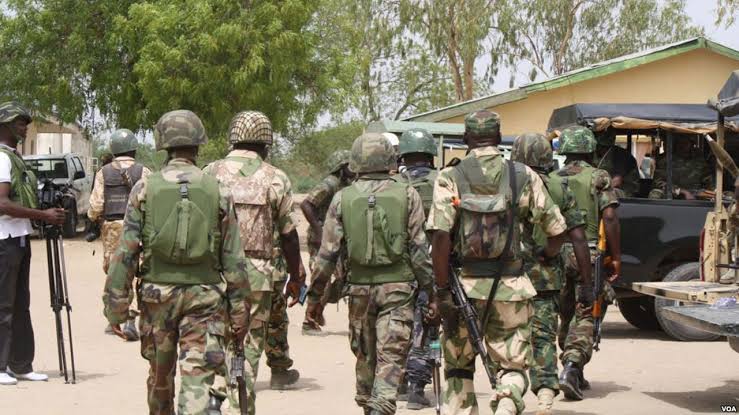
Despite the intensity of the assault, the Nigerian troops were ultimately able to repel the attackers and force them into retreat. However, the confrontation came at a significant cost. The death of Brigadier General Braimah, alongside other casualties, marked one of the most serious losses for the military in recent months. His passing has been particularly impactful given his rank and the leadership role he occupied within the theatre of operations.
In the hours following the attack, various unofficial reports began to emerge, many of which painted a far grimmer picture than what the Army would later confirm. Some accounts suggested that the base had been completely overrun and that the number of casualties was far higher than initially believed. Figures circulating online claimed that as many as seventeen or eighteen soldiers had lost their lives during the incident. These reports quickly gained traction, fueling concern among the public and raising questions about the state of military preparedness and morale.
Addressing these claims, the Media Information Officer for Operation Hadin Kai, Lieutenant Colonel Sanni Uba, provided clarification on the actual casualty figures. According to the official statement, a total of four personnel were killed in the encounter. This number includes two officers, among them Brigadier General Braimah, as well as two soldiers. The Army firmly rejected the higher figures being circulated, describing them as a deliberate attempt to distort the facts and undermine public confidence in the Armed Forces.
Beyond the dispute over casualty numbers, another claim that gained widespread attention involved the circumstances of the General’s death. Some reports alleged that Brigadier General Braimah had been left vulnerable during the battle because his vehicle malfunctioned or broke down at a critical moment. This narrative, which suggested a failure in equipment or maintenance, was particularly sensitive, as it touched on concerns about the quality and reliability of military hardware deployed in active combat zones.
Lieutenant Colonel Uba addressed this allegation directly, offering a detailed explanation intended to counter the narrative. He stated that the General was operating from a Mine Resistant Ambush Protected vehicle, commonly known as an MRAP. These vehicles are specifically designed for high-risk combat environments and are built to withstand explosive attacks and heavy gunfire. According to the Army, the vehicle in question was fully functional and among the most robust assets available in the Nigerian military’s arsenal.
Read more on: Bandits Trigger Panic, Demand 700 Cows and 1,000 Sheep
What occurred during the engagement, the Army explained, was not a mechanical failure but a temporary immobilization caused by the intensity of the firefight. In the chaos of battle, vehicles can become restricted in movement due to terrain, enemy fire, or tactical positioning. The Army maintained that this was the case in Benisheikh, stressing that the situation reflected the extreme conditions of the encounter rather than any deficiency in equipment or maintenance practices.
The military’s response to these claims highlights a broader concern about the role of misinformation in conflict situations. Officials warned that inaccurate reporting and the spread of unverified content can have serious consequences, not only by causing unnecessary panic among civilians but also by affecting the morale of troops and the perception of military effectiveness. In particular, the Army pointed to the circulation of unrelated images and videos being falsely linked to the Benisheikh attack. According to Lieutenant Colonel Uba, many of these visuals originated from past incidents or entirely different locations, yet were being shared as if they depicted the current situation.
While the Army focused on correcting the record, the loss of Brigadier General Braimah has also prompted an outpouring of grief and reflection at the national level. President Bola Tinubu expressed deep sorrow over the incident, describing the fallen officer and his colleagues as heroes whose sacrifices would not be forgotten. In his message of condolence, the President extended sympathy to the family of the late General as well as to the Nigerian Armed Forces, acknowledging the heavy price paid by those on the frontlines of the country’s security challenges.
The death of Brigadier General Braimah is particularly significant in the context of the ongoing counterinsurgency campaign in the North East. As a Brigade Commander, he held a key leadership position, responsible for coordinating operations and maintaining the effectiveness of troops under his command. His loss represents not only a personal tragedy but also a strategic setback, as experienced leadership is a critical component in the fight against insurgent groups.
Read more on: Boko Haram Attack Claims Senior Nigerian General in Borno
This incident also marks one of the highest-ranking casualties recorded in recent times, following the death of Brigadier General Musa Uba in late 2025. Such losses underscore the persistent dangers faced by military personnel operating in volatile regions, where the threat of insurgent attacks remains ever-present despite years of sustained operations.
As of Friday evening, military authorities confirmed that clearance operations were still ongoing in the Kaga Local Government Area, where the attack took place. Troops have been deployed to track down the insurgents responsible and to ensure that the surrounding areas remain secure. The Army stated that it has regained full control of the Benisheikh Damaturu axis, a critical route for both military logistics and civilian movement.
Even with control restored, the events of the past days serve as a sobering reminder of the complexities and risks inherent in the fight against insurgency. The combination of direct combat threats and the parallel challenge of managing information in the digital age presents a multifaceted battlefront for the military. While soldiers confront physical dangers on the ground, the institution must also contend with narratives that can shape public perception and influence national discourse.
In emphasizing the importance of accurate reporting, the Nigerian Army has called on the public and the media to rely on verified sources and to exercise caution when sharing information related to security operations. The goal, according to officials, is not only to prevent the spread of falsehoods but also to ensure that the sacrifices of those who serve are represented with honesty and respect.
The story of Brigadier General Braimah’s final moments, as presented by the Army, is one of courage under fire and commitment to duty. While debates may continue over the details, what remains undisputed is the reality of the loss and the broader context in which it occurred. For the soldiers who continue to serve in the North East, and for the nation as a whole, his death stands as a powerful reminder of the human cost of a conflict that is still far from over.
Read more on:
- U.S. Marks Plateau, Kano and 21 Other States as High-Risk Travel Zones
- Wike-Backed PDP Slams Makinde Over ADC Alliance Plans for 2027
- Trump Administration Petitioned by U.S. Lobbyists Over INEC’s ADC Decision
- Atiku, Obi, Kwankwaso Lead Opposition Protest Claiming INEC Bias
- World Bank Stresses Policy Reforms as Essential for Smarter African Growth