The calm surface of the Pacific Ocean was interrupted in spectacular fashion on the evening of April 10, 2026, as a spacecraft carrying four astronauts returned from one of humanity’s most significant journeys in decades. The NASA Artemis II mission came to a successful conclusion with a dramatic splashdown off the coast of San Diego, marking the first time in more than fifty years that humans have traveled to the vicinity of the Moon and safely made their way back to Earth.
For many around the world, the moment felt like a bridge between generations. The last time humans ventured this far into space was during the Apollo era, a period often spoken about with reverence and nostalgia. Now, Artemis II has revived that spirit of exploration while introducing it to a modern audience that followed every stage of the mission through high definition broadcasts and real time updates. In a way, it has reshaped how people engage with space exploration, turning distant cosmic events into something that feels immediate and personal.
The mission lasted just over nine days, though it is officially recorded as a ten day journey. During that time, the crew traveled hundreds of thousands of miles, venturing deep into cislunar space before looping around the Moon and returning home. Along the way, they captured stunning images of Earth from a distance of nearly 250,000 miles. These visuals, often described as both humbling and awe inspiring, reminded viewers of the fragility and beauty of our planet.
As the Orion spacecraft, named Integrity, began its return to Earth, the most intense phase of the mission unfolded. Re entry into the atmosphere is always one of the most dangerous parts of any spaceflight, and Artemis II was no exception. The capsule approached Earth at an extraordinary speed of Mach 33, which is thirty three times faster than the speed of sound. At such velocity, the friction between the spacecraft and the atmosphere created extreme heat, surrounding the capsule in a blazing sheath of plasma.
Read more on: https://loadedvibesng.com/the-acne-diet10-acne-fighting-foods-that-actually-work/
Temperatures during this phase reached levels that are difficult to comprehend, estimated at about half as hot as the surface of the sun. The heat shield of the Orion capsule was put to the ultimate test, protecting the astronauts from the inferno outside. As expected, communication between the spacecraft and Mission Control in Houston was temporarily lost during the most intense part of re entry. This communication blackout is a known and carefully planned aspect of space travel, but it still creates a tense few minutes as teams on the ground wait for confirmation that everything has gone according to plan.
Those moments of silence carried a sense of suspense for people around the globe who were watching the mission unfold. When communication was finally restored and the voice of Commander Reid Wiseman came through clearly, there was a collective sense of relief. In Mission Control, the tension gave way to smiles, applause, and a renewed sense of pride in what had just been accomplished.
The spacecraft’s descent continued smoothly after re entry, with parachutes deploying as planned to slow its fall. The capsule then gently touched down in the Pacific Ocean, where recovery teams were already in position. The USS John P. Murtha, serving as the primary recovery vessel, quickly secured the spacecraft and began the process of bringing the crew onboard.
When the hatch was opened, all four astronauts were reported to be in excellent condition. In a moment that captured the strength and preparation of the crew, they were able to walk out of the capsule without assistance and step onto the recovery ship. It was a powerful image that symbolized both the success of the mission and the resilience of the human body under extreme conditions.
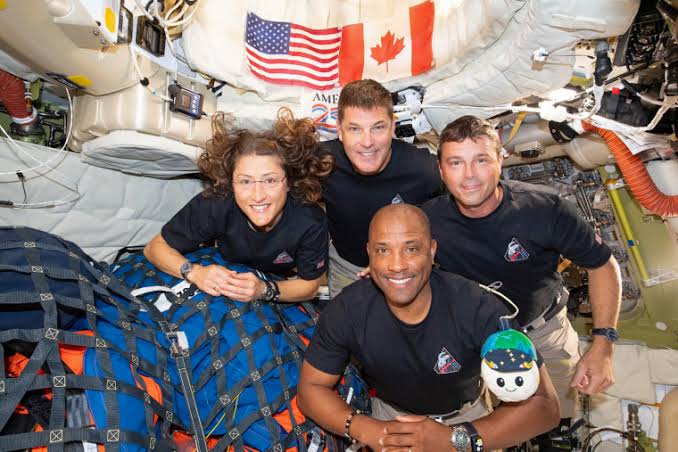
The Artemis II crew represents a new chapter in space exploration, reflecting both experience and diversity. Commander Reid Wiseman led the mission with steady leadership, guiding the spacecraft through its journey around the Moon and back to Earth. Pilot Victor Glover made history as the first person of color to travel to the Moon’s vicinity, adding an important milestone to the narrative of human spaceflight.
Read more on: 10 High-Protein Foods That Outperform Eggs and Boost Your Health
Mission Specialist Christina Koch, already known for her record breaking time in space, added another achievement to her career by participating in a lunar mission. Her experience played a key role in ensuring the success of the operation. Jeremy Hansen, representing the Canadian Space Agency, also made history as the first non American astronaut to leave Earth’s orbit and travel into deep space. Together, the four astronauts formed a team that embodied international cooperation and the shared human desire to explore beyond our planet.
Although Artemis II did not include a lunar landing, its objectives were no less important. The mission served as a critical test of the systems and technologies that will be required for future journeys. One of its major accomplishments was completing a free return trajectory around the Moon. This path allowed the spacecraft to loop around the far side of the Moon and return to Earth using the gravitational pull of the lunar body, demonstrating a reliable method for deep space travel.
The mission also covered an impressive distance, traveling nearly 694,481 miles, which is more than 1.1 million kilometers. This journey provided valuable data on how both the spacecraft and the crew perform in the harsh environment of deep space. Exposure to radiation, prolonged periods in microgravity, and the psychological challenges of being far from Earth were all factors that the mission sought to study.
Another important achievement was the successful testing of high bandwidth communication systems. Using NASA’s Deep Space Network, the crew was able to transmit high quality video, including 4K footage, from lunar distances. This capability represents a significant step forward in how missions can be monitored and shared with people on Earth.
The Orion spacecraft’s life support systems were also put through rigorous testing. Ensuring that a crew can survive and function effectively during long missions is essential for the future of space exploration. Artemis II demonstrated that the spacecraft can sustain four astronauts in the demanding conditions of cislunar space, paving the way for longer and more complex missions.
Read more on: 10 Ways Your Phone Is Slowly Harming Your Body and Mind
Beyond the technical achievements, the mission also offered moments of reflection and wonder. As the spacecraft made its way back toward Earth, Commander Wiseman described the view of the planet from space. He spoke of a striking blue hue that defined the Earth’s appearance, a sight that has been echoed by astronauts throughout history. Such observations serve as a reminder of the uniqueness of our planet and the importance of preserving it.
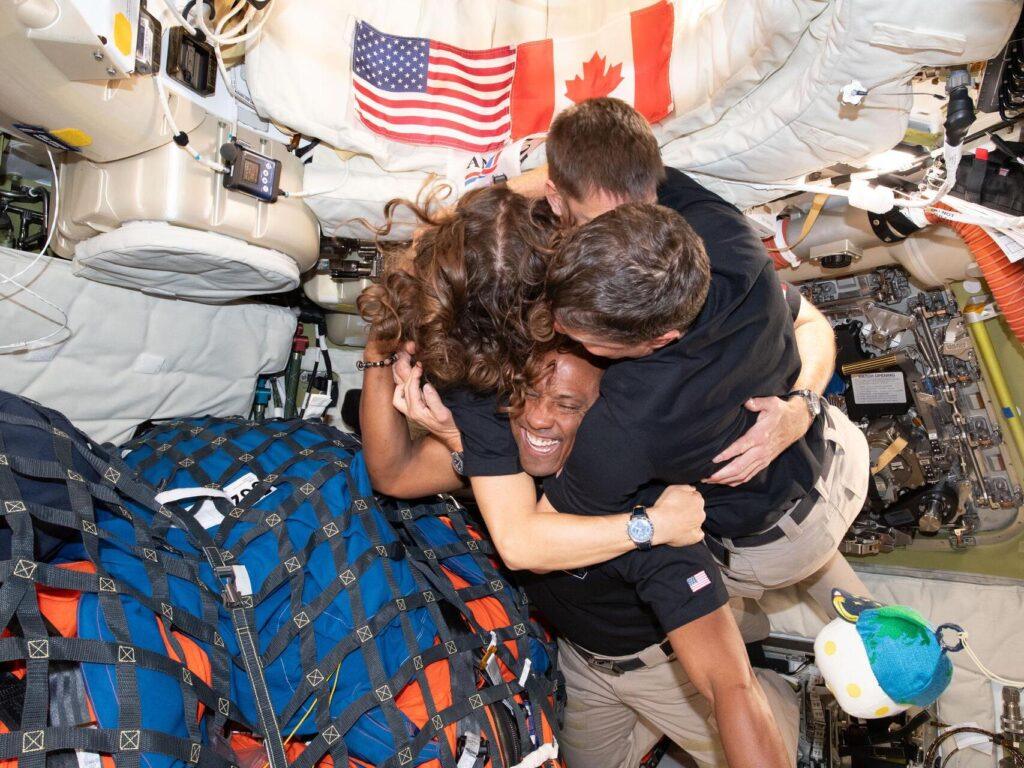
For many people, Artemis II provided a welcome shift in perspective. At a time when global attention is often focused on challenges and divisions, the mission highlighted what can be achieved through collaboration and shared purpose. Watching the astronauts return safely to Earth after traveling to the Moon’s vicinity brought a sense of unity and inspiration that transcended borders.
The successful completion of Artemis II is not the end of the journey but rather the beginning of a new era. The data collected during the mission will be carefully analyzed in the months ahead. Scientists and engineers will use this information to refine systems, address any challenges, and prepare for the next feet of exploration.
The crew is now on their way to the Johnson Space Center in Houston, where they will reunite with their families and undergo detailed medical evaluations. These assessments are an important part of understanding how space travel affects the human body and will contribute to the planning of future missions.
Looking ahead, the focus will shift to Artemis III, which is scheduled to take place in 2028. This mission aims to achieve what Artemis II set the stage for, returning humans to the surface of the Moon for the first time since the Apollo program. The success of Artemis II has provided confidence that this goal is within reach.
Read more on: First Black Astronaut Heads Toward the Moon on Artemis II
NASA has made it clear that this mission represents a stepping stone rather than a final destination. The Artemis program is designed to establish a sustained human presence on the Moon and eventually support missions to Mars and beyond. Each mission builds on the lessons of the previous one, creating a pathway toward deeper exploration of our solar system.
As the Orion capsule was lifted from the waters of the Pacific and secured aboard the recovery ship, it marked the end of one journey and the beginning of another. The image of the spacecraft, surrounded by the vast ocean after returning from the depths of space, serves as a powerful symbol of human curiosity and determination.
The Artemis II mission has shown that the spirit of exploration is alive and well. It has connected past achievements with future ambitions and reminded the world that even in an age dominated by technology and rapid change, there are still frontiers waiting to be explored.
Read more on: