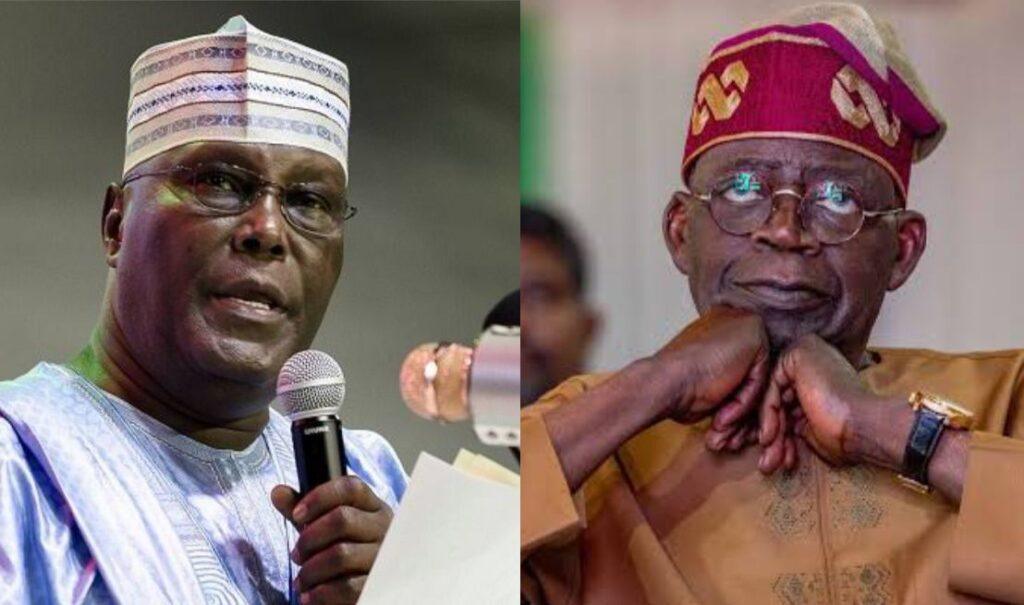
Nigeria’s political space has once again become heated following a fresh exchange between former Vice President Atiku Abubakar and President Bola Ahmed Tinubu. The disagreement, which centers on recent comments made by the President about fuel prices, has quickly evolved into a broader debate about economic reality, governance, and the everyday struggles faced by Nigerians.
Atiku, speaking through his Senior Special Assistant on Public Communication, Phrank Shaibu, strongly challenged the President’s position. He accused the administration of relying on selective comparisons that fail to reflect the true condition of the Nigerian economy. According to Atiku, such arguments overlook the deeper issues affecting citizens, particularly when it comes to income levels, inflation, and purchasing power.
How the Controversy Began
The disagreement can be traced back to remarks made by President Tinubu during an official visit to Bayelsa State. While inaugurating infrastructure projects in Yenagoa, the President addressed concerns about the rising cost of living, which has become a major issue across the country.
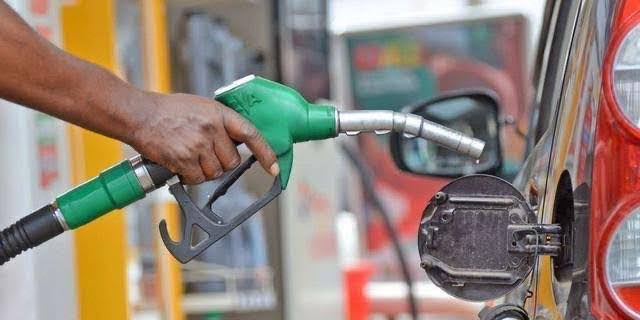
In his speech, Tinubu acknowledged that Nigerians are going through difficult economic times. However, he urged citizens to maintain perspective and consider how Nigeria compares to other countries facing similar challenges. He pointed out that petrol prices in nations such as Kenya and South Africa are significantly higher than what Nigerians currently pay.
The President suggested that this difference should offer some level of reassurance, emphasizing that the government is working to maintain a balance while implementing reforms aimed at long term stability. He encouraged Nigerians to remain patient and hopeful as his administration continues to address economic challenges.
While the statement was intended to provide context and possibly calm public concerns, it quickly drew criticism from opposition figures who saw it as disconnected from the realities on the ground.
Atiku’s Response and Core Argument
Atiku Abubakar wasted little time in responding. In a detailed statement, he argued that comparing fuel prices across countries without considering the broader economic context is misleading. He described the President’s reasoning as both curious and troubling, insisting that it fails to capture the real burden faced by ordinary Nigerians.
Central to Atiku’s argument is the concept of purchasing power. He stressed that the cost of petrol cannot be evaluated in isolation. Instead, it must be considered alongside income levels and the overall cost of living.
According to Atiku, while it may be true that fuel is cheaper in Nigeria than in Kenya when measured at the pump, this does not mean Nigerians are better off. He explained that the average Kenyan worker earns significantly more than the average Nigerian, which makes it easier for them to absorb higher fuel costs.
He highlighted the difference in minimum wages as a clear example. Nigeria’s newly approved minimum wage stands at seventy thousand naira, while Kenya’s equivalent is estimated to be more than double that amount when converted. This disparity, he argued, means that a Kenyan citizen is in a stronger position to cope with higher fuel prices compared to a Nigerian worker earning far less.
Atiku further noted that focusing solely on fuel prices ignores the broader economic pressures facing Nigerians, including rising food costs, transportation expenses, and the overall increase in the cost of living.
Read more on: 16 Residents Killed as Security Forces Neutralize 110 Bandits in Niger State
The Wider Cost of Living Debate
Beyond fuel prices, Atiku pointed to data suggesting that the general cost of living in Nigeria has become more severe than in some other African countries, including Kenya. This, he argued, undermines the idea that Nigerians should feel reassured simply because petrol prices appear lower on the surface.
Inflation has remained a persistent issue, reaching levels not seen in decades. Although there have been signs of moderation in early 2026, the impact on households has already been significant. Many families continue to struggle with basic expenses, and the gap between economic indicators and real life conditions remains wide.
The devaluation of the naira has also contributed to rising costs, making imported goods more expensive and putting additional pressure on consumers. These factors, taken together, paint a picture of an economy where nominal price comparisons do not fully reflect the lived experience of citizens.
The World Bank Report Adds Weight to the Debate
The timing of this political exchange is particularly significant, coming shortly after the release of the World Bank’s April 2026 Nigeria Development Update. The report provided a sobering assessment of the country’s economic situation and has since become a key reference point in the ongoing debate.
One of the most striking findings in the report is the rise in poverty levels. According to the World Bank, approximately sixty three percent of Nigerians are now living below the poverty line. This translates to an estimated one hundred and forty million people, highlighting the scale of the challenge facing the country.
The report also pointed to what it described as a collapse of the middle class. Even as some macroeconomic indicators show signs of improvement, many Nigerians have not felt any relief in their daily lives. This disconnect between official data and household experience has fueled criticism of current economic policies.
Atiku referenced the World Bank findings to support his argument, describing the administration’s reforms as deeply flawed. He criticized the removal of fuel subsidies and the decision to float the naira, arguing that these policies have contributed to widespread hardship rather than economic progress.
Read more on: Court Sentences Former Senatorial Candidate
Political Tensions and Growing Opposition
This latest disagreement is not occurring in isolation. It is part of a broader pattern of rising political tension as opposition figures become increasingly vocal in their criticism of the government.
Just days before this exchange, Atiku joined other prominent political leaders, including Peter Obi and Rabiu Kwankwaso, in a large protest held in Abuja. The demonstration, organized under the banner of “Save Our Democracy,” drew attention to concerns about governance, electoral processes, and the state of democracy in Nigeria.
The protest was also linked to a recent decision by the Independent National Electoral Commission to withdraw recognition from the leadership of the African Democratic Congress. Opposition leaders have described the move as an attempt to weaken alternative political voices ahead of the 2027 elections.
In this context, Atiku’s criticism of Tinubu’s fuel price remarks can be seen as part of a broader effort to challenge the administration’s narrative and highlight perceived shortcomings in its policies.
Two Competing Narratives
At the heart of this debate are two very different perspectives on Nigeria’s economic situation.
For the Presidency, the comparison with countries like Kenya is intended to provide a sense of perspective. The argument suggests that Nigeria is not alone in facing economic challenges and that, in some respects, it is performing better than its peers. This approach emphasizes patience and long term planning, with the expectation that current reforms will eventually yield positive results.
For Atiku and other opposition figures, the comparison tells a different story. They argue that such metrics are misleading because they fail to account for key factors such as income levels and purchasing power. From this viewpoint, what matters most is not how Nigeria compares to other countries on paper, but how Nigerians are actually living.
This difference in perspective reflects a deeper disagreement about how economic success should be measured. While government officials may focus on macroeconomic indicators and regional comparisons, critics insist that the true test lies in the everyday experiences of citizens.
Read more on: Court Schedules April 14 Hearing in ADC Leadership Rift
Understanding the Economic Indicators
To better understand the debate, it is useful to look at some of the key economic indicators being discussed.
Nigeria’s minimum wage currently stands at seventy thousand naira, while Kenya’s equivalent is estimated to be around one hundred and seventy thousand naira when converted. This significant gap highlights the difference in earning power between workers in the two countries.
Poverty rates also differ sharply. Nigeria’s rate is estimated at sixty three percent, compared to around thirty six percent in Kenya. This suggests that a larger proportion of Nigerians are struggling to meet basic needs.
Fuel prices, on the other hand, appear lower in Nigeria, averaging just over one thousand naira per litre, compared to approximately one thousand four hundred and fifty naira in Kenya. However, as Atiku has emphasized, this figure alone does not provide a complete picture.
When income levels and cost of living are taken into account, the advantage suggested by lower fuel prices becomes less clear.
A Debate That Resonates with Citizens
The ongoing exchange between Atiku and Tinubu has resonated widely because it touches on issues that affect millions of Nigerians. Rising living costs, stagnant incomes, and economic uncertainty are everyday realities for many households.
For some, the President’s remarks may offer reassurance that the country is not alone in facing economic challenges. For others, Atiku’s criticism may better reflect their personal experiences and frustrations.
The debate also highlights the importance of how economic information is communicated. Simple comparisons can be powerful, but they can also be misleading if they do not capture the full context.
Read more on: Army Counters Misinformation, Clarifies Circumstances Surrounding General Braimah’s Death
Looking Ahead
As Nigeria continues to navigate a complex economic landscape, discussions like this are likely to remain a central part of the political conversation. With the 2027 elections on the horizon, both the government and the opposition are positioning themselves to shape public perception and influence voter sentiment.
For now, the disagreement over fuel prices serves as a reminder that economic policy is not just about numbers and statistics. It is also about how those numbers translate into real life conditions for citizens.
Whether Nigerians choose to align with the government’s call for patience or the opposition’s demand for a different approach remains to be seen. What is clear, however, is that the question of how best to measure and improve economic well being will continue to dominate public discourse in the months and years ahead.
Read more on:
- Eight Family Members Killed in Late Night Attack on Bokkos Community
- Eight Family Members Killed in Late Night Attack on Bokkos Community
- Bandits Trigger Panic, Demand 700 Cows and 1,000 Sheep
- Boko Haram Attack Claims Senior Nigerian General in Born
- U.S. Marks Plateau, Kano and 21 Other States as High-Risk Travel Zones