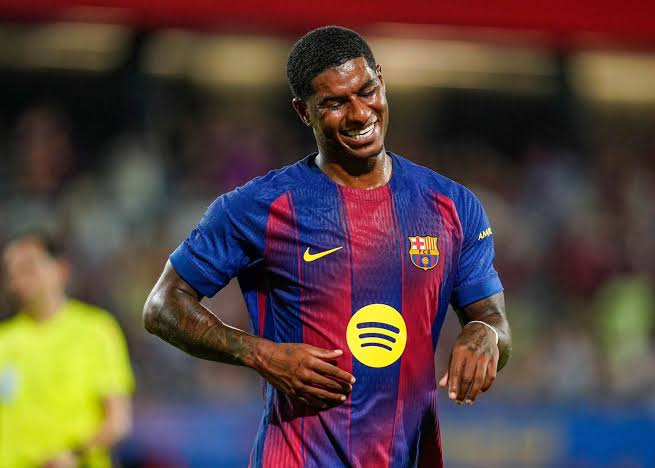
Tension continues to build around Barcelona, and not just because of events on the pitch. In the aftermath of their 2–0 defeat to Atlético Madrid in the Champions League quarter final, the club now finds itself at the center of a different kind of controversy, one that blends football politics, financial strain, and transfer market maneuvering. What initially appeared to be a straightforward loan deal involving Marcus Rashford has evolved into a heated debate that is drawing reactions from pundits, former players, and fans across Europe.
At the heart of the situation is Barcelona’s reported attempt to renegotiate the agreed buy option for Rashford, who joined the Spanish giants on loan from Manchester United earlier in the year. The England international has experienced something of a resurgence since arriving in Spain, delivering performances that have reminded many of his peak form. With his value rising significantly as a result, Barcelona’s desire to revisit the financial terms of the agreement has sparked accusations of unfair conduct, with some critics using dramatic language to describe what they see as an attempt to tilt the situation in their favor.
It is important to note that the phrase match fixing, which has been circulating in online discussions, is not being used in a literal or legal sense. Rather, it has emerged as a metaphor among critics who believe Barcelona is trying to manipulate the transfer market dynamics after benefiting from Rashford’s improved performances. The controversy reflects broader frustrations with how elite clubs navigate financial constraints while still attempting to compete at the highest level.
The reaction from figures associated with Manchester United has been particularly strong. Former players Gary Neville and Rio Ferdinand have both spoken out publicly, expressing their dissatisfaction with Barcelona’s reported stance. Speaking on a widely followed football podcast, Neville questioned the fairness of trying to renegotiate a clause that was agreed upon when Rashford’s market value was significantly lower. He pointed out that Manchester United had included what he described as a reasonable buy option in the original deal, likely reflecting the player’s form at the time. Now that Rashford has rediscovered his confidence and effectiveness, Neville argued that attempting to reduce the agreed fee is simply unacceptable.
Read more on: UEFA Sidelined Referee After Barcelona’s Fury Over VAR Controversy
Rio Ferdinand echoed similar sentiments but went even further in his criticism. He suggested that allowing Barcelona to secure Rashford for a reduced price after his standout performances would amount to a major loss for Manchester United. In his view, the situation highlights the risks clubs take when they agree to loan deals with fixed buy options, particularly when those deals involve players capable of dramatic improvement.
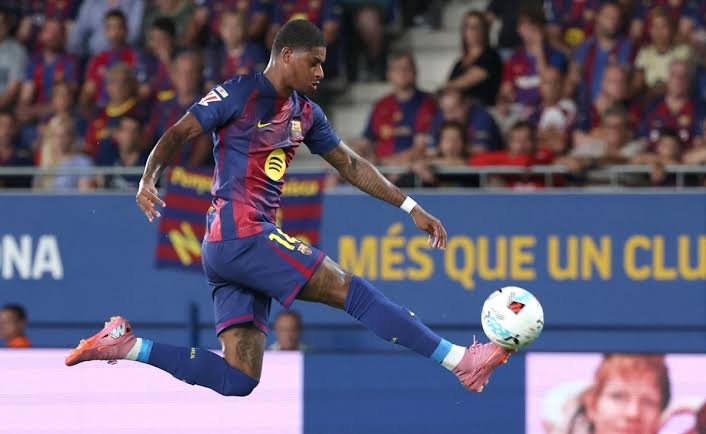
Much of the debate stems from Rashford’s performances since his arrival in La Liga. He has become an important part of Hansi Flick’s system, contributing both goals and assists while offering pace and creativity in attack. His impact has been felt not only in domestic competition but also on the European stage, where he has emerged as one of Barcelona’s most reliable attacking outlets. These contributions have significantly increased his perceived market value, with some estimates placing it close to double the agreed buy option.
In La Liga, Rashford has delivered consistent attacking output, combining goals with assists to influence matches in meaningful ways. His presence has added a new dimension to Barcelona’s forward line, particularly in moments where individual brilliance is required to unlock tight defenses. In the Champions League, he has also played a key role, scoring crucial goals and maintaining a level of performance that has kept Barcelona competitive despite recent setbacks.
Hansi Flick has publicly acknowledged Rashford’s importance to the team, even suggesting that the player could be central to any potential comeback in their European tie against Atlético Madrid. Despite trailing by two goals, Flick has expressed confidence that a fully fit and focused Rashford could help inspire a turnaround in the second leg. This belief only adds to the complexity of the situation, as it raises questions about whether Barcelona can realistically afford to let such an influential player leave or risk losing him due to financial constraints.
Read more on: Crystal Palace Humble Fiorentina in Stunning European Quarter-Final Display
The controversy surrounding the transfer has also intersected with lingering tensions from the Champions League defeat. Barcelona has already lodged a formal complaint with UEFA regarding refereeing decisions in the match against Atlético Madrid, specifically pointing to a handball incident that they believe should have resulted in a penalty. The club has requested a full investigation, access to VAR communications, and official acknowledgment of what they see as a decisive error.
However, these actions have not been universally well received. Critics, particularly from rival fan bases, have suggested that Barcelona’s focus on refereeing decisions is an attempt to shift attention away from their own shortcomings. Some have even gone as far as linking the current situation to past controversies involving the club, using those references to question the credibility of their complaints. While these claims remain speculative and often driven by rivalry, they have contributed to an increasingly hostile online environment.
The use of charged terms in this debate reflects the intensity of modern football discourse, where financial decisions, refereeing controversies, and historical grievances often become intertwined. In this context, Barcelona’s attempt to renegotiate Rashford’s transfer fee is being viewed through multiple lenses, ranging from strategic business decision to questionable practice.
From a purely financial perspective, Barcelona’s position is not entirely surprising. The club has been dealing with well documented economic challenges in recent years, including issues related to financial fair play regulations. These constraints have forced them to adopt a more cautious approach in the transfer market, often seeking creative solutions to secure players without exceeding budgetary limits. Attempting to lower a pre agreed fee could be seen as part of this broader strategy, particularly if the club believes it has leverage due to Rashford’s current situation.
Read more on: Andy Robertson Set to Depart Liverpool
On the other hand, Manchester United’s stance appears to be rooted in protecting the value of their asset. If Barcelona chooses not to activate the buy option at the agreed price, United retains the ability to either reintegrate Rashford into their squad or sell him at a significantly higher valuation. Given his recent performances, there is little doubt that the player would attract strong interest from other clubs, potentially leading to a bidding situation that drives up his price.
This dynamic places Barcelona in a difficult position. On one hand, they have a player who is performing at a high level and contributing meaningfully to their campaign. On the other hand, they must navigate financial limitations that could prevent them from securing his services on a permanent basis. The decision they ultimately make will likely depend not only on Rashford’s continued form but also on the outcome of their Champions League tie and their broader strategic priorities.
Hansi Flick’s reported comments about the situation add another layer of intrigue. There are indications that the manager may be evaluating Rashford’s long term role within the team, potentially linking his future to the outcome of key matches. If Barcelona fails to achieve its objectives, particularly in Europe, it could influence their willingness to commit to a significant financial outlay, even for a player who has performed well.
Meanwhile, Manchester United is in a relatively strong position. The club can afford to be patient, knowing that Rashford’s value has increased and that they have multiple options available. Whether they choose to bring him back into the fold or sell him for a profit, they are unlikely to accept terms that fall significantly below his current market worth.
Read more on: Arne Slot Explains Why He Kept Salah on the Bench Against PSG
As the situation continues to unfold, it serves as a reminder of how quickly narratives can shift in modern football. A player who was once seen as surplus to requirements can become a highly sought after asset within a matter of months. At the same time, agreements that appear straightforward on paper can become sources of controversy when circumstances change.
For Barcelona, the challenge lies in balancing ambition with financial reality. The club remains determined to compete at the highest level, both domestically and in Europe, but must do so within constraints that limit its flexibility. For Manchester United, the focus is on ensuring that any outcome reflects the true value of their player.
Ultimately, the debate over Marcus Rashford’s future is about more than just one transfer. It highlights broader questions about fairness, strategy, and the evolving nature of football economics. Whether Barcelona’s approach is viewed as clever negotiation or inappropriate maneuvering will depend largely on perspective. What is clear, however, is that the situation has captured attention across the football world, adding yet another layer of drama to an already eventful season.
Read more on:
- Simeone Outsmarts Flick as Atlético Madrid Defeat Barcelona
- CAF President Arrives in Dakar Amid AFCON Title Controversy
- Manchester City on Brink of Signing Elliot Anderson, Beating United to £65 Million Transfer
- Atlético Chief Slams VAR After Barcelona Defeat
- Arbeloa: Mbappé Fully Fit and Ready for Big Matches