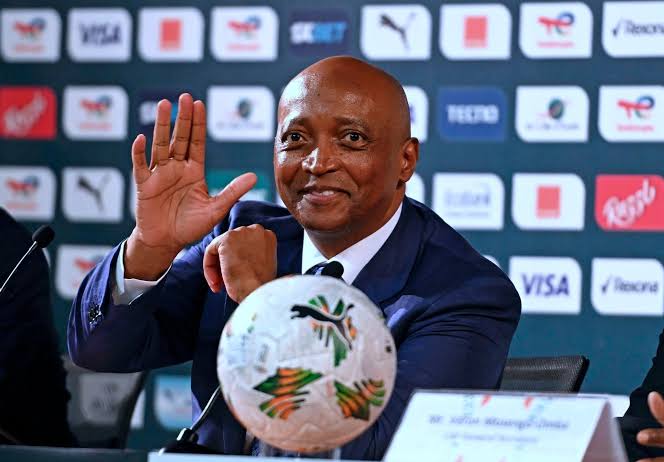
African football is currently in the grip of one of the most dramatic and politically sensitive episodes in its modern history. What should have been a celebration of continental unity and sporting excellence has instead turned into a complex dispute involving governing bodies, national pride, and legal battles that stretch beyond the pitch. On Wednesday, April 8, 2026, the President of the Confederation of African Football, Patrice Motsepe, arrived in Dakar, Senegal, in what is widely being described as a crucial diplomatic intervention aimed at calming rising tensions.
At the heart of this unfolding crisis is a decision that has stunned fans and officials alike. Senegal, which had been widely recognized as the winner of the 2025 Africa Cup of Nations, has been stripped of its title through an administrative ruling. In a move that many consider unprecedented, the championship has now been officially awarded to Morocco, the host nation of the tournament. This reversal has not only divided opinions across the continent but has also triggered a deeper conversation about fairness, governance, and credibility within African football.
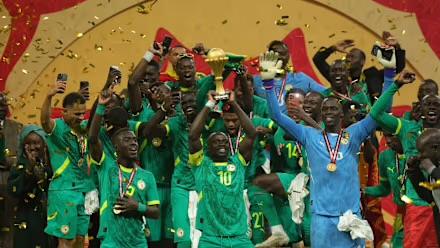
To understand the magnitude of the situation, it is necessary to revisit the events that led to this extraordinary decision. The AFCON final took place on January 18, 2026, at the Prince Moulay Abdallah Stadium in Rabat. It was a highly anticipated match between two strong sides, with Senegal seeking to cement its dominance in African football and Morocco aiming to claim glory on home soil. Under intense pressure and in front of a passionate crowd, Senegal managed to secure a narrow 1-0 victory, thanks to a late goal scored by Pape Gueye.
Read more on: Manchester City on Brink of Signing Elliot Anderson, Beating United to £65 Million Transfer
At that moment, Senegal appeared to have successfully defended its reputation as one of the continent’s top footballing nations. Celebrations erupted among players and fans, and for a brief period, there was no indication that the result would later be contested. However, beneath the surface, tensions had been building throughout the match, particularly regarding officiating decisions that Senegal’s camp found deeply questionable.
The turning point came in the closing stages of the game. The referee awarded a controversial penalty to Morocco during added time, a decision that immediately sparked outrage among Senegalese players and coaching staff. The sense of injustice was so strong that head coach Pape Thiaw, along with his players, made the dramatic decision to leave the pitch in protest. This walk off lasted for approximately 14 minutes and created a chaotic and unprecedented situation in what should have been a routine conclusion to a major final.
Although the match eventually concluded with Senegal maintaining its 1-0 lead, the fallout from that protest would prove to be far more significant than anyone anticipated. The Confederation of African Football launched an investigation into the incident, focusing particularly on whether Senegal’s actions constituted a violation of tournament regulations.
Nearly two months later, on March 17, 2026, the CAF Appeals Committee delivered a ruling that sent shockwaves across the football world. The committee determined that Senegal’s temporary withdrawal from the pitch amounted to a forfeiture of the match. As a result, the original scoreline was nullified and replaced with a 3-0 victory in favor of Morocco. With that decision, the AFCON title was officially reassigned to the Moroccan team.
Read more on: Atlético Chief Slams VAR After Barcelona Defeat
This administrative reversal has been described by many observers as one of the most controversial decisions in the history of African football. It effectively transformed the narrative of the final, turning Senegal from champions into losers on paper, despite their performance on the field. For Morocco, it meant being crowned champions long after the final whistle had been blown, a scenario that has left fans across the continent divided.
In response to the growing tension, Patrice Motsepe’s visit to Dakar is seen as a strategic effort to prevent the situation from escalating further. His presence in Senegal signals the seriousness with which CAF is treating the dispute, as well as the potential consequences if it is not resolved in a timely and transparent manner.
Motsepe’s schedule in Dakar reflects the diplomatic nature of his mission. He is expected to meet with President Bassirou Diomaye Faye at the presidential palace, a clear indication that the issue has transcended sports and entered the realm of state-level engagement. In addition to this, he will hold discussions with the President of the Senegalese Football Federation, Abdoulaye Fall, as well as other key stakeholders within the country’s football ecosystem.
As part of his visit, Motsepe is also scheduled to travel to Goree Island, a site of deep historical and cultural significance for Senegal. This gesture is widely interpreted as an attempt to show respect for the nation’s heritage while reinforcing a message of unity and reconciliation during a period of tension.
Read more on: Arbeloa: Mbappé Fully Fit and Ready for Big Matches
Despite these diplomatic efforts, the situation remains highly complex. One of the most striking aspects of the crisis is the existence of two conflicting realities. Officially, according to CAF’s ruling, Morocco is the 2025 AFCON champion. However, in practice, Senegal continues to act as the rightful holder of the title.
The Senegalese Football Federation has firmly rejected the decision and has refused to return the physical trophy or the winners’ medals. This defiance has been evident in recent public appearances. During an international friendly match against Peru in Paris, Senegalese players wore jerseys adorned with two stars, symbolizing their victories in 2021 and what they still consider to be their 2025 triumph. They also paraded the AFCON trophy in front of a crowd of more than 80,000 spectators, a powerful statement of their position.
In parallel with these symbolic acts, Senegal has taken formal legal action by appealing the CAF ruling to the Court of Arbitration for Sport. This move shifts the dispute into an international legal framework, where the final decision will carry significant weight not only for the teams involved but also for the credibility of CAF as a governing body.
Patrice Motsepe has publicly acknowledged the importance of respecting the legal process. Ahead of his visit, he emphasized that his role is not to impose personal opinions but to ensure that the outcome of the dispute aligns with established judicial procedures. His statement reflects a careful balancing act between maintaining authority and addressing widespread concerns about fairness and transparency.
The broader implications of this crisis extend far beyond the immediate parties involved. For Senegal, the issue is not just about a football title but about national pride and the integrity of competition. Government officials have gone as far as calling for an international investigation into what they describe as potential corruption within CAF. Such allegations, whether proven or not, have the potential to damage the reputation of the organization and undermine confidence in its decisions.
On the other side, Morocco maintains that the ruling is consistent with established regulations. Officials from the Moroccan Football Federation argue that the rules regarding pitch abandonment are clear and must be applied uniformly, regardless of the circumstances. From their perspective, the decision to award them the title is not a matter of favoritism but of enforcing discipline and maintaining order within the sport.
CAF itself finds itself in a difficult position. While it must uphold its regulations, it also faces the challenge of addressing perceptions that its processes may be influenced by external factors. The organization’s credibility is at stake, and how it handles this situation could shape its standing in the global football community for years to come.
Read more on: England Defender Conor Coady Suddenly Collapses
As of April 8, 2026, all eyes are on Dakar, where discussions between Motsepe and Senegalese officials are ongoing. A press conference scheduled for later in the day is expected to provide further clarity on the next steps. Fans, analysts, and stakeholders across Africa are waiting to see whether this meeting will bring the two sides closer to a resolution or simply highlight the depth of the divide.
For Senegal, the objective remains clear. They want their on-field victory to be recognized and reinstated. For CAF, the priority is to demonstrate that its decisions are based on fairness, transparency, and adherence to the rules. Bridging these positions will not be easy, especially given the emotional and political dimensions of the dispute.
This situation has already become a defining moment in African football. It has raised important questions about how the sport is governed, how disputes are resolved, and how trust can be maintained in the face of controversy. Whether through diplomacy, legal intervention, or a combination of both, the resolution of this crisis will have lasting consequences.
For now, the continent watches and waits, aware that the outcome will not only determine the rightful holder of a trophy but also set a precedent for how similar conflicts are handled in the future.
Read more on:
- Haaland Hat-Trick Fires Man City to Historic Eighth Straight FA Cup Semi-Final
- Osimhen Leads Super Eagles Against Ronaldo and Lewandowski in High-Stakes June Friendlies
- Salah’s Saudi Shock, Osimhen’s Comeback, and Chelsea’s Heartbreak: A Night of Football Turning Points
- Ceballos Faces Summer Showdown as Betis Return Hangs by €15m