Here’s a natural, smooth rewrite of your report:
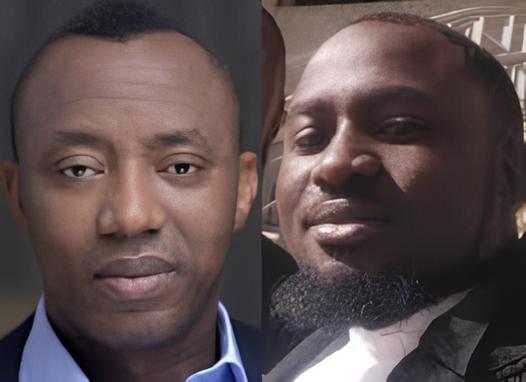
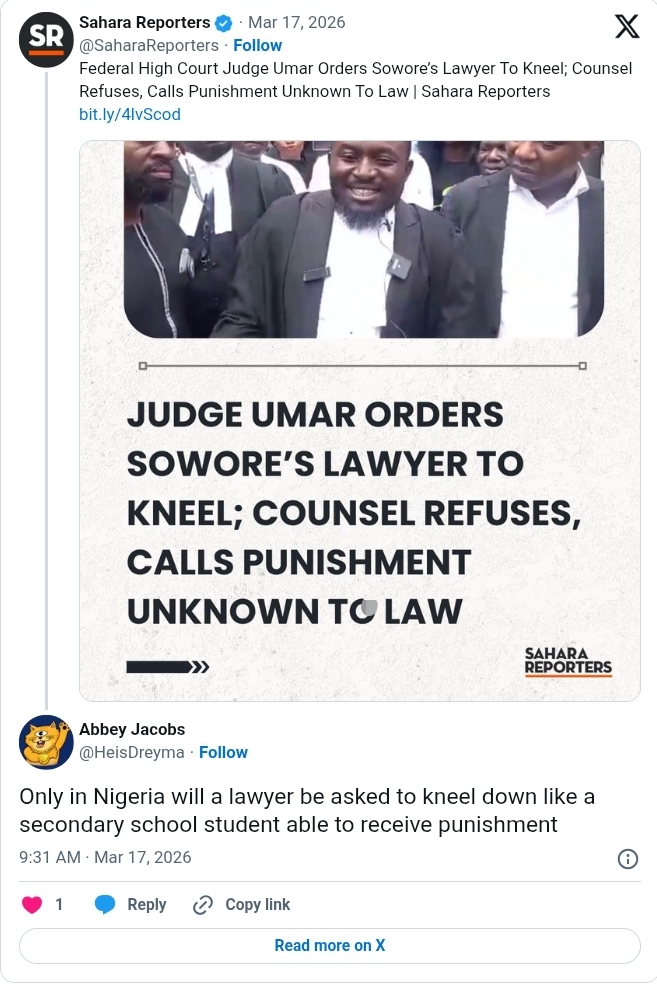
Tension flared at the Federal High Court on Monday after Mohammed Umar ordered a lawyer representing Omoyele Sowore to kneel, a directive the counsel refused, describing it as unlawful and not recognised under Nigerian law.
The incident occurred during ongoing proceedings involving Sowore, the publisher of Sahara Reporters and a former presidential candidate. He is being prosecuted by the Department of State Services over comments in which he allegedly described Bola Ahmed Tinubu as a criminal.
What started as a routine session quickly became heated after the defence team requested a longer adjournment. This followed the prosecution’s announcement that it had closed its case. Lawyers present said the request appeared to irritate the judge, who had already indicated that proceedings should move forward without extended arguments.
The situation escalated further when Sowore addressed the court and stated that he would continue travelling across Nigeria to mobilise citizens ahead of the 2027 general election.
The prosecution reacted immediately. Lead counsel Adeolu Kehinde, SAN, interrupted and attempted to stop him from speaking.
Sowore’s lead counsel, Marshal Abubakar, then stood up to respond. Witnesses described his intervention as firm and passionate. He argued that the case raised broader political issues and suggested that the Federal Government was attempting to silence Sowore and possibly prevent him from participating in the next election cycle.
Despite earlier warnings from the judge to avoid further arguments, Abubakar continued speaking. This prompted Justice Umar to react.
In a move that surprised many in the courtroom, the judge ordered the lawyer to step forward and kneel as punishment for what he described as contempt of court.
Abubakar refused.
In a calm but firm response, he stated that kneeling was not a lawful punishment under Nigerian law and that he could not comply with such an order.
Several senior lawyers quickly intervened, urging the judge to de-escalate the situation as tensions in the courtroom rose.
Under Nigerian law, contempt of court is recognised but is typically handled through formal procedures, including penalties such as fines or detention. Physical acts such as kneeling are not part of the standard legal framework.
As the atmosphere became increasingly tense, Justice Umar eventually halted proceedings.
The case was adjourned to April 13, 2026, although the defence objected to the date, arguing that it was too far off given the stage of the trial.
Sowore’s legal battles have been closely followed by civil society groups over the years. Since 2019, he has faced several cases linked to his activism and criticism of government officials.
The latest courtroom incident has already drawn attention within legal circles, particularly because issues of courtroom discipline are usually handled through established legal procedures.
Nigerian Bar Association Reacts
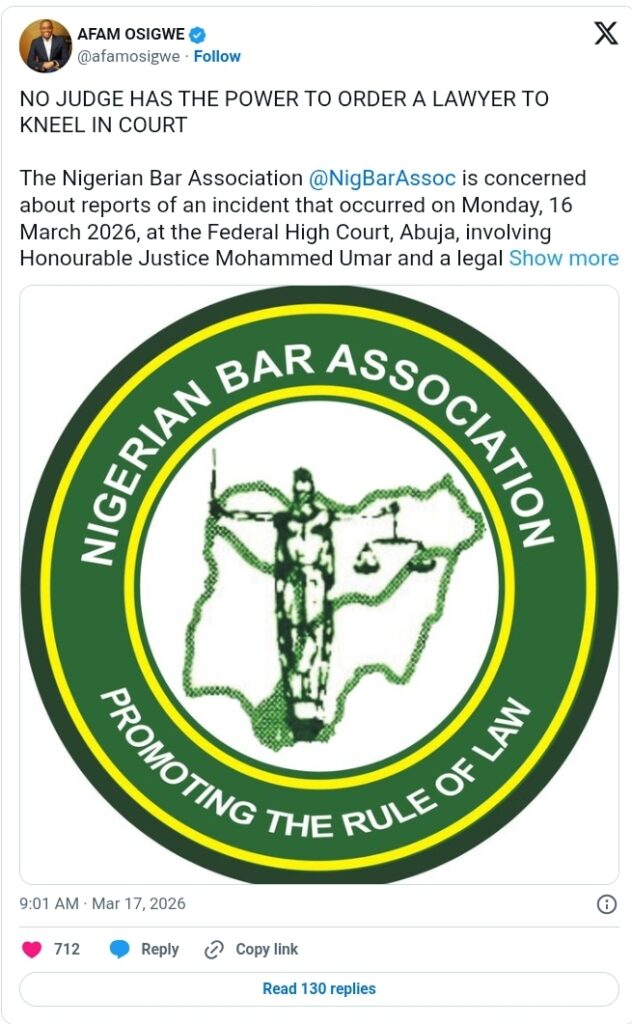
The Nigerian Bar Association has expressed concern over the incident.
In a statement signed by its president, Afam Osigwe, SAN, the association stated that no judge has the authority under Nigerian law to order a lawyer to kneel in court.
It described the courtroom as a place governed by law, procedure and decorum, noting that while judges have the power to maintain discipline, such authority must be exercised within legal boundaries.
The association acknowledged that courts can punish contempt but emphasised that such actions must follow clearly defined procedures that protect fairness and dignity.
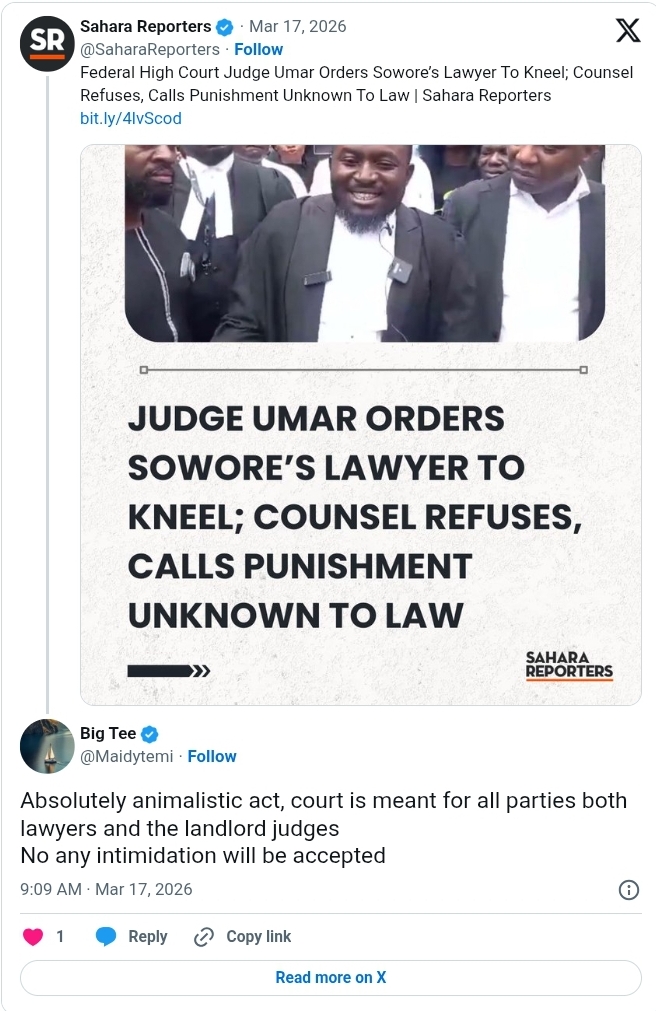
According to the NBA, ordering anyone to kneel is not a recognised judicial sanction and does not align with accepted standards of conduct.
At the same time, the association reminded lawyers of their responsibility to remain professional, even during disagreements in court.
It added that the legal system depends on a careful balance between the Bar and the Bench and urged all parties to remain calm and address concerns through proper institutional channels.