
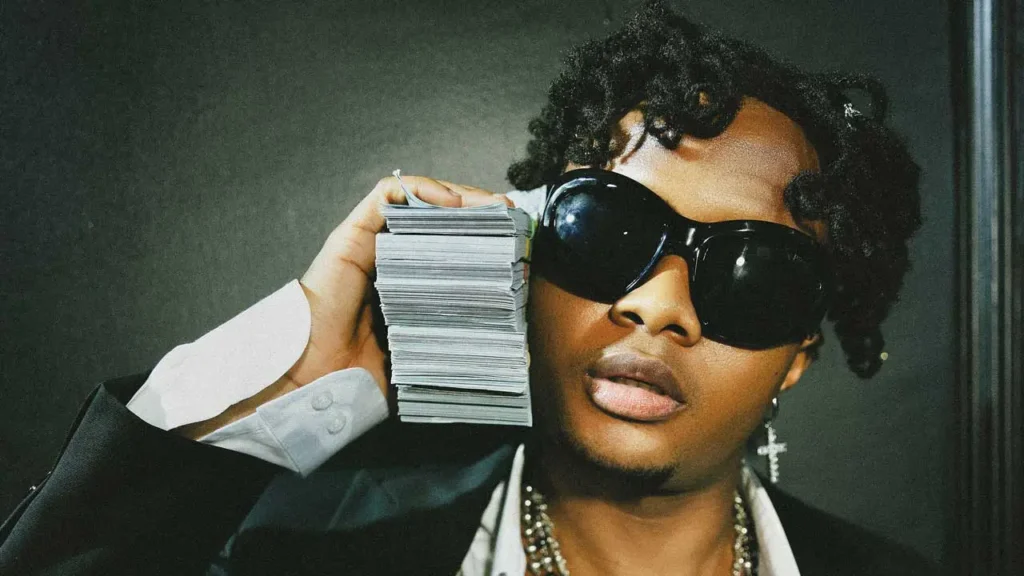
In a deeply emotional and revealing livestream that has since sparked widespread conversation across Nigeria’s entertainment space, Mavin Records artist Crayon, whose real name is Charles Chibueze Chukwu, opened up about personal struggles that fans rarely get to see behind his bright and energetic public image. The conversation, which took place on Thursday night during a live session with popular streamer Carter Efe, shifted far beyond music talk and into the more fragile realities of mental health, family pressure, addiction, and the emotional toll that fame can place on young artists trying to build lasting careers.
Known widely for his upbeat sound and joyful performances, Crayon has often been associated with songs that celebrate youth, love, and energy. However, in this unexpected moment of honesty, he described a very different side of his journey, one marked by psychological strain, overwhelming expectations, and moments of personal breakdown that were hidden from the public during some of his biggest professional successes.
He explained that one of the most difficult periods of his life came in 2022, a year that many fans remember as a breakthrough moment in his career due to the success of major hits like Overloading (Overdose). While his music was dominating charts and gaining massive attention across Africa and beyond, Crayon said he was internally struggling with severe emotional distress that nearly cost him his stability.
According to him, the pressure of trying to remain relevant in an increasingly competitive music industry became mentally exhausting. He spoke about the fear of being forgotten or replaced, a feeling that he said constantly lingered in his mind as new artists emerged and the industry continued to evolve at a fast pace. The expectation to consistently deliver hit songs and maintain visibility added to the stress, creating what he described as an invisible battle that few people around him could fully understand.
Read more on: Blessing CEO Faces EFCC Probe Over Alleged ₦300 Million Cancer Fund Fraud
Beyond industry pressure, he also spoke openly about the burden of family expectations. Crayon explained that becoming successful at a young age placed him in a position where many people relied on him financially and emotionally. What began as a dream come true slowly turned into a responsibility that felt overwhelming. He admitted that supporting family members while still trying to establish his own career created a heavy emotional load that contributed significantly to his mental breakdown.
At his lowest point in 2022, Crayon revealed that he was eventually taken to a medical facility for psychiatric care. He described the experience as a necessary intervention that helped him regain control of his mind and begin the process of healing. According to him, he spent time under professional supervision receiving treatment and therapy, something he now refers to as a turning point in his life rather than a moment of shame.
He credited close friends and members of Mavin Records for stepping in quietly during that period. Rather than making the situation public, he said they focused on protecting him and ensuring he received the help he needed. In his words, they supported him through prayer, emotional encouragement, and structured care until he was strong enough to return to music. He described the experience as one where he felt like he was fighting internal battles that were completely invisible to the outside world, even while continuing to exist in the spotlight.

As the livestream continued, Crayon’s conversation moved into more sensitive territory when he reflected on the early stages of his career and his experiences within the music industry. It was during this segment that he made remarks involving Afrobeats superstar Tiwa Savage, a statement that has since generated intense public debate and mixed reactions online.
Crayon recounted an incident from 2018, when he was still an emerging artist trying to find his footing in the industry. At the time, he said he had a strong admiration for Tiwa Savage, whom he referred to as one of his senior colleagues and someone he looked up to deeply. According to his account during the livestream, he described an interaction in which Tiwa allegedly introduced him to a substance he referred to as “Backy,” which he described as a strong blend often associated with smoking.
Read more on: Orezi Remembers Late Father, Calls Out Leaders Over Nigeria’s Failing System
He claimed that during the interaction, he was asked whether he smoked and, after responding affirmatively, was introduced to the substance. He further suggested that this moment contributed to habits he later struggled with during his early years in the industry. His comments have not been independently verified, and Tiwa Savage has not issued any public response regarding the specific claims made during the livestream.
The mention of such a high profile figure quickly sparked widespread reactions across social media, with discussions dividing public opinion. Some users have raised concerns about the culture within parts of the entertainment industry, particularly regarding substance use and the influence senior figures may have on younger artists. Others have cautioned against drawing conclusions based on a single personal account, especially one shared during an emotional livestream without additional context or corroboration.
The situation has also reopened broader conversations about mentorship dynamics within the Nigerian music industry. Many observers are now questioning how young artists are guided when they enter the industry, and whether enough structures exist to protect them from negative influences while they are still adjusting to fame, pressure, and financial responsibility.
In addition to his mental health disclosures and the Tiwa Savage remarks, Crayon also addressed ongoing tension between himself and the leadership of Mavin Records, particularly label founder Don Jazzy. He referenced earlier claims in which he suggested that a significant financial support arrangement, reportedly valued at a very large sum, had not been fulfilled as expected.
While he did not go into extensive detail during the livestream, he implied that misunderstandings and unmet expectations had created strain in his relationship with the label. However, he also made it clear that despite any disagreements, he still holds Mavin Records in high regard. He described the label as an important part of his survival during his most difficult moments, particularly during his psychiatric treatment, when he said the company ensured he was protected and supported.
Read more on: Adekunle Gold and Olamide Finally Drop First-Ever Track
This mix of appreciation and frustration reflects a more complicated picture of the relationship between artists and record labels, especially in an industry where financial expectations, career growth, and personal well being often intersect in difficult ways. Crayon’s remarks suggest that while professional support structures exist, they are not always free from tension or misunderstanding.
His revelations also come at a time when mental health in the Nigerian music industry is receiving increased attention. Over the past few years, several artists have spoken publicly about emotional struggles, burnout, and the pressure of fame. Crayon referenced this broader context during his livestream, pointing to the need for more open conversations about mental health and better systems of support for artists navigating sudden fame and financial responsibility at a young age.
He also acknowledged the role of fellow artist Rema, whom he described as a close source of emotional support during some of his more difficult periods. According to him, Rema’s presence and encouragement helped him stay grounded during moments when he felt overwhelmed. He further emphasized the importance of professional therapy in his recovery, noting that structured medical help played a crucial role in stabilizing his mental health and helping him rebuild his life and career.
Reflecting on his journey, Crayon described his recent music as an expression of healing and renewed purpose. He suggested that his post recovery work represents a more grounded and self aware version of himself, shaped by both his struggles and his recovery process. Songs like Labalaba, in his view, symbolize a return to joy and a more balanced mental state.
The livestream has since sparked widespread discussion not only about Crayon’s personal experiences but also about the broader realities of fame, pressure, and mental health within the entertainment industry. While some see his openness as a courageous step toward breaking stigma, others are calling for caution regarding sensitive allegations involving public figures.
At the center of the conversation now is a larger question about the environment young artists are entering and the kind of support systems that exist to guide them through fame, responsibility, and personal challenges. Crayon’s account has added another layer to ongoing debates about how the industry handles vulnerability, accountability, and wellbeing in a space where success often comes with intense psychological pressure.
Read more on:
- Wizkid Blasts Burna Boy Over DJ Tunez Fight, Trolls Him With Baby Oil Posts
- DJ Tunez Speaks Out After Clash with Burna Boy
- Omah Lay Responds to Viral Performance That Reportedly Ended a Relationship in 2024
- Burna Boy and DJ Tunez’s Chaotic Fight at Obi’s House
- Burna Boy and DJ Tunez’s Chaotic Fight at Obi’s House