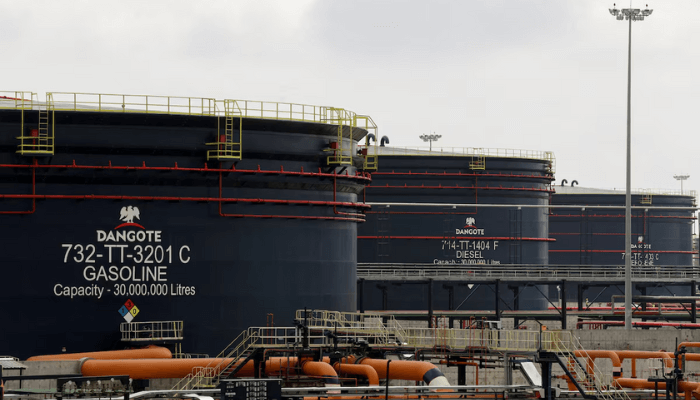
Nigeria’s energy sector is once again under intense pressure following a fresh round of fuel price increases announced by the Dangote Petroleum Refinery. In what is now the highest adjustment recorded so far in the 2026 fiscal year, the refinery has raised its gantry price for Premium Motor Spirit, commonly known as petrol, to ₦1,275 per litre. At the same time, the price of Automotive Gas Oil, better known as diesel, has climbed sharply to ₦1,950 per litre.
This latest development, which took effect on April 7, 2026, has sent shockwaves across multiple sectors of the Nigerian economy, particularly transportation, manufacturing, and small scale enterprises. It also marks the tenth time fuel prices have been reviewed within the first quarter of the year alone, underscoring just how unstable and unpredictable the domestic fuel market has become in recent months.
A Sharp Rise in Prices
For many Nigerians, the new pricing structure represents a noticeable and painful increase compared to what was obtainable only a few weeks ago. In March 2026, petrol was sold at around ₦1,200 per litre at the gantry level. The jump to ₦1,275 reflects an increase of just over six percent, which may appear moderate on paper but carries significant real world consequences when multiplied across daily consumption.
Diesel has seen an even steeper rise. Previously priced at approximately ₦1,750 per litre, it now stands at ₦1,950. This increase of over eleven percent is particularly concerning because diesel plays a central role in powering industries, heavy duty transportation, and countless small businesses that rely on generators due to inconsistent electricity supply.
Liquefied Petroleum Gas, commonly used for cooking, has not been spared either. Prices have risen from about ₦1,350 per kilogram to ₦1,500, further stretching household budgets at a time when many families are already struggling with inflation.
It is important to note that these figures reflect ex depot or gantry prices, which are the rates at which fuel is sold to marketers. By the time these products reach filling stations, the pump prices are expected to range between ₦1,350 and ₦1,420 per litre depending on location, transportation costs, and retailer margins.
Read more on: Trump Warns of Civilizational Destruction as Iran Deadline Approaches
Understanding the Drivers Behind the Increase
Industry experts and insiders have pointed to a combination of global and local factors that are responsible for the latest surge in fuel prices. These factors form a complex web of pressures that continue to shape the cost of energy in Nigeria despite the presence of a large scale local refinery.
The first and perhaps most significant factor is the sharp rise in global crude oil prices. Brent crude, which serves as a major international benchmark, has climbed above 110 dollars per barrel. Since crude oil is the primary raw material used in refining petrol and diesel, any increase in its price directly affects the cost of finished products. Even though the Dangote Refinery operates within Nigeria, it still procures crude at market reflective rates, meaning it is not insulated from global price fluctuations.
Another major contributor is the growing geopolitical tension in the Middle East, particularly between the United States and Iran. The Strait of Hormuz, a critical shipping route through which a large portion of the world’s oil supply passes, has become increasingly volatile. Disruptions or even the threat of disruptions in this region tend to drive up the cost of securing crude oil shipments, often referred to as replacement costs. For a refinery that must maintain a steady flow of crude to operate at full capacity, these rising costs are inevitably passed down the supply chain.
On the domestic front, inflation continues to play a significant role. The cost of additives used in refining, as well as the logistics involved in distributing fuel across Nigeria, has increased substantially. Diesel, which is used to power transportation trucks, has become more expensive, creating a ripple effect that feeds back into the overall cost of petrol distribution. This interconnected system means that rising diesel prices indirectly push petrol prices even higher.
The Impact on Everyday Life
For ordinary Nigerians, the implications of these price increases go far beyond numbers on a chart. The effects are immediate and deeply felt across daily life.
Transportation costs are often the first to reflect changes in fuel prices, and this situation is no different. In major cities such as Lagos, Abuja, and Port Harcourt, commuters have already begun to experience noticeable increases in fares. Reports indicate that both intra city and interstate transport fares have risen by as much as fifteen to twenty percent within hours of the announcement.
For small business owners, the situation is even more challenging. Many entrepreneurs rely heavily on diesel powered generators to run their operations due to unreliable electricity supply. From hair salons and barbershops to cold rooms and small scale manufacturing units, the rising cost of diesel is placing immense strain on profit margins. Some business owners have described the situation as suffocating, warning that they may be forced to either raise prices or shut down entirely if the trend continues.
Food prices are also expected to rise in the coming weeks. The transportation of agricultural produce from northern Nigeria to urban centers depends heavily on diesel powered trucks. As fuel costs increase, logistics companies are likely to pass on the additional expenses to consumers, leading to higher prices for essential food items.
Read more on: Kebbi Assembly Speaker Muhammad Usman Zuru Dies in Cairo After Prolonged Illness
Public Reactions and Growing Debate
As expected, the latest price hike has sparked widespread debate across social media and public discourse. Opinions are sharply divided, with some individuals defending the refinery while others are openly critical.
Supporters of the Dangote Refinery argue that despite the increases, locally refined fuel still offers advantages compared to the previous system of import dependence. They point out that if Nigeria were still relying entirely on imported fuel, prices could be even higher given the current global market conditions.
On the other hand, critics question why a domestic refinery should be so heavily influenced by external factors. Many Nigerians had hoped that local refining would provide a buffer against international price shocks and bring some level of stability to the market.
Popular social commentators, including figures like VeryDarkMan, have added their voices to the conversation. Some have called on the government to step in and provide relief, particularly by reviewing policies such as the naira for crude arrangement. The expectation among critics is that such measures should help cushion the impact of global price increases on local consumers.
What Lies Ahead
With the situation still evolving, industry stakeholders are closely monitoring developments. The Independent Petroleum Marketers Association of Nigeria is expected to hold discussions aimed at determining a unified retail pricing strategy in response to the new gantry rates.
Meanwhile, the Nigerian Midstream and Downstream Petroleum Regulatory Authority has urged the public to remain calm, assuring that fuel supply across the country remains stable despite the price adjustments.
However, the broader outlook remains uncertain. As long as global crude oil prices remain elevated and geopolitical tensions persist, there is little indication that fuel prices will stabilize in the near future.
Read more on: FG Sets Aside ₦135 Billion for 2027 Election Legal Disputes
The Bigger Picture
The recent developments highlight a fundamental reality of today’s energy market. Even with significant investments in local refining capacity, Nigeria remains closely tied to global economic and political dynamics. The dream of completely insulating the country from international shocks may not be entirely realistic in the current landscape.
For now, Nigerians are left to navigate the immediate challenges posed by rising fuel costs, while policymakers, industry players, and analysts continue to search for long term solutions.
What is clear is that the era of cheap fuel is becoming increasingly distant. As the cost of energy continues to rise, its impact will be felt across every sector of the economy, shaping not only business operations but also the everyday lives of millions of people.
Read more on:
- ADC Faces Existential Crisis as INEC Issues 72-Hour Ultimatum
- Bloodshed on Easter Sunday as Gunmen Strike Kaduna Community
- Man Arrested for Burning His Father Alive in Kazaure
- Minister of State for Labour Onyejeocha Nkeiruka Exits Tinubu Cabinet
- INEC’s Voter Revalidation Plan Sparks Nationwide Political Tension
- 11 Killed, Dozens of Homes Destroyed in Deadly Reprisal Attack