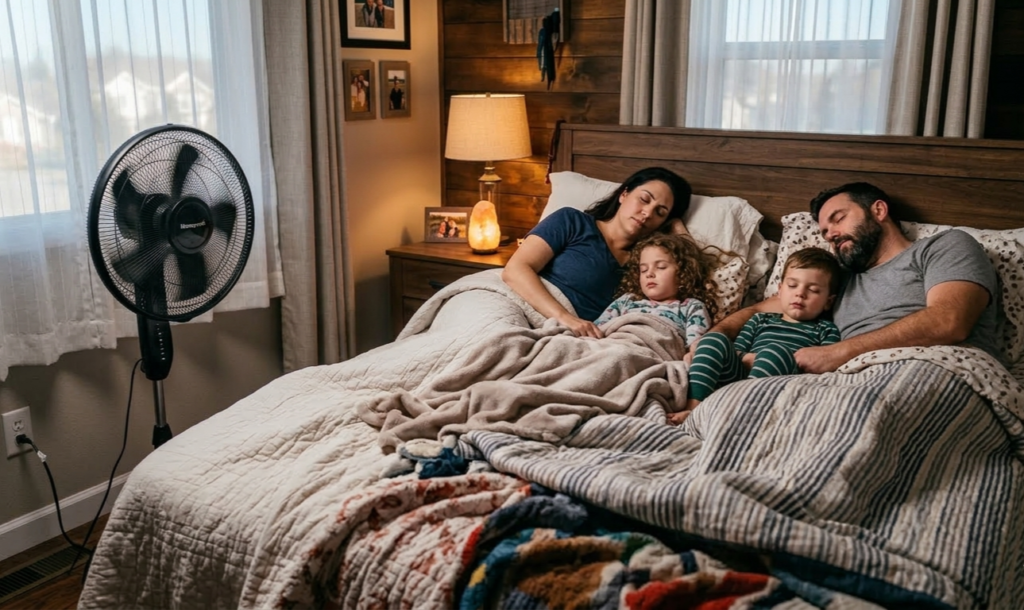
Many people rely on a fan to get through hot nights, but some wonder if it could have an impact on their health. While a fan can make sleeping in warm weather much more comfortable, doctors say there are a few potential downsides to keep in mind, such as dryness, allergies, and muscle stiffness.
If you grew up in Nigeria, you’ve probably heard someone say that sleeping with a fan can make you sick or leave you waking up with body pains. Yet, in a country where nighttime heat can be intense, fans are almost a necessity. So the real question is whether sleeping with a fan is actually harmful or just another common household belief.
Here’s what doctors and sleep experts say.
1. It Can Dry Out Your Nose, Throat, and Eyes

One of the most common issues doctors mention is dryness. When a fan blows air continuously across your body or face, it can dry out your nasal passages, throat, and eyes.
This may cause you to wake up with a scratchy throat, dry mouth, or irritated eyes. People who already struggle with allergies or sinus problems may notice their symptoms becoming worse.
2. It Can Circulate Dust and Allergens
Fans do not just move air. They also circulate whatever particles are already in the room, including dust, pollen, pet dander, and mold.
Sleep and allergy experts say that a fan running all night can stir up these particles, especially if the room is not clean. For people with allergies or asthma, this could trigger symptoms. Because of this, doctors recommend cleaning your fan regularly and keeping your bedroom tidy.
3. It May Lead to Muscle Stiffness

Some people also complain about waking up with neck or shoulder pain after sleeping with a fan blowing directly on them.
Cold air hitting one part of the body for several hours can sometimes cause muscles to tighten. This may result in a stiff neck, sore shoulders, or mild body aches the next morning. While this does not happen to everyone, doctors advise avoiding direct airflow on your body throughout the night.
4. It Can Worsen Congestion for Some People
For individuals with sinus issues, sleeping with a fan on might make morning congestion worse. Continuous airflow can dry out the nose, and the body may respond by producing more mucus to compensate.
This can lead to that blocked-nose feeling some people experience when they wake up. However, this reaction varies from person to person.
How to Use a Fan Safely While Sleeping
If you enjoy sleeping with a fan, you do not necessarily need to stop. Doctors simply suggest making a few adjustments:
- Avoid pointing the fan directly at your face or body. Let it circulate air around the room instead.
- Clean the fan regularly to prevent dust buildup.
- Keep your bedroom clean to reduce allergens.
- Drink enough water to help prevent dryness.
- If possible, use a timer so the fan cools the room while you fall asleep and switches off later.
So, Is Sleeping With a Fan Bad for You?
For most people, the answer is no. In fact, a fan is one of the easiest ways to stay cool and sleep better during hot weather.
However, if you often wake up with a dry throat, allergy symptoms, or muscle stiffness, the issue may be related to how the fan is positioned, how clean it is, or how long it runs.
When used properly, a fan can make a big difference, especially on humid nights when sleeping without one feels almost impossible.