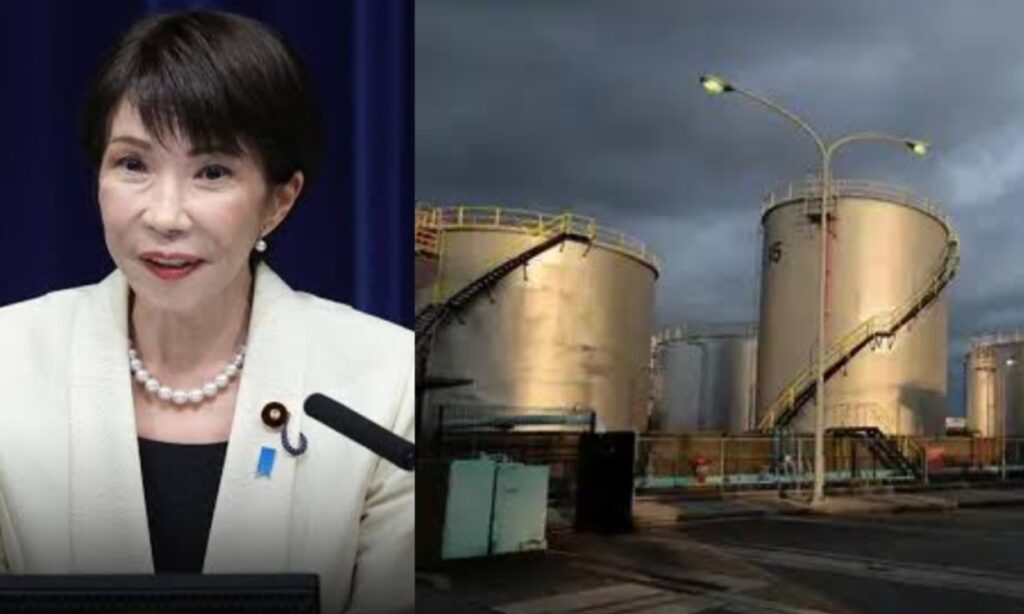
Japan has begun releasing part of its strategic oil reserves as part of a coordinated effort led by the International Energy Agency (IEA) to stabilise global oil prices following the ongoing conflict in the Middle East.
The Japanese government announced on Monday that the process had started, after the IEA earlier indicated that countries in the Asia–Oceania region would be the first to release oil from their reserves before similar actions are taken in other parts of the world.
The decision to release oil from emergency stockpiles was agreed upon by IEA member countries on March 11. The move aims to ease rising global oil prices triggered by the Middle East conflict and has been described as the largest coordinated release of oil reserves in history.
Japan, which depends heavily on the Middle East for nearly all of its crude oil imports, confirmed the development through a notice published in its official government bulletin on Monday. The notice stated that the country’s oil reserves “are being lowered,” effectively instructing managers of the national stockpiles to release part of the stored supply in line with the new directive.
Several Japanese media outlets interpreted the notice as confirmation that the release of oil had already begun.
Speaking on the development, government spokesperson Minoru Kihara said the country plans to release an amount of oil equivalent to 15 days of private-sector petroleum demand.
Japan maintains one of the largest strategic petroleum reserves in the world. As of December, the country’s reserves were estimated to exceed 400 million barrels, enough to cover about 254 days of domestic oil consumption.
Meanwhile, the Minister of Economy, Trade and Industry, Ryosei Akazawa, explained that oil from private-sector reserves would be released first before the government begins tapping into its own stockpiles.
Earlier, Japan’s Prime Minister, Sanae Takaichi, also indicated that the country could release roughly one month’s worth of its national oil reserves as part of the international effort to stabilise energy markets.
According to the IEA, a total of 271.7 million barrels of oil from government-controlled reserves around the world will be made available under the coordinated plan.
The agency stated that member countries had already submitted their implementation strategies.
“Individual implementation plans have been submitted to the IEA by member countries. These plans indicate that stocks will be made available immediately by IEA member countries in the Asia–Oceania region,” the agency said in a statement.
It further noted that member countries in the Americas and Europe are expected to begin releasing oil from their reserves towards the end of March.
The coordinated action is intended to help ease pressure on global energy markets and reduce the impact of supply disruptions caused by the ongoing Middle East crisis.