Menopause is a natural stage in a woman’s life, but for many, the changes can feel confusing or even overwhelming. Knowing when it starts and understanding the symptoms can make a big difference in how you manage this phase.
This guide explains menopause from a medical point of view, in a way that is clear and easy to follow.

What Is Menopause
Menopause is the point when a woman permanently stops having menstrual periods. It is confirmed after 12 consecutive months without a period, with no other medical reason.
It happens because the ovaries gradually reduce the production of key hormones, especially estrogen and progesterone. These hormones control the menstrual cycle and support many systems in the body, including the brain, bones, heart, and reproductive organs.
When Menopause Usually Begins
Most women experience menopause between the ages of 45 and 55, with the average age around 51.
However, menopause does not begin suddenly. It develops over time through a transition phase called Perimenopause.
Perimenopause often starts in the mid 40s, though some women may notice changes as early as their late 30s. This stage can last several years before menopause is reached.
After menopause, a woman enters Postmenopause, which continues for the rest of her life.
The Stages of Menopause
Perimenopause
This is the early transition phase where hormone levels begin to fluctuate.
Ovulation becomes irregular, and estrogen levels rise and fall unpredictably. This is why many of the first symptoms appear during this stage.
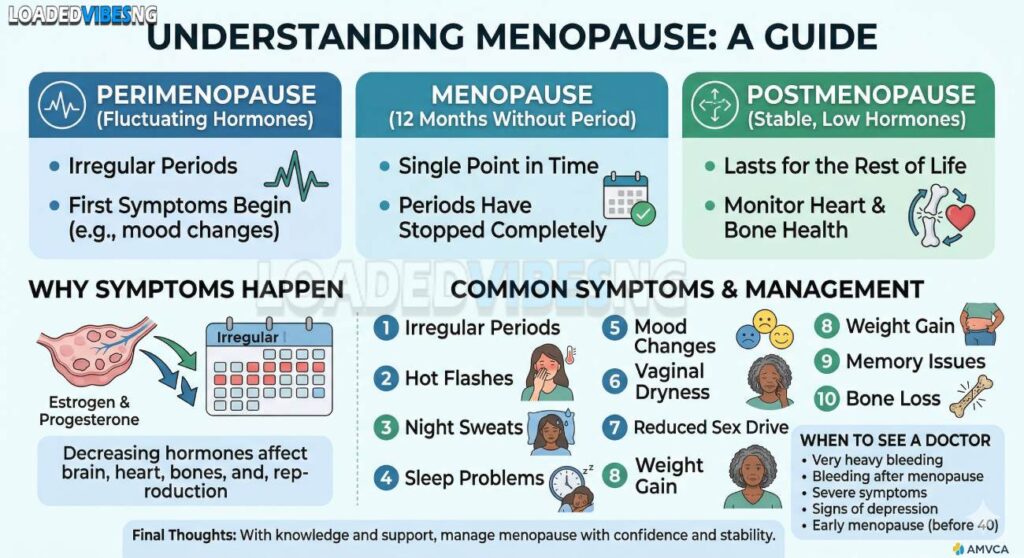
Menopause
This is a single point in time when menstruation has stopped for 12 months.
At this stage, the ovaries produce very low levels of hormones.
Postmenopause
After menopause, hormone levels remain low and stable.
Some symptoms may improve, but long term health changes, especially related to bones and the heart, become more important to monitor.
Why Symptoms Happen
Most menopause symptoms are caused by a drop in estrogen.
Estrogen plays a role in many body functions, including:
- Regulating body temperature
- Supporting brain function and mood
- Maintaining vaginal and urinary health
- Protecting bone strength
- Controlling fat distribution and metabolism
When estrogen levels decline, these systems react, leading to the symptoms associated with menopause.
Common Symptoms of Menopause
1. Irregular Periods
This is usually the first noticeable sign. Periods may become unpredictable. They can be heavier, lighter, shorter, or farther apart.
2. Hot Flashes
Hot flashes are sudden feelings of heat, often affecting the face, neck, and chest.
They occur due to changes in how the brain controls body temperature. Even small temperature changes can trigger a strong heat response.
3. Night Sweats
These are hot flashes that occur during sleep and can cause heavy sweating and frequent waking.
4. Sleep Problems
Many women struggle with sleep during menopause.
This may be due to hormonal changes, night sweats, or increased anxiety. Poor sleep can also worsen fatigue and mood.
5. Mood Changes
Hormonal fluctuations can affect brain chemicals that regulate mood.
This may lead to:
- Irritability
- Anxiety
- Low mood
- Reduced emotional stability
6. Vaginal Dryness and Discomfort
Lower estrogen levels can cause thinning and dryness of vaginal tissues. This condition is medically known as Genitourinary Syndrome of Menopause.
It may lead to discomfort, pain during intercourse, and increased risk of infections.
7. Reduced Sex Drive
Changes in hormones, combined with physical discomfort or emotional factors, may reduce sexual desire.
8. Weight Gain
Many women notice weight gain, especially around the abdomen.
This is linked to hormonal changes, slower metabolism, and reduced muscle mass with age.
Read also:
- How i slept with my son-in-law while my daughter was in labor
- Top 21 Signs of a Toxic Relationship (And What You Should Do)
- 10 Simple Lifestyle Tips to Improve Your Daily Life
- The Atkins Diet: What It Is, How It Works, Benefits, Risks and Food Guide (Infographics)
- Caring for Oily Skin: A Practical Guide That Actually Works
- Why You Should Run From Toxic Relationships and How to Protect Your Happiness
- End of an Era: Mohamed Salah Confirms Liverpool Exit
- Is the Milk Carton Becoming Obsolete? How 3D-Printed “Milk Slices” Are Changing the Game
- AMVCA 2026: All You Need to Know Ahead of the Nominee Reveal
- Davido Announces First London Festival “Davido and Friends”
- Bobrisky’s Ex-worker Oye says: PA During the Day but We Slept Together at Night
9. Memory and Concentration Issues
Some women experience forgetfulness or difficulty focusing. These symptoms are usually mild but can be frustrating.
10. Bone Loss
Estrogen helps protect bone density. After menopause, bones may become weaker over time, increasing the risk of fractures.
11. Skin and Hair Changes
Reduced collagen production can lead to dry skin, wrinkles, and thinning hair.
Early Signs of Menopause
Before menopause, during perimenopause, you may notice:
- Changes in menstrual cycle
- Hot flashes starting mildly
- Breast tenderness
- Fatigue
- Headaches
- Worsening premenstrual symptoms
These signs can appear years before periods stop completely.
Early or Premature Menopause
When menopause occurs before age 40, it is known as Premature Menopause.
Possible causes include:
- Genetic factors
- Autoimmune conditions
- Medical treatments such as chemotherapy
- Surgical removal of the ovaries
Early menopause should always be evaluated by a healthcare professional because of its long term health impact.
When to See a Doctor
You should seek medical advice if you experience:
- Very heavy or unusual bleeding
- Bleeding after menopause
- Severe symptoms affecting daily life
- Signs of depression or anxiety
- Menopause before age 40
A doctor can help confirm the stage you are in and recommend appropriate treatment or lifestyle changes.
Final Thoughts
Menopause is a natural biological process, but it affects each woman differently.
Understanding when it begins and recognizing the symptoms early allows you to manage the changes better and protect your long term health.
With the right knowledge and support, this stage of life can be handled with confidence and stability.