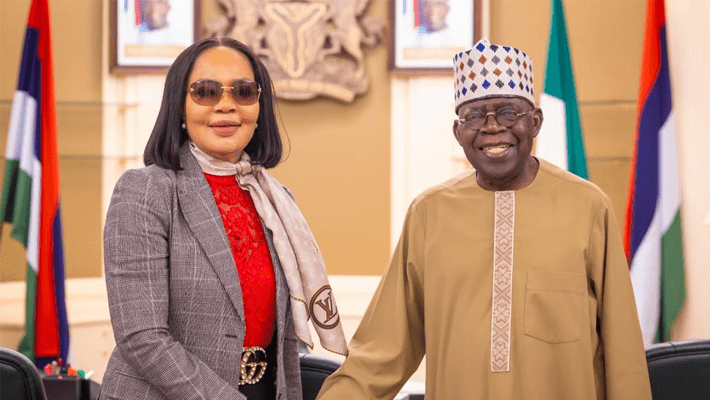
Nigeria’s political environment is beginning to shift in a significant way as the build up to the 2027 general elections gathers momentum. One of the clearest signs of this transition emerged on Friday, April 3, 2026, when the Minister of State for Labour and Employment, Honorable Barrister Nkeiruka Onyejeocha, formally announced her resignation from office. Her decision marks a notable moment in the current administration and signals the start of a broader movement among political office holders preparing for the next electoral cycle.
The announcement was made through a personal and reflective statement shared on her official X account, where she described her time in government as a meaningful and defining chapter in her public service journey. Her exit adds to a growing list of high profile resignations within the Federal Executive Council, making her the third minister to step down within the same week. These developments are closely tied to a directive issued earlier by President Bola Ahmed Tinubu, which has begun to reshape the composition of his cabinet.
At the heart of Onyejeocha’s resignation lies a policy decision designed to promote fairness and accountability as the country approaches another election period. Earlier in the year, President Tinubu instructed all political appointees who intend to contest elective positions in the 2027 general elections to vacate their offices no later than March 31, 2026. This directive was communicated through the Office of the Secretary to the Government of the Federation and has since triggered a wave of exits among ministers and other top officials.
The rationale behind this move is rooted in the need to create a level playing field for all aspirants. By stepping down ahead of the party primaries, which are scheduled to take place between April and May, these officials are expected to separate their public responsibilities from their personal political ambitions. This approach also aligns with the provisions of the Electoral Act 2026, which emphasizes transparency and fairness in the electoral process. One of the key concerns addressed by the directive is the potential misuse of government resources. By requiring ministers to resign before actively pursuing political office, the administration aims to prevent any advantage that could arise from access to state funds, influence, or institutional power.
Read more on: Chief of Staff Survives Ambush While Plateau Faces Renewed Killings
Although Onyejeocha tendered her resignation a few days after the official deadline, her decision clearly indicates her intention to return to the political arena. Her departure from the cabinet is widely seen as a strategic move, allowing her to fully focus on her next political ambition without the constraints of holding a ministerial position.
In her farewell message, Onyejeocha expressed deep appreciation to President Tinubu for the opportunity to serve under his leadership. She described her role in the administration as both an honor and a privilege, highlighting her involvement in advancing the Renewed Hope agenda. Her words carried a tone of gratitude and optimism, as she framed her exit not as a conclusion but as the beginning of a new phase in her career.
She also extended her appreciation to the staff and leadership of the Federal Ministry of Labour and Employment. According to her, their dedication and professionalism played a vital role in achieving the ministry’s objectives during her tenure. She pointed to efforts aimed at improving workers’ rights, enhancing labor relations, and creating employment opportunities as some of the key areas where progress was made. Her acknowledgment of the ministry’s workforce reflects the collaborative effort that defined her time in office and underscores the importance of teamwork in public administration.
As soon as news of her resignation broke, attention quickly shifted to her next political move. Onyejeocha is a well known figure in Nigerian politics, particularly in Abia State, where she built a strong reputation during her years in the National Assembly. She served in the House of Representatives for sixteen years, representing the Isuikwuato and Umunneochi Federal Constituency from 2007 to 2023. During that period, she established herself as an influential legislator with a solid political base.
Given her experience and track record, many observers believe that she may be preparing to contest for her former seat in the House of Representatives. Such a move would allow her to leverage her established support network and return to a familiar political environment. However, there is also considerable speculation that her ambitions may go beyond that. Political analysts within Abia State have suggested that she could be considering a bid for the Senate or even the governorship. While she has not publicly declared her intentions, her resignation has intensified discussions about her future and positioned her as one of the key figures to watch in the coming months.
Read more on: Seven Family Members Among Ten Abducted in Katari Attack
Her departure also creates a gap in the federal cabinet, particularly in terms of regional representation. With Onyejeocha stepping down, Abia State currently has no representative in the Federal Executive Council. This development is likely to prompt the President to make a new appointment in order to maintain balance and ensure that all states continue to have a voice at the federal level. Such a decision is expected to be part of a broader cabinet reshuffle that may take place soon.
The ongoing changes within the cabinet point to a period of transition for the administration. Onyejeocha is not alone in her decision to leave office in pursuit of political ambitions. Other ministers have taken similar steps, reflecting a wider trend as the political landscape begins to shift. Among them is the former Minister of Transportation, Saidu Ahmed Alkali, who resigned in order to pursue the governorship of Gombe State. Similarly, Yusuf Maitama Tuggar stepped down from his role as Minister of Foreign Affairs to join the governorship race in Bauchi State. These departures highlight the growing intensity of political activity as the 2027 elections draw closer.
With several key positions now vacant, there is increasing anticipation regarding the President’s next move. A cabinet reshuffle appears imminent, and it is expected to bring in new faces who will help drive the administration’s agenda during this transitional period. This moment presents both a challenge and an opportunity for the government. On one hand, the loss of experienced officials could create temporary gaps in leadership. On the other hand, it provides a chance to introduce fresh perspectives and strengthen the administration’s capacity to deliver on its promises.
Read more on: Obi Criticizes Tinubu’s Airport Visit as “Leadership Failure”
The impact of these developments extends beyond the federal cabinet. For the ministers who have resigned, the focus now shifts from governance to political mobilization. They will need to reconnect with their constituencies, build alliances, and position themselves effectively for the upcoming primaries. This transition from administrative roles to active campaigning is a critical phase that will test their political strength and influence.
In the case of Onyejeocha, her departure marks the end of her tenure at the Labour Ministry, where she played a role during a period that involved complex negotiations with organized labor and efforts to address employment challenges. Her time in office was characterized by engagement with key stakeholders and attempts to improve conditions for Nigerian workers. As she steps away from this role, her legacy within the ministry will be assessed in terms of the policies implemented and the progress achieved.
As Nigeria moves closer to the 2027 elections, developments like this serve as clear indicators of the shifting priorities within the political space. Governance and electoral ambitions are beginning to intersect, creating a dynamic environment where decisions made today will have far reaching implications for the future.
For now, all eyes remain on both the outgoing ministers and the President. Observers are keen to see how those who have resigned will navigate the path back to electoral politics and how the administration will respond through new appointments and strategic adjustments. The coming weeks are likely to bring further announcements and developments, each adding another layer to an already evolving political story.
In many ways, Onyejeocha’s resignation is more than just a personal career move. It is part of a broader narrative that reflects the beginning of a new political cycle in Nigeria. As the country prepares for another round of elections, the actions of key figures like her will continue to shape the direction of the nation’s political journey.
Read more on:
- Nation on Edge: Tinubu Redirects Visit to Plateau as UNIJOS Orders Urgent Student Evacuation
- Iran Issues Stark Warning to U.S. Tech Firms as Conflict Enters Dangerous New Phase
- Governor Sanwo-Olu Launches 2026 Budget of Shared Prosperity, Focuses on Growth and Infrastructure
- El-Rufai in Fresh Legal Developments as Courts Adjourn Bail, Allow Suit Withdrawal