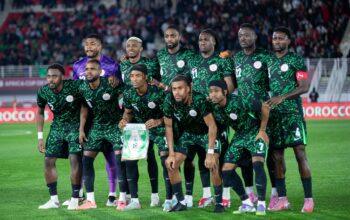
The long and demanding journey to North America has finally reached its emotional climax. After years of qualifiers, exhausting travel across continents, and countless moments of tension and drama, the full lineup for the 2026 FIFA World Cup is now officially set.
On a night filled with passion, tears, and history-making performances, the final two spots were decided through the inter-confederation play-offs. For two nations, it marked the end of decades-long absences from football’s biggest stage. For the rest of the world, it confirmed a tournament that will look strikingly different from anything seen before.
Iraq’s Long-Awaited Return
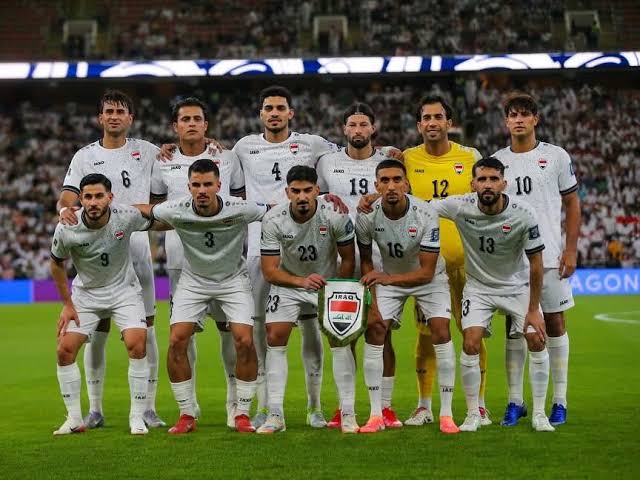
At the BBVA Stadium in Guadalupe, Iraq authored one of the most emotional stories of the qualification campaign. Known as the “Lions of Mesopotamia,” they secured their place at the World Cup for the first time in 40 years with a hard-fought 2–1 victory over Bolivia.
The significance of the moment was evident as head coach Graham Arnold broke down in tears at the final whistle. Over recent months, Arnold has had to do more than just prepare a team tactically he has also worked to shield his players from the psychological strain tied to ongoing challenges back home. In doing so, he has molded a squad defined by discipline, unity, and resilience.
The match itself started in electric fashion. Ali Al-Hamadi opened the scoring just 10 minutes in, powering home a header that instantly ignited celebrations among Iraqi fans. Bolivia responded before halftime through Moises Paniagua, briefly restoring tension to the contest.
However, Iraq’s determination proved decisive. Early in the second half, Aymen Hussein arguably the team’s standout performer throughout the campaign finished off a well-delivered cross in the 53rd minute to reclaim the lead. From there, Iraq held firm under late pressure, showing composure and grit to see out the result.
Their qualification carries a poetic twist: their last World Cup appearance came in Mexico in 1986, and now, four decades later, they have once again sealed their place on Mexican soil.
After the match, Arnold made it clear that his team is not heading to the tournament merely to participate. With France, Senegal, and Norway awaiting them in Group I, he issued a strong statement of intent, emphasizing that Iraq has been hardened by adversity and is ready to challenge the world.
Read more on: Super Eagles Out Again as Africa’s 2026 World Cup Teams Are Confirmed
DR Congo Ends a 52-Year Drought
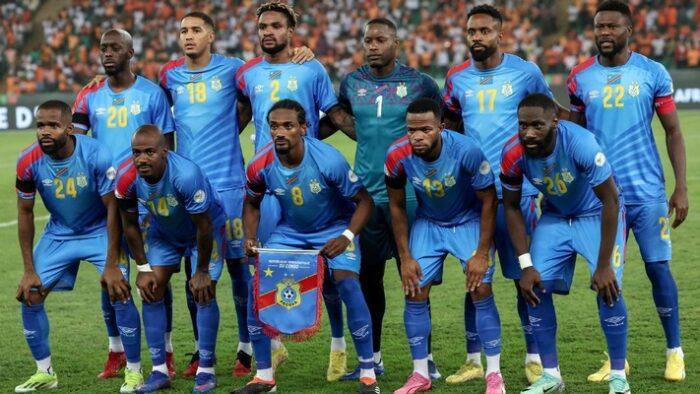
While Iraq celebrated in Monterrey, another historic breakthrough was unfolding at the Akron Stadium in Zapopan. DR Congo secured their return to the World Cup with a narrow 1–0 victory over Jamaica, ending a 52-year absence from the competition.
Previously known as Zaire during their 1974 appearance, the Leopards have long been considered a sleeping giant in African football. This time, they navigated the expanded qualification format and a difficult play-off route to finally reclaim their place among the global elite.
The decisive moment came in extra time after a tightly contested and goalless 90 minutes. Defender Axel Tuanzebe emerged as the unlikely hero, reacting quickest to a loose ball from a corner and finishing from close range to send his nation into jubilation.
Back in Kinshasa, celebrations reportedly erupted instantly, with fans flooding the streets in scenes of pure joy. For DR Congo, this qualification is more than just a return it signals the beginning of what many hope will be a sustained rise in African football.
Read more on: Infantino Shuts Down Iran World Cup Exit Rumors Amid Rising Tensions
Shock Exits and Fallen Giants
While the play-offs delivered unforgettable moments for emerging nations, they also confirmed a series of shocking eliminations. Despite the expansion to 48 teams intended in part to give traditional powerhouses more margin for error several big names failed to make the cut.
The most startling absence is Italy. The four-time World Cup champions have now missed three consecutive tournaments after suffering a penalty shootout defeat to Bosnia and Herzegovina. What was once unthinkable has now become a prolonged crisis, marking at least 16 years away from football’s grandest stage.
Nigeria also fell short, losing out during their qualification path to DR Congo, meaning one of Africa’s most prominent footballing nations will not be part of the tournament. Poland, led by veteran striker Robert Lewandowski, bowed out in a dramatic 3–2 defeat to Sweden, bringing an emotional end to his international journey. Denmark, another strong European side, were eliminated by Czechia in a tense penalty shootout.
A World Cup Like No Other
With Iraq and DR Congo completing the final lineup, the 2026 World Cup promises to usher in a new era for international football. The expanded format has created room for fresh stories, new rivalries, and a broader representation of global talent.
Read more on: Salah Set to Leave Liverpool as Egypt Warns Against MLS Move
Some of the group stage matchups already hint at the drama to come. Group A features hosts Mexico alongside South Africa, South Korea, and Czechia. Group I stands out as a particularly challenging pool, with France, Senegal, Iraq, and Norway set to battle it out. Meanwhile, Group K will see defending champions Argentina face Algeria, DR Congo, and Uzbekistan.
As the qualification dust settles, it is clear that the narrative of international football is shifting. The dominance of traditional powerhouses is no longer guaranteed, and the rise of nations like Iraq and DR Congo underscores a changing landscape.
The 2026 World Cup is no longer just about the usual giants it is shaping up to be a tournament defined by new voices, long-awaited returns, and the unpredictable beauty that makes football the world’s game.
Read more on: