The political atmosphere in Nigeria reached a critical point on Friday, April 3, 2026, following a sharp critique by Peter Obi, the former Labour Party presidential candidate. Obi openly criticized President Bola Ahmed Tinubu for his recent visit to Plateau State, describing the President’s decision to meet with victims of the Palm Sunday killings from the airport tarmac as both irresponsible and a stark demonstration of absent leadership.
This controversy arises in the wake of a tragic attack that occurred in the Angwan Rukuba community of Jos North on Palm Sunday, which reportedly claimed at least twenty-eight lives and left dozens more injured. The attack has drawn nationwide attention to the increasingly fragile security situation in Plateau State, a region once celebrated for its peaceful coexistence and tourism potential.
The source of immediate public outrage was the manner in which the President conducted his visit to Plateau State on Thursday, April 2. Rather than traveling to the affected neighborhoods to engage directly with victims and witness the aftermath firsthand, President Tinubu met with grieving residents, traditional rulers, and state officials in a hall adjoining the Yakubu Gowon Airport in Heipang, near Barkin Ladi. The decision to hold the engagement at the airport rather than at the heart of the devastated communities drew widespread criticism and sparked debate over the nature of leadership during crises.
Read more on: Double Blow to Northern Nigeria: Chief of Staff Survives Ambush While Plateau Faces Renewed Killings
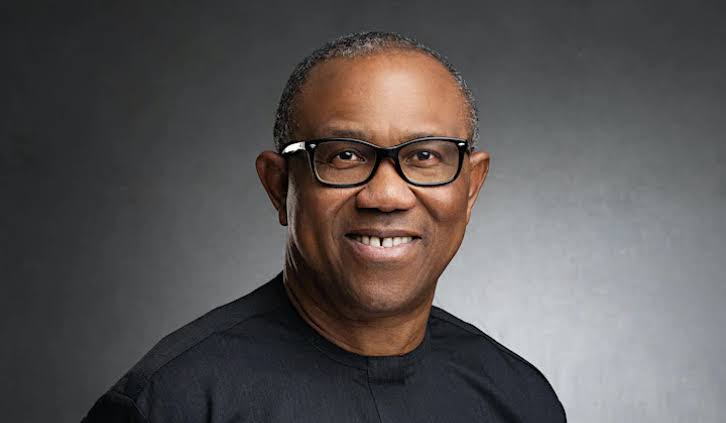
Peter Obi’s response was swift and strongly worded. In a statement released on Friday, he argued that true leadership demands not only policy and rhetoric but physical presence and empathy. According to Obi, addressing citizens who have just lost loved ones and been displaced from their homes from the confines of an airport terminal is insufficient. He stated that leadership involves sharing in the pain of those affected, demonstrating compassion, and being visible in the spaces where suffering occurs. Obi further argued that this approach is part of a troubling pattern. He cited a June 2025 visit by President Tinubu to Benue State, where the President reportedly addressed victims of violence from the Government House without visiting the actual sites of the attacks. Obi suggested that repeated reliance on distant, staged appearances reflects a disconnect between government officials and the communities they are meant to serve.
The Presidency responded quickly to the critique. Bayo Onanuga, Special Adviser to the President on Information and Strategy, defended the President’s actions, highlighting logistical constraints and the necessity of a structured itinerary. The statement emphasized that President Tinubu had spent the morning of his visit receiving Chadian President Mahamat Idriss Déby Itno in Abuja before traveling to Plateau State. According to the administration, the President’s schedule required strict adherence to time constraints to ensure that subsequent engagements, including a planned visit to Iperu in Ogun State, could proceed without disruption.
Read more on: The Struggle for 2027: ADC Faces Internal Turmoil as PRP Courts Atiku, Obi, and Kwankwaso Amid David Mark’s Defiance
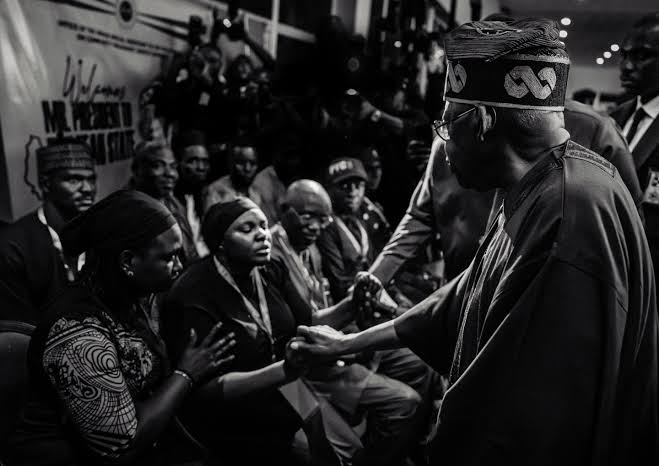
The Presidency also defended the airport meeting as a strategic and effective means of engagement. By bringing representatives of affected communities to a central location, the administration argued that the President was able to engage multiple stakeholders efficiently, including victims, traditional leaders, and state officials. During the session, President Tinubu reportedly addressed a woman whose video showing her holding her deceased son had gone viral. The President told her that he understood her pain and that he had seen the video. The administration further highlighted the announcement of new measures to improve security in Jos, including the deployment of 5,000 artificial intelligence-enabled surveillance cameras aimed at monitoring the region and assisting law enforcement in identifying perpetrators of violence.
Despite these defenses, the opposition remains unconvinced. Peter Obi’s critique was echoed by former Vice President Atiku Abubakar, who argued that victims may have been transported from their homes to the airport to create a staged image for media coverage. Critics contend that by failing to visit the actual sites of destruction, the President missed an opportunity to understand the extent of the security breakdown on the ground. They argue that transporting victims to the airport reduces a human tragedy to a choreographed spectacle, prioritizing optics over genuine engagement and accountability.
The broader security context in Plateau State amplifies the gravity of the situation. Once known as the Home of Peace and Tourism, Plateau has in recent years witnessed a resurgence of violent attacks. According to former Governor Jonah Jang, more than 160 communities have been destroyed or occupied by armed groups over successive administrations. Residents continue to navigate a precarious security environment, and the Palm Sunday attack is just one example of the ongoing threat to civilian life. The state has intermittently imposed curfews, and although the 48-hour curfew following the recent attack has been lifted, the general atmosphere remains tense. The arrest of an individual impersonating a soldier in the aftermath of the killings underscores the chaos and insecurity that continue to plague the region.
Read more on: Enugu Nursing Student Suspended After Viral Video Exposes Hospital Crisis
The political fallout from this episode extends beyond immediate security concerns. Nigeria’s political discourse in 2026 appears to be increasingly shaped by what could be described as empathy politics. Peter Obi’s criticism frames leadership as a matter of human connection, compassion, and moral responsibility, contrasting sharply with the government’s focus on efficiency, technology, and logistics. Obi’s messaging seeks to position the Tinubu administration as detached and elite, out of touch with the lived realities of ordinary citizens suffering from violence and insecurity.
Conversely, the Presidency has leaned into a results-oriented narrative, emphasizing technological solutions such as AI surveillance cameras and enhanced collaboration between federal and state security agencies. Officials argue that these measures demonstrate a proactive approach to preventing future attacks and ensuring that perpetrators are swiftly identified and brought to justice. The government maintains that physical presence, while symbolically important, must be balanced against practical considerations and broader strategic imperatives.
The clash over leadership style has implications for Nigeria’s political landscape as the nation approaches the 2027 general elections. The debate raises fundamental questions about how political leaders are expected to respond to crises, what constitutes effective governance, and how empathy and policy should be balanced in the eyes of the electorate. Citizens witnessing the Jos tragedy and the subsequent airport engagement may form opinions not only about the effectiveness of the Tinubu administration but also about the broader role of political accountability and human-centered leadership in Nigeria.
Moreover, this incident highlights a growing tension in Nigerian politics between optics and substance. While staged appearances and media-managed events can convey an image of responsiveness, they risk alienating communities that perceive these gestures as insincere or disconnected from reality. The Palm Sunday killings, combined with the President’s airport-bound visit, illustrate the challenges of balancing high-level security, logistical demands, and genuine engagement with affected populations.
Read more on: ADC Demands INEC Chairman’s Sack, Warns of ‘One-Party Blueprint’ Ahead of 2027 Elections

For residents of Plateau, the stakes are immediate and personal. Families are grieving lost loved ones, communities are displaced, and the sense of safety has been severely eroded. In this context, political debates over presence versus technological interventions take on profound human significance. The effectiveness of AI surveillance cameras and other federal initiatives will ultimately be measured not just in arrests or data collection but in the restoration of security and confidence in the state’s ability to protect its citizens.
As the political conversation continues to unfold, it is clear that Nigeria is at a crossroads. Leaders must navigate competing pressures: to demonstrate empathy and shared humanity, to deliver tangible policy outcomes, and to reassure citizens that government institutions can effectively respond to crises. The Jos incident and the response from both the Presidency and the opposition highlight the challenges of governance in an environment marked by violence, public scrutiny, and high expectations from a politically engaged population.
The Jos controversy also underscores the evolving nature of political critique in Nigeria. Social media amplification, viral footage, and real-time public feedback are reshaping the way political figures are held accountable. Peter Obi’s critique, while grounded in traditional political commentary, draws power from public outrage and social media discourse, emphasizing the interplay between perception, empathy, and leadership performance.
Ultimately, the dispute over the President’s approach to the Palm Sunday attack reflects deeper issues within Nigerian governance. It raises questions about how leaders prioritize engagements, how they balance safety and symbolism, and how they address public expectations for human-centered leadership. For Plateau State, the immediate concern remains security and recovery. For Nigeria as a whole, the broader concern is the standard of leadership expected in times of crisis and the ways in which empathy, accountability, and results intersect in shaping public trust and political legitimacy.
The unfolding situation will likely influence political narratives, public perception, and electoral strategies in the months leading up to the 2027 general elections. The conversation about leadership in Nigeria is evolving, and the Jos airport controversy has become a defining moment in this dialogue. As citizens and political observers continue to scrutinize the actions of President Tinubu and the responses of opposition figures like Peter Obi and Atiku Abubakar, the nation is witnessing a complex negotiation between policy, optics, and the moral responsibilities of those in positions of power.
The Palm Sunday attack, the President’s airport-bound response, and the ensuing political debate exemplify the profound challenges of governance in modern Nigeria, where security, public expectation, and political legitimacy are constantly intertwined. How leaders navigate these challenges in the coming months will not only affect Plateau State but may also set a precedent for political accountability and crisis management across the country.
Read more on:
- Nation on Edge: Tinubu Redirects Visit to Plateau as UNIJOS Orders Urgent Student Evacuation
- Iran Issues Stark Warning to U.S. Tech Firms as Conflict Enters Dangerous New Phase
- Governor Sanwo-Olu Launches 2026 Budget of Shared Prosperity, Focuses on Growth and Infrastructure
- El-Rufai in Fresh Legal Developments as Courts Adjourn Bail, Allow Suit Withdrawal