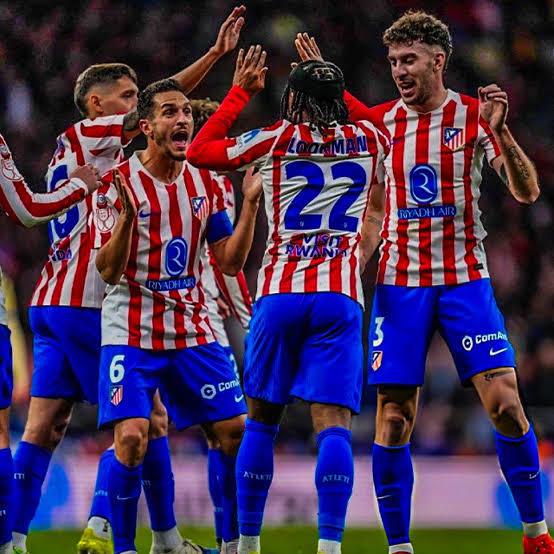
In a night filled with tension, tactical discipline, and clinical execution, Atlético Madrid delivered a statement performance at the Spotify Camp Nou, defeating FC Barcelona 2–0 in the first leg of their UEFA Champions League quarter-final clash. The result sent shockwaves through European football, as Diego Simeone’s side overturned expectations with a display that combined defensive solidity and ruthless efficiency in front of goal.
Coming into this encounter, Barcelona were widely considered favorites, especially after their recent La Liga victory over Atlético just days earlier. However, Simeone and his players had clearly absorbed the lessons from that defeat and returned to Catalonia with a renewed sense of purpose and a well-crafted plan. By the final whistle, it was Atlético who walked away with a commanding advantage, leaving Hansi Flick’s Barcelona with a daunting task ahead in the second leg in Madrid.
Beyond the scoreline, this was a match that showcased the contrast between two footballing ideologies. Barcelona’s possession-based dominance met Atlético’s structured resilience, and on this occasion, it was the latter that proved more effective.
A Match Defined by Discipline and Patience
From the opening minutes, Barcelona imposed themselves in familiar fashion. The home side controlled possession, circulated the ball efficiently, and sought to stretch Atlético’s defensive lines. With players like Lamine Yamal and Pedri pulling the strings in midfield and wide areas, there was a sense that Barcelona would eventually find a breakthrough.
However, Atlético Madrid came prepared for exactly this scenario. Simeone set his team up in a compact defensive shape, with two disciplined banks of players sitting deep and denying Barcelona any meaningful space in dangerous areas. Every passing lane appeared crowded, and every attacking movement from the hosts was met with intense pressure and positional awareness.
Despite holding the majority of possession in the first half, Barcelona struggled to convert control into clear-cut chances. Their attacking play often broke down in the final third, where the absence of Raphinha due to injury became increasingly noticeable. Without his directness and creativity, Barcelona lacked the cutting edge required to unlock Atlético’s stubborn defense.
Lewandowski, who has been a consistent goal threat for Barcelona, found himself isolated for long stretches of the game. Surrounded by Atlético defenders and receiving limited service, the Polish striker was unable to influence proceedings as he usually does.
Read more on: CAF President Arrives in Dakar Amid AFCON Title Controversy
First Half Frustration for Barcelona
As the first half progressed, Barcelona continued to probe but failed to find a breakthrough. Pedri attempted to dictate the tempo, while Yamal provided flashes of brilliance on the wing, but Atlético remained composed and organized.
Jan Oblak’s presence in goal also played a crucial role. Returning from injury, the experienced goalkeeper brought calmness and authority to Atlético’s backline. His positioning and communication ensured that Barcelona’s few attempts on target were dealt with effectively.
At the other end, Atlético offered glimpses of their counter-attacking threat. While they spent much of the first half defending, they remained alert to opportunities to break forward quickly whenever possession was regained. The pace of Giuliano Simeone and the physical presence of Alexander Sørloth provided an outlet, hinting at the danger that would later materialize.
By halftime, the score remained 0–0, but the dynamics of the game were already clear. Barcelona had the ball, but Atlético had control of the space and the rhythm.
Atlético Strike with Precision
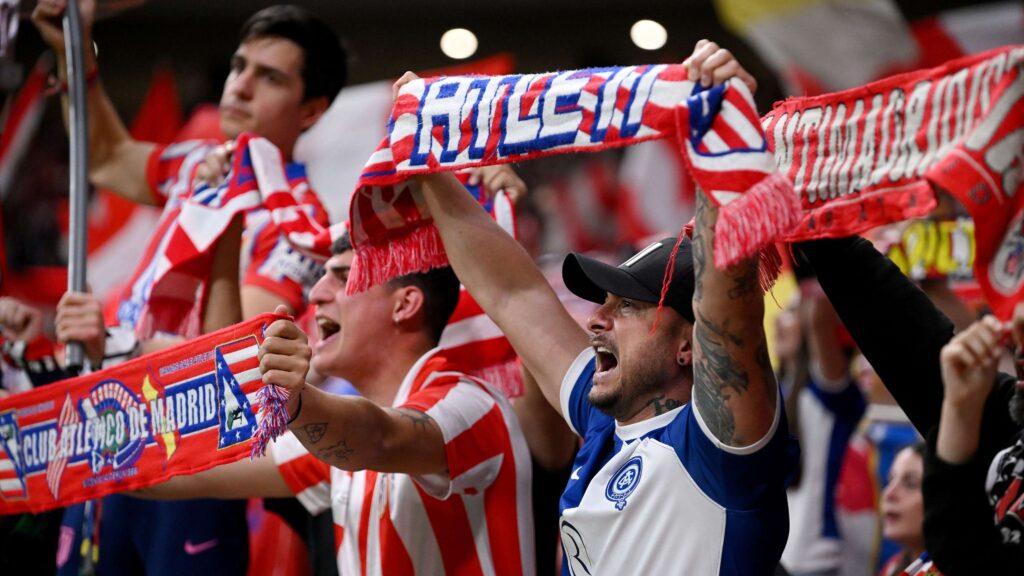
The second half began with a similar pattern, but it did not take long for Atlético Madrid to shift the narrative.
Against the run of play, Simeone’s side executed a swift and devastating counter-attack. Antoine Griezmann, a player known for his intelligence and ability to exploit space, played a central role in initiating the move. Finding himself in a pocket of space, he drove forward and forced the Barcelona defense to retreat.
This moment marked a turning point in the match. It exposed the vulnerability in Barcelona’s high defensive line, which had been pushed up near the halfway line throughout the game. While this approach is effective in maintaining pressure, it also leaves space behind for quick opponents to exploit.
Atlético began to sense an opportunity. Their confidence grew, and their transitions became sharper and more purposeful.
Sørloth Delivers the Decisive Blow
The defining moment of the match arrived in the 70th minute. Atlético Madrid launched another incisive attack, this time from the left flank.
Matteo Ruggeri, who had been quietly effective throughout the game, delivered a precise and well-weighted cross into the penalty area. The ball found Alexander Sørloth, who timed his movement perfectly to evade his markers.
Without hesitation, Sørloth struck the ball first time with power and precision, leaving the Barcelona goalkeeper with no chance. The net rippled, and the Camp Nou fell silent.
It was a goal that encapsulated Atlético’s approach. Efficient, direct, and executed with clinical accuracy. While Barcelona had spent much of the match building up play patiently, Atlético needed only a few decisive moments to make their mark.
Read more on: Manchester City on Brink of Signing Elliot Anderson, Beating United to £65 Million Transfer
Barcelona’s Response Falls Short
Following the goal, Barcelona intensified their efforts in search of an equalizer. Hansi Flick made tactical adjustments, introducing fresh legs in Ferran Torres and Alejandro Balde to add energy and attacking impetus.
The home side pushed forward with urgency, committing more players to attack and attempting to stretch Atlético’s defensive structure. However, this approach also played into Atlético’s hands.
Simeone’s team remained disciplined, maintaining their shape and absorbing pressure with remarkable composure. Every cross was contested, every shot was blocked or deflected, and every attacking move was met with resistance.
Eric Garcia, playing against his parent club, delivered a standout performance in defense. His positioning, anticipation, and composure under pressure were instrumental in keeping Barcelona at bay. Alongside him, Atlético’s defensive unit functioned as a cohesive and well-drilled machine.
Late in the game, Atlético continued to threaten on the counter, nearly adding a second goal on multiple occasions. Their ability to transition quickly from defense to attack kept Barcelona cautious, preventing them from committing fully to an all-out assault.
The Numbers Tell the Story
Statistically, Barcelona dominated many aspects of the game. They enjoyed 62 percent possession, completed passes with greater accuracy, and registered more shots and corners.
However, football is not solely about numbers. Atlético Madrid demonstrated that efficiency and organization can outweigh possession and volume of chances.
Barcelona recorded 14 shots, but only four were on target. Atlético, on the other hand, had fewer opportunities but made them count, with their clinical finishing proving decisive.
The contrast in styles was evident. Barcelona sought to control the game through possession, while Atlético focused on controlling space and capitalizing on key moments.
Team News and Key Absences
Both teams entered the match with notable absences that influenced their approach.
For Barcelona, the absence of Frenkie de Jong in midfield was significant. His ability to dictate play and transition the ball quickly was sorely missed. Additionally, Andreas Christensen remains sidelined with a long-term injury, further limiting defensive options.
Raphinha’s absence also had a noticeable impact on Barcelona’s attacking fluidity. Without his pace and creativity on the wing, the team struggled to create the kind of dynamic attacking movements needed to break down Atlético’s defense.
Read more on: Atlético Chief Slams VAR After Barcelona Defeat
A Tactical Battle Won by Simeone
Atlético Madrid, meanwhile, welcomed the return of Jan Oblak, whose experience proved invaluable. However, they were still without key midfielders Pablo Barrios and Rodrigo Mendoza, making their disciplined performance even more impressive.
This match ultimately came down to tactical execution, and in that regard, Diego Simeone emerged as the clear winner.
Hansi Flick’s high defensive line and possession-heavy approach have been effective throughout the season, but Atlético exposed its vulnerabilities with well-timed counter-attacks.
Simeone’s strategy was simple yet highly effective. Defend deep, remain compact, and strike quickly when opportunities arise. His players executed this plan with precision and commitment, demonstrating a clear understanding of their roles.
The use of substitutions also played a role. Introducing players like Thiago Almada added fresh energy and helped maintain the team’s structure during critical phases of the game.
Looking Ahead to the Second Leg
With a 2–0 advantage, Atlético Madrid now hold a strong position heading into the second leg at the Riyadh Air Metropolitano on April 14, 2026.
However, the tie is far from over. Barcelona have the quality and experience to mount a comeback, but they will need a significantly improved performance in Madrid.
To progress within 90 minutes, Barcelona must win by at least three goals. A two-goal victory would take the match to extra time, as the away goals rule is no longer in effect.
For Atlético, the objective will be to maintain their defensive discipline while remaining a threat on the counter. With the support of their home crowd, they will be confident in their ability to see out the tie.
Elsewhere in the Champions League
In another quarter-final clash, Paris Saint-Germain secured a 2–0 victory over Liverpool at the Parc des Princes. Like Atlético, PSG capitalized on home advantage to gain an early edge in their tie.
As the Champions League progresses into its निर्णing stages, the competition continues to deliver drama and unpredictability. Established favorites are being tested, and tactical battles are proving just as important as individual brilliance.
Read more on: Arbeloa: Mbappé Fully Fit and Ready for Big Matches
Conclusion
Atlético Madrid’s victory at the Camp Nou was more than just a win. It was a demonstration of tactical intelligence, discipline, and belief.
While Barcelona controlled possession and created more opportunities, it was Atlético who executed their game plan to perfection. Simeone’s ability to adapt and outmaneuver his opponent proved decisive, giving his team a crucial advantage in the tie.
As both teams prepare for the second leg, the question remains whether Barcelona can produce a memorable comeback or whether Atlético will complete the job and secure their place in the semi-finals.
One thing is certain. This tie is far from finished, and the next chapter promises to be just as compelling.
Read more on:
- England Defender Conor Coady Suddenly Collapses
- Haaland Hat-Trick Fires Man City to Historic Eighth Straight FA Cup Semi-Final
- Osimhen Leads Super Eagles Against Ronaldo and Lewandowski in High-Stakes June Friendlies
- Salah’s Saudi Shock, Osimhen’s Comeback, and Chelsea’s Heartbreak: A Night of Football Turning Points