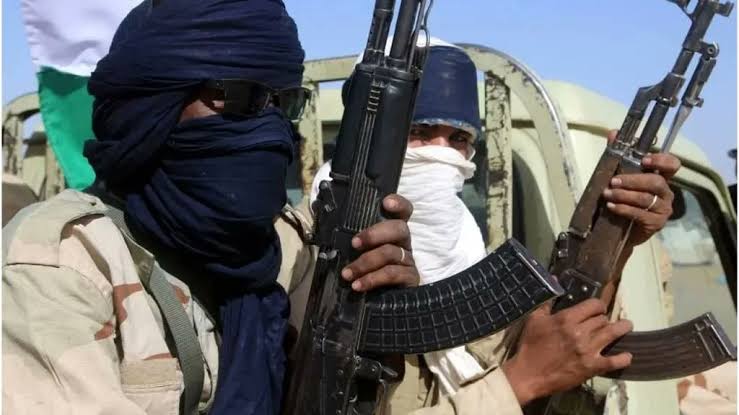
A fresh wave of fear has gripped several rural communities in Katsina State following a disturbing threat reportedly issued by a notorious bandit leader. Residents across parts of Kankia Local Government Area are now living under intense anxiety after receiving what many describe as a chilling ultimatum that could determine the fate of entire villages within days.
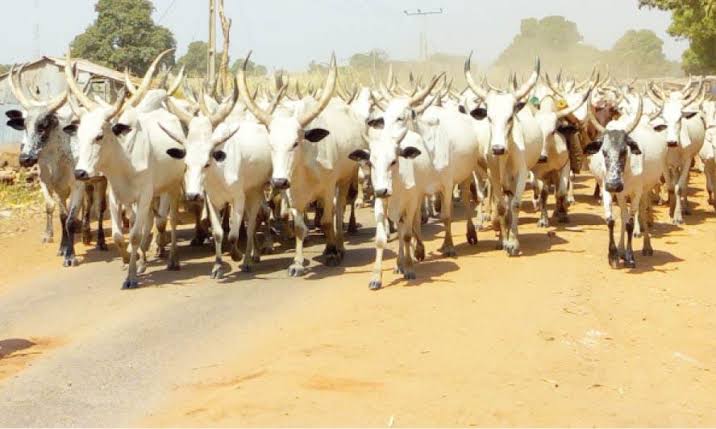
According to local accounts, the bandit leader, identified as Muhammadu, has demanded a staggering number of livestock from the affected communities. The ultimatum reportedly requires villagers to provide 700 cattle and 1,000 sheep within a period of six days. The message, which was allegedly delivered in the form of a written letter, warned that failure to meet these demands would result in a violent attack that could wipe out entire settlements.
The development has thrown the area into chaos, with many residents unsure of what steps to take as the deadline approaches. While such threats are not entirely new in parts of northern Nigeria that have long struggled with banditry, the scale and boldness of this demand have raised alarm among both locals and observers.
The crisis is said to have begun on Thursday, April 9, 2026, when the letter surfaced in Sukuntuni, one of the communities at the center of the unfolding situation. Villagers claim that the message was directly linked to Muhammadu, a figure widely feared in the region for commanding a large group of armed fighters who operate across rural areas with relative ease. His name alone is enough to trigger panic, given his reputation for orchestrating attacks, kidnappings, and large-scale cattle rustling.
In the letter, the demand was clearly outlined. The communities were instructed to gather the required livestock within six days from the time of delivery. The consequences of failing to comply were described in stark terms, with threats of total destruction looming over the villages. For residents who have already endured repeated security challenges, the warning has been taken very seriously.
Read more on: Another Top Legislator Passes Away as Circumstances Unfold
The fear has not been confined to Sukuntuni alone. Nearby communities including Unguwar Tsamiya, Magama, Walawa, and Tudun Wulli have also been affected, as news of the ultimatum spread rapidly from one village to another. In many of these places, daily life has been disrupted as families begin to weigh their options, often choosing between staying behind to protect their homes or fleeing to safer locations.
Reports from the area suggest that a significant number of people have already begun leaving. Families are said to be packing their belongings in haste, abandoning farms, livestock, and homes in search of safety. The movement has been described as a mass exodus, with villagers heading toward larger towns and urban centers where they hope to find some level of protection.
Those who remain behind are said to be living in constant fear, uncertain of what the coming days may bring. The presence of armed men on motorcycles in surrounding areas has only heightened tensions. Residents claim that these individuals move around openly, reinforcing the perception that the threat is both real and imminent.
For many villagers, the demand itself is nearly impossible to meet. Livestock is not only a source of income but also a symbol of wealth and survival in these communities. Losing such a large number of animals would mean economic ruin for many families. Yet the alternative, which is facing a potential attack, is even more terrifying. This has placed residents in an extremely difficult position, with no clear path forward.
Local sources have offered some insight into what may have triggered the demand. According to these accounts, the situation may be linked to internal disputes among bandit groups operating in the region. Muhammadu is said to have fallen out with some of his associates, leading to a conflict that resulted in the loss of a large number of rustled animals. It is believed that he moved approximately 1,700 animals away from their shared territory following the disagreement.
Read more on: Atiku Criticizes Tinubu Over Nigeria and Kenya Fuel Price Comparison
In what appears to be an attempt to recover from this loss, he allegedly turned his attention to nearby communities, demanding that they provide an equivalent number of livestock. Residents interpret this as a forced compensation scheme, one that unfairly places the burden of the bandit leader’s internal conflict on innocent civilians who have no connection to the dispute.
As fear continues to spread, attention has also turned to the response from authorities. The Katsina State Government has acknowledged the situation but has urged residents to remain calm while investigations are carried out. Maiwada Dammalla, who serves as the Director General of Media to Governor Dikko Radda, addressed the issue by stating that officials are still working to verify the authenticity of the letter.
According to him, such threats are sometimes used as a form of psychological warfare by criminal groups. By spreading fear and uncertainty, these groups can achieve their objectives without necessarily carrying out an attack. Displacing communities, disrupting local economies, and creating panic can serve their interests just as effectively as direct violence.
Dammalla emphasized that the government is committed to protecting lives and property, even as efforts continue to determine whether the threat is genuine or exaggerated. He noted that security agencies have not yet officially confirmed the letter as a verified directive from any known bandit network. Despite this, the government’s message has done little to ease the anxiety felt by residents on the ground.
For many villagers, the distinction between a real threat and psychological intimidation is almost irrelevant. The fear is tangible, and the consequences of ignoring the ultimatum could be devastating if the threat turns out to be real. This uncertainty has left communities in a state of limbo, unsure whether to trust reassurances or prepare for the worst.
Read more on: 16 Residents Killed as Security Forces Neutralize 110 Bandits in Niger State
The human cost of the situation is already becoming evident. Families who have fled their homes now face an uncertain future, often with limited resources and no clear plan for return. Children have been pulled out of school, farms have been left unattended, and entire communities have been disrupted. The social and economic impact of such displacement can be long-lasting, even if the immediate threat is eventually resolved.
Those who depend on livestock for their livelihood are particularly vulnerable. Losing animals to bandit demands or abandoning them while fleeing can push families into poverty. In regions where agriculture and animal husbandry form the backbone of daily life, such losses can take years to recover from.
The situation also highlights the broader security challenges facing parts of northern Nigeria. Despite ongoing efforts by security forces, many rural areas continue to experience attacks, kidnappings, and extortion by armed groups. The ability of bandits to issue such large-scale demands underscores the level of control they can exert in certain regions, often operating beyond the immediate reach of law enforcement.
As the six-day deadline approaches, the tension in Kankia and its surrounding communities continues to rise. Residents are watching closely to see whether security forces will intervene in a decisive way. There are growing calls for increased patrols, rapid deployment of personnel, and proactive measures to prevent any potential disagreement.
Read more on: Court Sentences Former Senatorial Candidate
At the same time, there is hope that the situation may be resolved without violence. Some residents are holding on to the possibility that the threat could indeed be a tactic designed to instill fear rather than a prelude to an actual attack. However, given past experiences, many are unwilling to take that risk.
For now, the focus remains on survival. Families are making difficult decisions, balancing the need to protect their lives with the desire to hold on to their homes and livelihoods. The coming days will be critical in determining how the situation unfolds and whether the affected communities can find a path back to stability.
The unfolding events in Kankia serve as a stark reminder of the realities faced by many rural communities. It is a story of fear, resilience, and uncertainty, where ordinary people are caught in circumstances far beyond their control. As developments continue, the hope is that swift and effective action will prevent the worst from happening and restore a sense of security to those who need it most.
Read more on:
- Court Schedules April 14 Hearing in ADC Leadership Rift
- Army Counters Misinformation, Clarifies Circumstances Surrounding General Braimah’s Death
- Eight Family Members Killed in Late Night Attack on Bokkos Community
- Bandits Trigger Panic, Demand 700 Cows and 1,000 Sheep
- Boko Haram Attack Claims Senior Nigerian General in Born