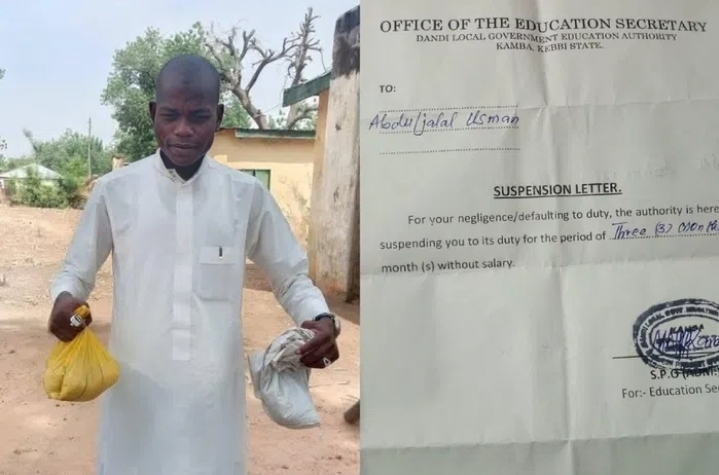
A classroom teacher in Kebbi State has been suspended after authorities viewed his refusal to accept the government’s Ramadan palliative package as an act of insubordination.
The teacher, AbdulJalal Usman, received a three-month suspension without pay through a letter issued by the office of the Education Secretary in Dandi Local Government Area. In the letter, the authorities accused him of “negligence and defaulting to duty,” which led to the disciplinary action.
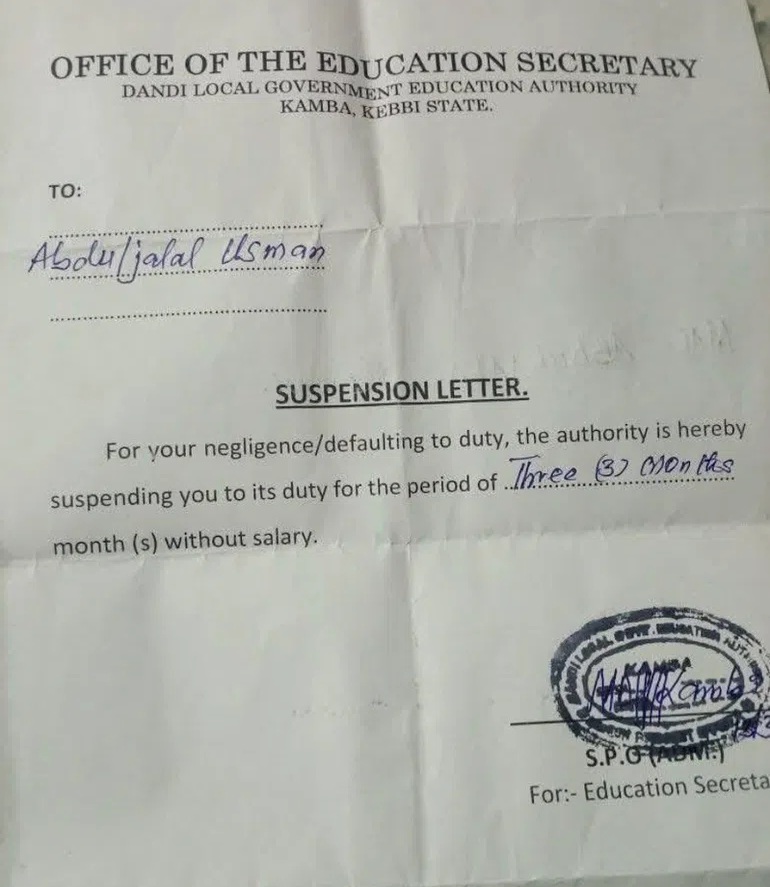
According to the notice, “For your negligence/defaulting to duty, the authority is hereby suspending you from duty for a period of three months without salary.”
Usman’s suspension followed a video that circulated online showing him rejecting the Ramadan relief package distributed by the government. The package reportedly consisted of a bowl of rice and millet meant to support Muslims observing the fasting period. In the video, Usman criticised the authorities, accusing them of being insensitive to the struggles faced by many citizens.
Watch the video here: https://twitter.com/i/status/2032812497003040974
The decision to suspend him has sparked widespread reactions online, with many observers describing the action as harsh and unnecessary.
At the same time, the teacher has received some support from members of the public. Reports indicate that a well-wisher sent him ₦150,000 to help him through the Ramadan period while he serves the suspension.
Since the start of the 2026 Ramadan season in February, several state governments—particularly in northern Nigeria—have been distributing food items as palliatives to assist Muslims affected by the country’s tough economic conditions.
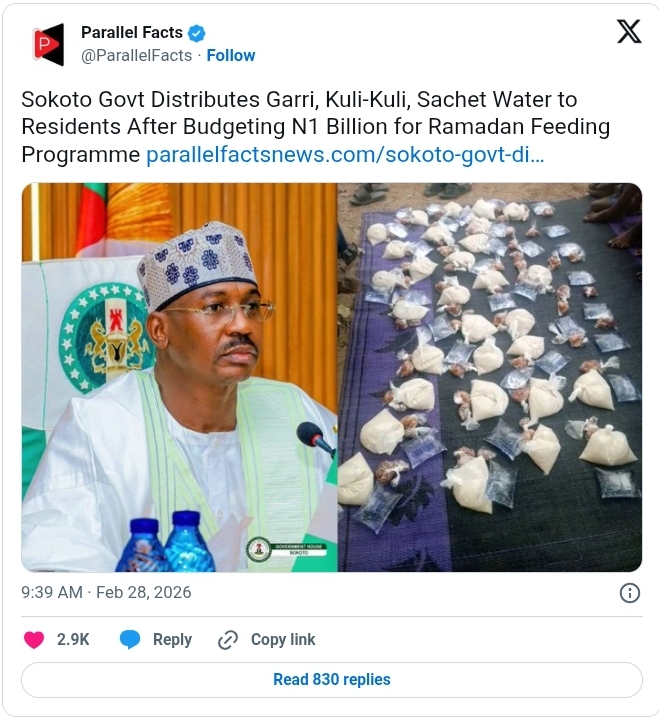
However, some of these relief efforts have attracted criticism. In Sokoto State, for instance, authorities faced backlash after distributing garri with groundnuts, sugar, and water as Ramadan palliatives despite allocating ₦1 billion to provide about 34,000 meals.
Similar distributions have also taken place in parts of southwestern Nigeria through support groups linked to Bola Ahmed Tinubu. These packages, which include food items and basic groceries, have sparked mixed reactions online, with some critics arguing that such initiatives could be used to influence voters ahead of the 2027 elections.