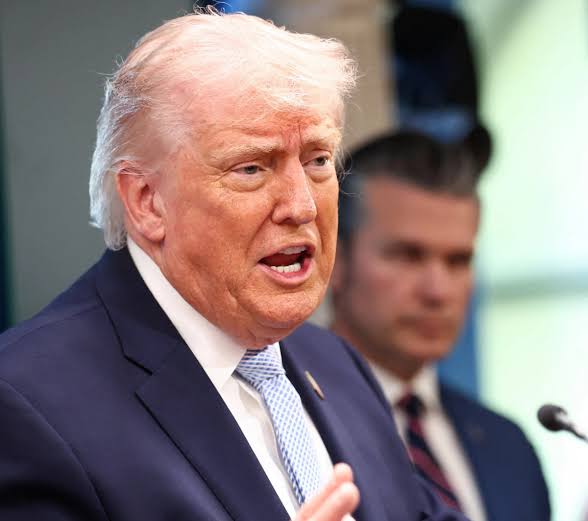
A political controversy that began within the corridors of Nigeria’s Independent National Electoral Commission (INEC) has now crossed the Atlantic, capturing the attention of Washington policymakers and lobbying circles. Reports emerging today indicate that a prominent U.S.-based lobbying firm has formally petitioned the Trump Administration to impose targeted sanctions on top Nigerian electoral officials. The request, unprecedented in scope, is directly connected to INEC’s recent decision to withdraw recognition from the leadership of the African Democratic Congress (ADC), one of Nigeria’s most vocal opposition parties.
The move represents a significant escalation in what was initially seen as an internal Nigerian political dispute. By internationalizing the crisis, the ADC and its representatives in the diaspora are signaling that the conflict over party leadership and electoral fairness is no longer merely a domestic matter. Instead, they are framing it as a broader issue of democratic principles, governance integrity, and the protection of political opposition in Nigeria, which they argue has implications for regional stability and international norms.
The crisis reached its tipping point last week when INEC publicly declared that it would no longer recognize the faction of the ADC led by former Senate President David Mark. According to the commission, the decision was based on a series of conflicting court orders and internal party disputes, which it argued made it impossible to engage with one faction without undermining judicial processes. INEC described its actions as a necessary step to “halt all engagement” with the party’s rival camps while it navigates the complex legal environment surrounding the ADC’s leadership.
INEC officials have emphasized that their actions were guided strictly by judicial directives, specifically citing the Court of Appeal in Appeal No: CA/ABJ/145/2026. In their statement, the commission highlighted the need to comply with legal orders and maintain operational integrity. Officials argue that any engagement with one faction over another could be interpreted as violating court instructions and potentially inviting legal challenges that would compromise the electoral process.
Read more on: Atiku, Obi, Kwankwaso Lead Opposition Protest Claiming INEC Bias
However, the ADC leadership and its youth wing have strongly opposed this explanation. They argue that INEC’s actions are not simply a matter of judicial compliance but constitute a politically motivated attempt to weaken opposition forces ahead of Nigeria’s future elections. In a statement released earlier this week, the ADC youth wing labeled INEC’s decision as a direct threat to democratic governance in Nigeria and issued a 72-hour ultimatum demanding the reversal of the derecognition. The ultimatum, which expires today, warned that failure to address the grievances would result in a nationwide “Occupy INEC” campaign, which the youth wing described as a necessary measure to protect the credibility of Nigeria’s electoral system.
While domestic protests are a common feature of Nigeria’s political landscape, the involvement of a U.S.-based lobbying firm adds a new and complex layer to the dispute. The lobbying group, which acts on behalf of international stakeholders and members of the ADC diaspora, filed a formal petition urging the Trump Administration to take punitive action against the electoral officials deemed responsible for undermining the party’s leadership. According to the petition, INEC’s derecognition of the ADC faction is less about legal necessity and more about consolidating political advantage for the ruling All Progressives Congress ahead of upcoming electoral cycles.
The petition requests several specific actions. First, it seeks the revocation of U.S. visas for senior INEC commissioners involved in the decision-making process. This request is aimed at restricting travel and signaling international disapproval of what the petitioners describe as an anti-democratic move. Second, the lobbying group has requested that the Trump Administration freeze any assets held in U.S. financial institutions by those deemed responsible for undermining Nigeria’s democratic institutions. According to the petition, such measures would serve as a form of accountability for actions perceived to threaten political pluralism in Nigeria.
Central to the petition’s strategy is the emphasis on President Trump’s previously articulated foreign policy principles, particularly his approach to reciprocity and the use of executive authority to sanction foreign actors that disrupt international stability or American interests. The lobbyists argue that framing the INEC decision as a violation of the rule of law could resonate with the administration, which has historically employed sanctions as a primary tool for addressing perceived international injustices. By positioning the issue as one of defending democratic norms, the petitioners hope to attract the attention and favor of policymakers in Washington who are sympathetic to causes involving political fairness and governance integrity.
Read more on: World Bank Stresses Policy Reforms as Essential for Smarter African Growth
Observers note that the timing of the petition is particularly sensitive for the Trump Administration. Domestically, the White House continues to navigate legal challenges and political scrutiny over prior executive orders targeting law firms and political opponents. By elevating the ADC crisis to the level of international concern, the lobbyists are seeking to leverage U.S. foreign policy mechanisms to exert pressure on INEC while also appealing to broader principles of democracy promotion. Analysts suggest that such lobbying efforts are part of a growing trend in which diaspora communities and international stakeholders attempt to influence domestic political outcomes through foreign policy channels, raising questions about sovereignty and the role of external actors in national political disputes.
The potential consequences for Nigeria are significant. Should the U.S. government act on the requests outlined in the petition, the country could face serious diplomatic repercussions. Sanctions targeting INEC officials would inevitably cast doubt on the credibility of Nigeria’s upcoming elections, raising questions about fairness, impartiality, and transparency in the administration of the vote. Such measures could also have economic implications, potentially triggering volatility in the financial markets and undermining investor confidence at a time when the Naira is trading at approximately $1 to 1,377 NGN.
Furthermore, international interventions of this nature could strain Nigeria’s relationships with regional organizations such as the Economic Community of West African States. ECOWAS, which has historically taken a hands-off approach to internal electoral disputes unless fundamental rights or constitutional norms are violated, may view U.S. sanctions as an overreach into the sovereign affairs of Nigeria. Such a perception could spark diplomatic friction between Abuja and Washington, complicating not only electoral oversight but also broader economic and security cooperation between the two nations.
As the 72-hour ultimatum issued by the ADC youth wing concludes in Abuja, attention has shifted to Washington, where policymakers and advisors within the Trump Administration are reportedly reviewing the petition. The central question is whether the administration will respond in a manner that prioritizes the protection of democratic institutions in West Africa or whether the move will be perceived as an effort by private lobbying entities to influence U.S. foreign policy for partisan purposes. Analysts emphasize that the outcome could set an important precedent regarding the extent to which diaspora actors and lobbying organizations can impact foreign electoral processes.
Read more on: UNIJOS Lecturers Begin Strike Action Over Delayed March Pay
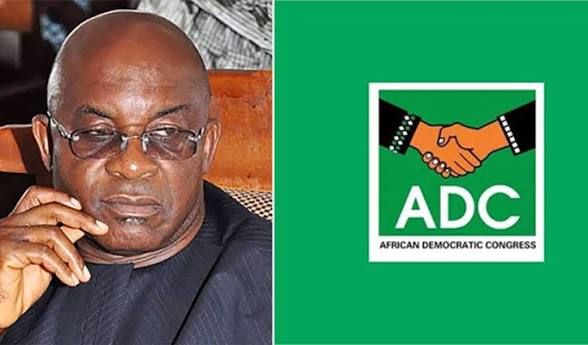
The ADC’s leadership crisis, once confined to internal party politics and legal wrangling, has now become a matter of international attention. What began as a dispute over the recognition of leadership factions within the party has evolved into a complex geopolitical issue, raising questions about the intersection of domestic governance, diaspora influence, and international diplomacy. The involvement of U.S. lobbyists and the potential for executive action underscore the high stakes involved and illustrate the ways in which internal political disputes can resonate far beyond national borders.
Political analysts argue that the crisis reflects broader challenges facing Nigeria’s democratic institutions. The country has experienced repeated tensions between electoral bodies and opposition parties, often exacerbated by legal ambiguities, leadership disputes, and the politicization of institutional mandates. The ADC’s struggle for recognition and the internationalization of the issue highlight the fragility of Nigeria’s political ecosystem and the growing importance of both domestic and global accountability mechanisms in ensuring electoral integrity.
For the Trump Administration, the decision on whether to act on the lobbying petition involves balancing multiple considerations. On one hand, there is a clear opportunity to signal support for democratic principles and opposition rights in a strategically important African nation. On the other hand, taking punitive action against INEC officials could be seen as interfering in the domestic political processes of a sovereign country, potentially complicating diplomatic and economic relations. The administration must weigh these factors carefully, understanding that any action—or lack thereof—will carry significant consequences both within Nigeria and on the international stage.
In Abuja, the ADC youth wing and domestic supporters continue to prepare for potential follow-up actions. The nationwide “Occupy INEC” initiative, which was initially threatened as part of the 72-hour ultimatum, remains a looming possibility should the commission fail to reverse its derecognition decision. Such a campaign would involve sustained demonstrations across multiple cities and is intended to exert pressure on the electoral body while signaling to the international community that opposition voices remain vigilant and active.
Read more on: Trump Announces Two-Week Halt to Military Strikes on Iran
In conclusion, the crisis surrounding INEC’s derecognition of the ADC leadership is no longer simply a Nigerian issue. With U.S. lobbyists actively petitioning the Trump Administration to consider sanctions and other measures against Nigerian electoral officials, the dispute has taken on a cross-continental dimension. The situation underscores the interconnectedness of domestic politics, diaspora advocacy, and international policy in an era where political actions in one country can quickly attract global attention.
As both Nigerian and American stakeholders await the next developments, one fact remains clear: the internal leadership dispute of the ADC has evolved into a matter of international significance, raising pressing questions about the protection of democratic institutions, the influence of diaspora actors, and the responsibilities of foreign governments in responding to challenges to political legitimacy abroad. The coming days will reveal whether the Trump Administration chooses to intervene, how INEC responds to ongoing domestic pressure, and what broader impact this crisis will have on Nigeria’s political and electoral landscape.
Read more on: