The aftermath of Barcelona’s heated Champions League quarter final clash with Atlético Madrid has taken a dramatic and widely debated turn. What began as frustration over a series of contentious decisions on the pitch has now escalated into official action at the highest level of European football governance. UEFA has reportedly removed Romanian referee Istvan Kovacs from officiating duties for the remainder of the European season, following a formal complaint submitted by FC Barcelona.
Although the final score from Wednesday night’s match remains unchanged, with Atlético Madrid securing a 2 to 0 advantage, Barcelona supporters and officials have interpreted UEFA’s decision as a form of acknowledgment. For many within the club, this move represents a partial vindication of their claims that key officiating errors significantly influenced the outcome of the match.
The controversy has sparked intense debate across the football world, raising questions about refereeing standards, the effectiveness of video assistance technology, and the broader issue of accountability in elite competitions.
A Defining Moment in the Match
At the center of the storm lies a peculiar and highly disputed incident that occurred early in the second half. In the 54th minute, Atlético Madrid goalkeeper Juan Musso initiated a short goal kick to restart play. What followed immediately drew the attention of players, coaching staff, and later millions of viewers watching replays.
Defender Marc Pubill appeared to handle the ball inside the penalty area before proceeding with the kick. Under the established laws of the game, once a goal kick is taken and the ball is considered in play, any deliberate handball by a defender within the penalty area should result in a penalty being awarded to the opposing team.
However, referee Istvan Kovacs chose to let play continue. His interpretation suggested that the ball had not yet fully come into play, thereby nullifying the possibility of a handball offense. This decision quickly became the focal point of Barcelona’s frustration.
Equally controversial was the absence of intervention from the Video Assistant Referee system. Christian Dingert, who was overseeing VAR duties for the match, did not recommend an on field review. This lack of action further intensified the sense of injustice felt by Barcelona players and staff.
Head coach Hansi Flick did not hold back in his post match comments. Clearly frustrated, he described the incident as an obvious penalty situation and questioned the role of VAR in such moments. His remarks reflected a broader sentiment within the club that the available technology had failed to correct a clear mistake.
Read more on: Crystal Palace Humble Fiorentina in Stunning European Quarter-Final Display
Barcelona Takes Formal Action
In the hours following the match, Barcelona moved swiftly to escalate the matter. On Thursday, the club’s legal department submitted an official complaint to UEFA. The document outlined their grievances in detail, focusing not only on the specific handball incident but also on what they described as a pattern of questionable officiating decisions.
The complaint called for several measures aimed at increasing transparency and accountability. Among these were requests for access to the communication between the referee and the VAR team during the match. Barcelona also sought an official acknowledgment of any errors that may have occurred, as well as appropriate disciplinary action against the officials involved.
The tone of the complaint underscored the seriousness with which the club viewed the situation. It was not merely about one decision, but about what they perceived as a systemic issue that has affected their performances in European competitions over time.
UEFA Responds with Swift Action
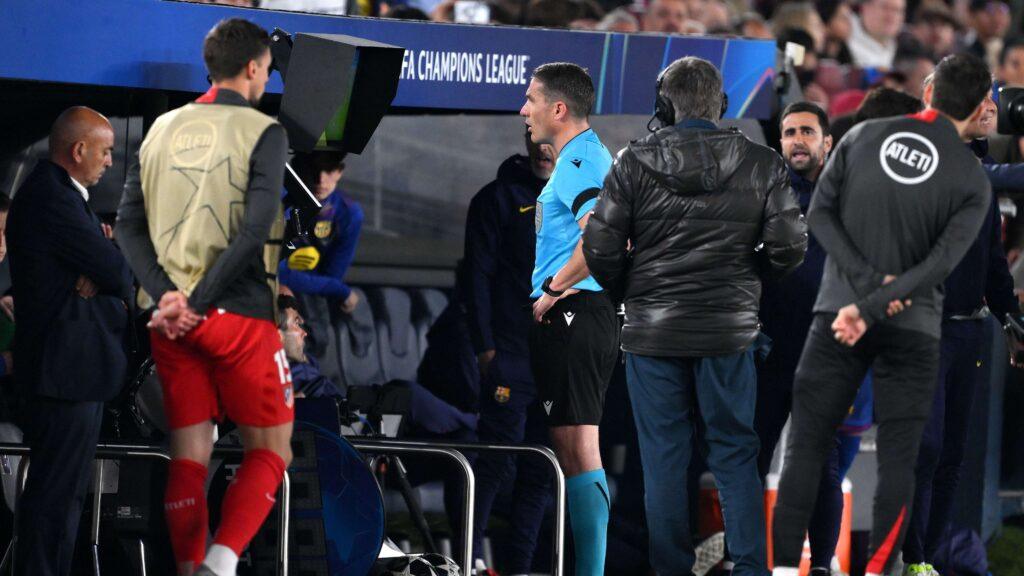
Reports from multiple sources, including respected sports outlets, indicate that UEFA’s Referees Committee reviewed the incident and took decisive action. Istvan Kovacs has been removed from officiating duties for the remainder of the current European season.
While UEFA has not publicly framed the decision as a direct admission of error, the timing and context leave little doubt that it is connected to the events of the Barcelona versus Atlético Madrid match. For many observers, sidelining a referee at this stage of the competition signals a serious concern about performance standards.
Former Bundesliga referee Manuel Gräfe was among those who publicly supported the decision. He stated that Kovacs’ handling of the match justified his removal, pointing to both the handball incident and another controversial moment involving Barcelona defender Pau Cubarsí.
Read more on: Andy Robertson Set to Depart Liverpool
The Cubarsí Red Card Controversy
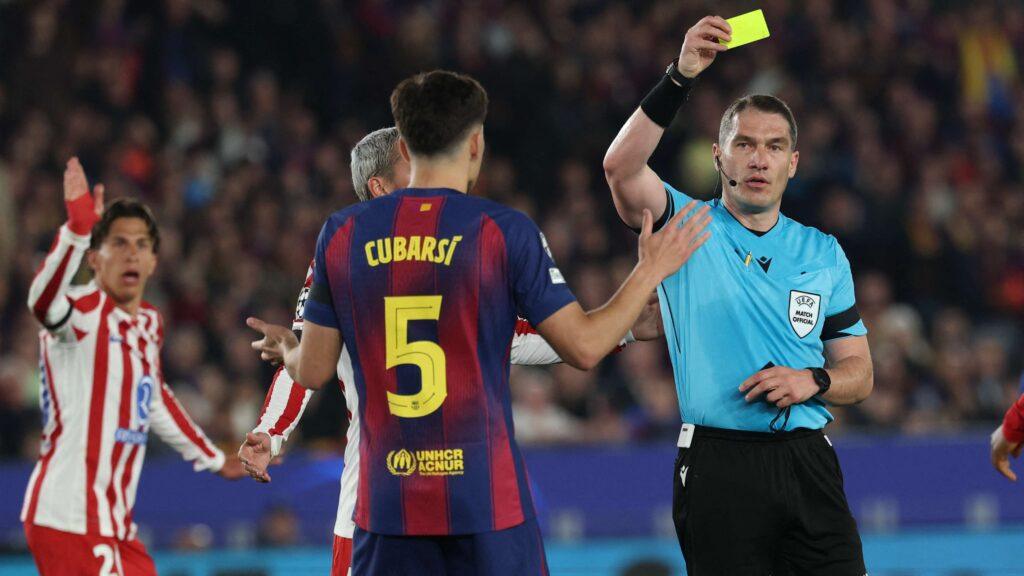
In addition to the disputed handball, the match also featured a contentious disciplinary decision. Pau Cubarsí was initially shown a yellow card for a foul on Atlético forward Giuliano Simeone. However, after a VAR review, the decision was upgraded to a straight red card.
While the final outcome of the review aligned with the rules, UEFA officials reportedly took issue with the referee’s initial assessment. The failure to immediately recognize the severity of the offense was viewed as a significant lapse, contributing to the overall sense of inconsistency in the match’s officiating.
This sequence of events added another layer to Barcelona’s frustration. Not only did they feel denied a potential penalty, but they were also forced to continue the match with ten players, further tilting the balance in Atlético Madrid’s favor.
A Partial Victory for Barcelona
Despite UEFA’s action against Kovacs, the practical implications for Barcelona remain limited. The result of the match stands, and there is no provision within UEFA regulations for replaying matches due to officiating errors. This means that Atlético Madrid’s two goal advantage remains intact heading into the second leg.
For Barcelona, the decision to sideline the referee offers a sense of moral satisfaction but does little to change their immediate challenge. They must now prepare for a crucial return leg at the Riyadh Air Metropolitano, where they will attempt to overturn the deficit.
Compounding their difficulties is the absence of Pau Cubarsí, who will serve a suspension following his red card. This adds to the tactical challenges facing Hansi Flick as he plans for what is likely to be a high pressure encounter.
Read more on: Arne Slot Explains Why He Kept Salah on the Bench Against PSG
Broader Implications for Football Governance
The incident has reignited discussions about the role of VAR and the need for greater transparency in decision making. While the technology was introduced to reduce errors and improve fairness, cases like this highlight its limitations.
One of the key criticisms is the lack of visibility into the decision making process. Unlike some other sports, football does not routinely provide access to conversations between referees and VAR officials. This has led to calls for UEFA to release audio recordings after matches, allowing fans and analysts to better understand how decisions are made.
There is also the question of consistency. Different matches often see similar incidents judged in different ways, leading to confusion and frustration. Establishing clearer guidelines and ensuring uniform application remains an ongoing challenge for governing bodies.
The Shadow of Ongoing Controversies
Adding another layer of complexity to the situation is the broader context in which it has occurred. Barcelona continues to face scrutiny over the so called Negreira case in Spain, which involves historical payments to a former refereeing official.
Critics have been quick to point out the irony of the club protesting refereeing decisions while being under investigation for issues related to officiating. This has fueled debate within the football community, with opinions divided on the relevance of the two situations.
For Barcelona, the focus remains on the present. The club has maintained that its complaint is based solely on the events of the match and the need to uphold fairness in competition.
Looking Ahead to the Second Leg
As attention shifts back to the pitch, Barcelona faces a daunting task. Overturning a two goal deficit against a defensively disciplined Atlético Madrid side will require both tactical precision and mental resilience.
The controversy surrounding the first leg may serve as motivation, but it also adds pressure. Players must channel their emotions effectively while avoiding distractions that could impact their performance.
For Atlético Madrid, the situation presents an opportunity to capitalize on their advantage. They will be aware of Barcelona’s determination but will also take confidence from their position.
Read more on: Simeone Outsmarts Flick as Atlético Madrid Defeat Barcelona
A Defining Moment in the Season
The events of this quarter final tie are likely to have lasting implications, not just for the teams involved but for European football as a whole. They highlight the fine margins that can define matches at the highest level and the significant impact of officiating decisions.
UEFA’s decision to sideline Istvan Kovacs sends a message about accountability, but it also raises further questions. Is removing a referee enough to address concerns about fairness, or are more systemic changes needed?
As debates continue, one thing is certain. The drama of the Champions League extends beyond the action on the field, encompassing issues of governance, technology, and trust. For Barcelona, the challenge now is to turn frustration into performance as they seek to keep their European hopes alive.
Read more on: