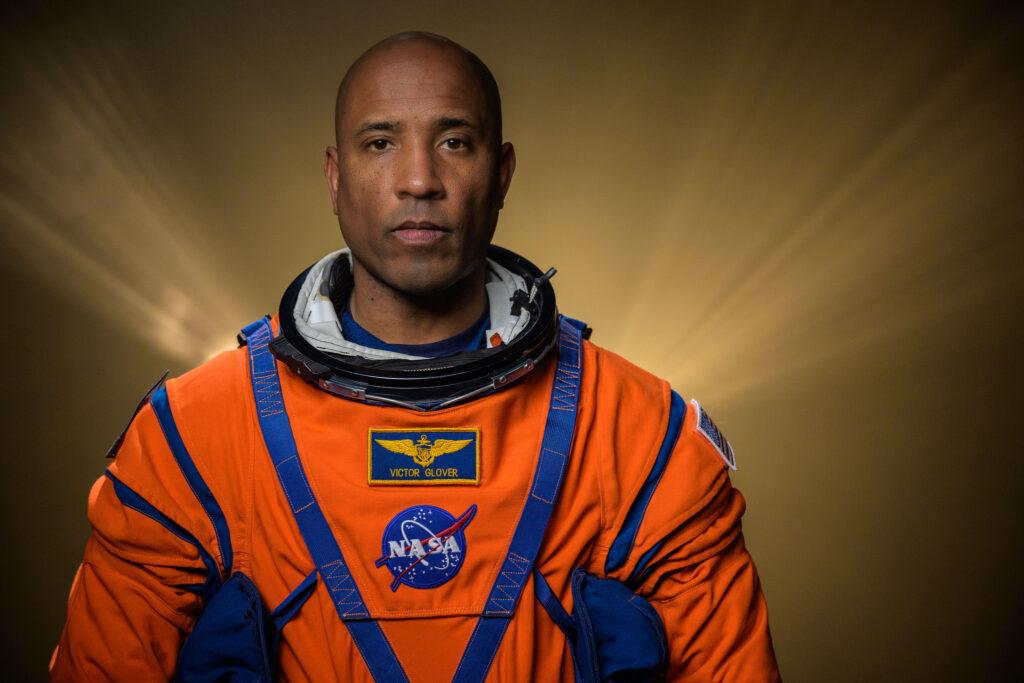
After half a century of waiting, humanity has officially taken another giant step toward the Moon. In a moment that has captured global attention and reignited excitement about space exploration, NASA’s Artemis II mission successfully launched from the Kennedy Space Center on Wednesday, April 1, 2026. Gm
This mission is historic for many reasons, but at its heart is a powerful human story. Among the four astronauts onboard is Victor Glover, a U.S. Navy Captain and experienced astronaut who has now made history as the first Black person to travel toward the Moon. His presence on Artemis II is not just a scientific milestone it represents a meaningful shift in representation and inclusion in space exploration, signaling that the future of space belongs to everyone.
A Powerful Liftoff That Marked a New Era
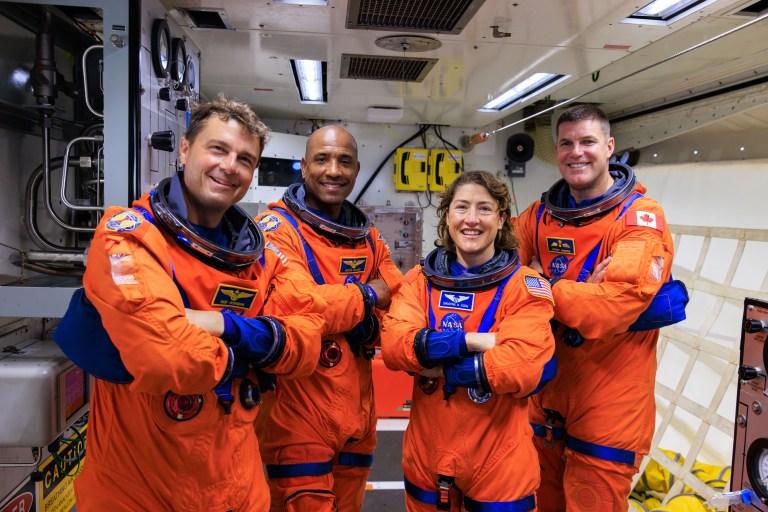
At exactly 6:35 PM EDT, the Space Launch System (SLS), widely regarded as the most powerful rocket ever built, ignited and thundered into the sky. The launch was nothing short of spectacular, as the rocket carried the Orion spacecraft and its crew into orbit, marking the beginning of a bold new chapter in lunar exploration.
Inside the spacecraft were four astronauts: Commander Reid Wiseman, Mission Specialists Christina Koch and Jeremy Hansen, and Pilot Victor Glover. Each of them brings unique experience and perspective, but together they symbolize a new, more inclusive era of space travel.
Shortly after reaching orbit, the crew shared a message that quickly resonated across the world:
“We have a beautiful moonrise. We’re headed right at it.”
That simple yet powerful statement captured the emotion of the moment. For many watching on Earth, it was a reminder that humanity is once again reaching beyond its limits.
Before heading toward the Moon, the crew is spending approximately 23 and a half hours orbiting Earth. During this phase, they are conducting a series of critical system checks to ensure that all components of the spacecraft are functioning properly. Once these checks are complete, the Orion capsule will perform what is known as a trans-lunar injection burn a maneuver that will propel them out of Earth’s orbit and set them on a path toward deep space.
Read more on: From From Fame to Faith: Nigerian Celebrities Who Found Purpose in Ministry
The Journey of Victor Glover
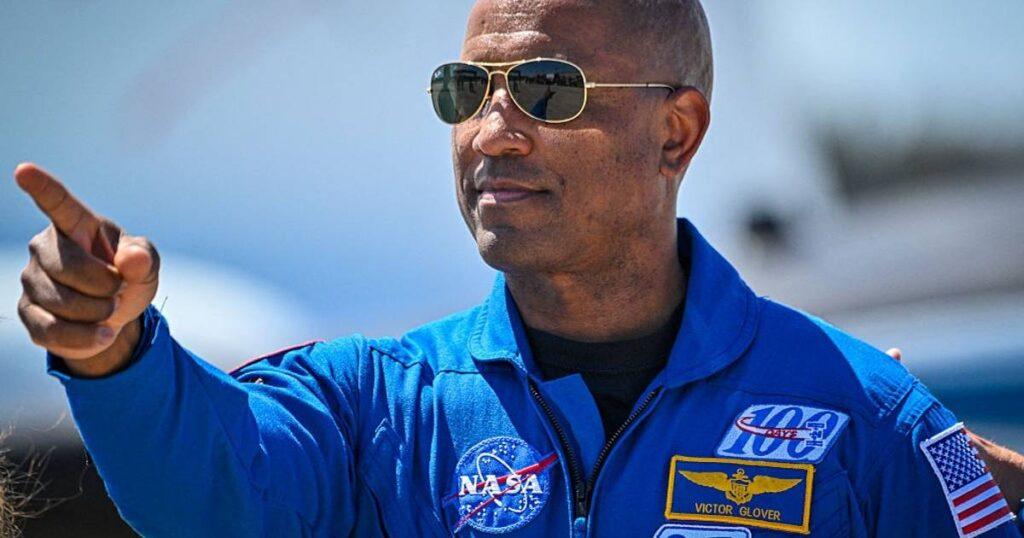
Victor Glover’s presence on this mission is the culmination of years of dedication, discipline, and achievement. Born in Pomona, California, Glover has built an impressive career that spans military service, engineering, and space exploration.
Before becoming an astronaut, Glover served as a combat pilot in the United States Navy. During his time in the military, he flew missions in the Iraq War and accumulated more than 3,000 flight hours, showcasing both skill and resilience under pressure.
His accomplishments didn’t stop there. In 2020, Glover made history when he piloted the SpaceX Crew-1 mission, becoming the first Black astronaut to live and work aboard the International Space Station for an extended period. That mission alone placed him among the pioneers of modern space travel.
Academically, Glover is equally accomplished. He holds three master’s degrees in specialized fields, including flight test engineering, systems engineering, and military operational art and science. This combination of practical and intellectual expertise makes him uniquely suited for a mission as complex as Artemis II.
How Artemis II Differs From the Apollo Era
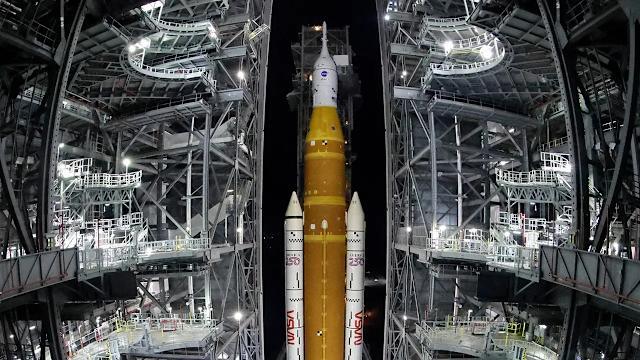
While comparisons to the Apollo missions of the late 1960s and early 1970s are inevitable, Artemis II represents a fundamentally different approach to space exploration.
The Apollo program was groundbreaking, but its crews were uniform in composition entirely male and exclusively American. Artemis II, on the other hand, reflects a more modern vision. It includes the first woman to travel toward the Moon (Christina Koch), the first Black astronaut on such a mission (Victor Glover), and the first non-American astronaut (Jeremy Hansen, representing Canada).
Technologically, the advancements are just as striking. The Space Launch System produces more thrust than the Saturn V rockets used during Apollo, making it the most powerful launch vehicle ever constructed. But beyond raw power, the mission’s purpose has also evolved.
Where Apollo focused largely on achieving a historic landing often described as “flags and footprints” the Artemis program is aimed at building a sustainable human presence on and around the Moon. It’s about long-term exploration, scientific discovery, and eventually using the Moon as a stepping stone for missions to Mars.
Read more on: Basketmouth Ex-Wife Elsie Okpocha Responds to Viral Claims About Her Children’s Paternity
The Unique “Figure-Eight” Flight Path
Artemis II is designed as a 10-day test mission, and while it will not include a lunar landing, its journey is still remarkable.
The Orion spacecraft will travel more than 230,000 miles away from Earth, venturing deep into space. One of the most anticipated moments will occur when the crew flies around the far side of the Moon reaching about 4,600 miles beyond it. This region has not been seen up close by humans since the final Apollo missions in 1972.
The trajectory follows what is known as a “free-return” path. Essentially, the spacecraft will loop around the Moon in a figure-eight pattern, using the Moon’s gravitational pull to redirect it back toward Earth. This method provides a natural return route, adding an extra layer of safety to the mission.
When the crew begins their journey home, the Orion capsule will re-enter Earth’s atmosphere at speeds of approximately 25,000 miles per hour before eventually splashing down in the Pacific Ocean, with the mission expected to conclude around April 11.
A Cultural and Generational Impact
Beyond the scientific and technical achievements, Artemis II carries significant cultural weight especially through Victor Glover’s participation. His journey is already being seen as a source of inspiration for millions around the world, particularly for young people who have not traditionally seen themselves represented in space exploration.
In interviews leading up to the mission, Glover shared a personal tradition that underscores his awareness of this responsibility. He often listens to Gil Scott-Heron’s 1970 poem “Whitey on the Moon,” a piece that critiques inequality and reminds him of the broader social context in which space exploration exists.
His presence on Artemis II sends a powerful message: that space exploration is no longer an exclusive domain, but a shared human endeavor.
Already, industries beyond science are responding. From fashion to education and even toy manufacturing, there is a noticeable shift toward representing a more diverse and inclusive image of astronauts. The idea of who gets to explore space is expanding, and with it, the dreams of a new generation the so-called “Artemis Generation.”
Read more on: From Cancer Claim to Controversy: Blessing CEO Faces Forgery Allegations
Looking Ahead
The success of Artemis II is a critical step in NASA’s long-term plans. If this mission proceeds as expected, it will pave the way for Artemis III, currently scheduled for 2028. That mission aims to return humans to the lunar surface for the first time in over 50 years.
For now, Victor Glover and his fellow astronauts continue their journey, moving farther away from Earth with every passing moment. As they travel through space, they carry not only the hopes of scientists and engineers, but also the aspirations of millions who now see themselves reflected in this historic mission.
From orbit to the far side of the Moon and back again, Artemis II is more than just a test flight it is a symbol of progress, possibility, and a future where space truly belongs to all of humanity.
Read more on: