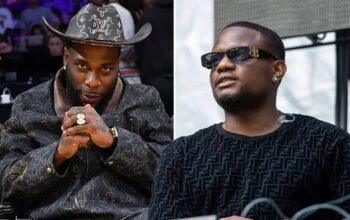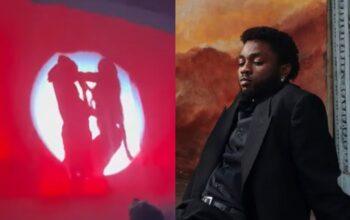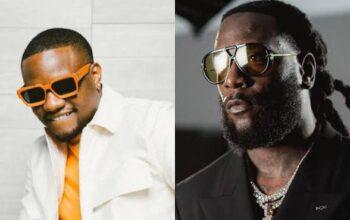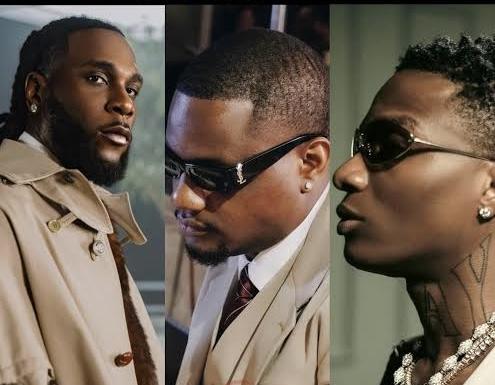
The Afrobeats music scene, long celebrated for its vibrancy, unity, and cultural influence, has been rocked by a major confrontation that threatens to disrupt the delicate balance of power among Africa’s biggest musical icons. What began as a physical altercation at one of Lagos’ most exclusive nightlife venues has now evolved into a full-blown digital war between two of the continent’s most prominent figures: Wizkid and Burna Boy.
The escalation began when Wizkid, often regarded as the composed and strategic leader of the genre, took to social media to defend his official disc jockey, DJ Tunez, following an alleged attack. What started as a personal defense has since transformed into a high-profile exchange filled with pointed taunts, provocative imagery, and cryptic references that have divided fans and industry insiders alike. This feud, amplified by social media, is not only a reflection of personal grievances but also a commentary on the increasingly competitive and public nature of celebrity conflicts in contemporary African music culture.
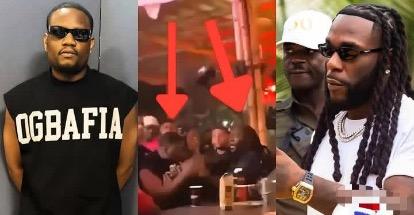
The catalyst for this confrontation occurred on the night of Monday, April 6, 2026, during the weekly “Obi’s House” celebrity event, hosted at the luxurious residence of nightlife entrepreneur Obi Cubana. This event has long been known as a gathering place for Nigeria’s entertainment elite, blending music, fashion, and networking in a glamorous setting. According to eyewitnesses and widely circulated video footage, a verbal disagreement between Burna Boy and DJ Tunez, whose stage name is also Ogbafia, quickly escalated into a physical altercation.
DJ Tunez later took to X, formerly known as Twitter, to share his side of the story, claiming that he was assaulted by Burna Boy’s security detail in what he described as an organized attack. In his posts, he wrote that he was struck from behind by multiple individuals, stating, “YOU HIT ME IN THE BACK OF MY HEAD WITHOUT ME LOOKING! THAT’S SOME SUCKA SHIiT MY BOY!” According to the DJ, the attack involved as many as ten individuals, creating a highly dangerous and intimidating scenario. This claim, widely shared and discussed across social media platforms, painted a stark image of the tension and the stakes involved in what might have otherwise seemed like a private disagreement.
Read more on: DJ Tunez Speaks Out After Clash with Burna Boy
Burna Boy’s response to the incident was equally public, though delivered with a provocative theatricality. In a post on Snapchat, he appeared to mock the situation by dancing to DJ Tunez’s own song, Money Constant, while altering the lyrics from “Ogbafia dey my side” to “Ogbafia dey for ground.” In the video, Burna Boy dramatically fell to the floor, a move interpreted by many as an ironic commentary on the altercation. This display added fuel to the fire, suggesting that the artist was willing to publicly ridicule the incident rather than offer reconciliation, thereby escalating tensions even further.
In response to Burna Boy’s actions, Wizkid broke his silence on Wednesday morning, unleashing a series of posts that shocked the industry with their intensity. Known for his calm and calculated public persona, Wizkid rarely engages in direct attacks on his peers. However, in defending DJ Tunez, he adopted a tone that was unusually aggressive, drawing attention from fans, journalists, and fellow artists across the globe. In one post, he wrote, “P**** nigga Jump a dj with 10man carry diddy towel Dey dance. I never saw a fool like this, Diddy babe, for my life.” This statement, which immediately went viral, included the now-infamous term “Diddy babe” and referenced a “Diddy towel,” a pointed jab interpreted by many as a critique of Burna Boy’s past professional association with American music mogul Sean Combs, popularly known as Diddy.
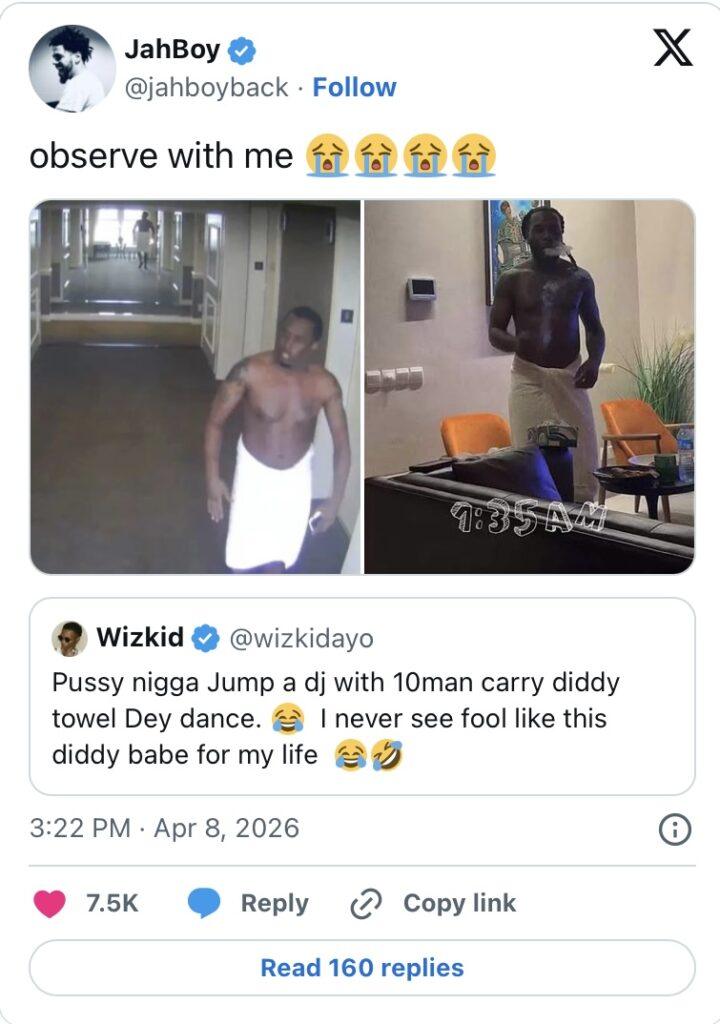
The reference to Diddy is loaded with implications, as Combs was the executive producer of Burna Boy’s Grammy-winning album Twice as Tall and has been involved in several high-profile legal disputes that attracted international media attention. By invoking this connection, Wizkid not only criticized Burna Boy’s behavior during the Lagos altercation but also tied it to a broader narrative questioning Burna Boy’s credibility and decision-making in both personal and professional contexts. This strategic choice underscores the increasingly sophisticated ways in which celebrity feuds are conducted in the digital age, with historical associations and legal controversies repurposed as instruments of public critique.
Read more on: Omah Lay Responds to Viral Performance That Reportedly Ended a Relationship in 2024
Adding another layer to the dispute, Wizkid further inflamed the situation by posting an image of baby oil, a cryptic but widely interpreted reference to legal allegations and controversies surrounding Sean Combs. This visual trolling has divided the fanbase into two camps. Supporters of Wizkid, often referred to as Wizkid FC, have praised him for defending his DJ and for reviving the assertive energy that characterized his early career. They view the posts as a demonstration of loyalty and courage, interpreting them as a necessary defense of a close collaborator against what they perceive as unprovoked aggression.
Conversely, supporters of Burna Boy have criticized Wizkid’s approach as unnecessarily personal and degrading. Some argue that referencing external legal controversies and using imagery such as baby oil represents a descent into low-level provocation that distracts from artistic achievement. Critics in this camp suggest that the feud may be motivated by social media visibility or clout-chasing, rather than a genuine concern for resolving the underlying incident. The dispute has thus evolved from a private altercation into a highly publicized and polarizing debate over ethics, loyalty, and respect within the music industry.
The conflict has not remained confined to online platforms. Reports have surfaced that a faction of the Nigerian DJs Association has informally discussed measures to support DJ Tunez, including the potential blacklisting of Burna Boy’s music from club playlists. While no official industry-wide ban has been enacted, several prominent DJs have indicated that they intend to show solidarity with their colleague by limiting exposure to Burna Boy’s tracks in live venues. This development illustrates the broader professional consequences of celebrity disputes and highlights how individual altercations can influence industry practices and alliances.
This recent feud also marks a significant rupture in what was once a celebrated camaraderie among Nigeria’s leading music artists. In December 2024, Wizkid, Burna Boy, and Davido were seen enjoying a public celebration together in Lagos, an event that many interpreted as a symbolic reconciliation of past rivalries and a potential heralding of a united front in the music industry. That peace now appears to have dissolved, replaced by a confrontation that threatens to become one of the most toxic episodes in the history of Afrobeats. Industry observers note that this turn of events may have implications for collaborations, sponsorship deals, and broader market dynamics, as the reputations and public images of the artists involved are inevitably influenced by such high-profile disputes.
The incident raises broader questions about the nature of loyalty and accountability within the music industry. Wizkid’s defense of DJ Tunez is seen by some as a reaffirmation of the principle that artists must protect and respect the contributions of their close collaborators. At the same time, the intensity and personal nature of the attacks have sparked debate about whether public feuds of this kind may ultimately harm the genre, drawing attention away from the music and toward interpersonal drama. Critics warn that the reliance on social media theatrics and provocative imagery may set a precedent that encourages similar public confrontations among other artists, potentially eroding professional standards and decorum within the industry.
Read more on: Burna Boy and DJ Tunez’s Chaotic Fight at Obi’s House
Fans around the world are following every development with keen interest. Social media platforms have been inundated with reactions, memes, and analyses dissecting every comment, post, and image associated with the feud. Hashtags supporting either Wizkid or Burna Boy have trended repeatedly, and discussions regarding the morality, strategy, and entertainment value of the confrontation have proliferated. This phenomenon underscores the global reach of Afrobeats, which continues to expand its influence beyond the African continent and into international markets where audiences are increasingly attuned to both music and celebrity culture.
Despite the intensity of the conflict, there remains a shared recognition of the immense talent and influence of both artists. Wizkid and Burna Boy are among the most successful and recognizable figures in African music, each with an impressive record of chart-topping hits, awards, and international collaborations. The current feud, while damaging in some respects, also highlights the complex dynamics of fame, competition, and public perception that define the modern entertainment landscape. Both artists are navigating a delicate balance between protecting personal and professional interests while maintaining the public personas that have propelled them to stardom.
Ultimately, the “Obi’s House” incident, the ensuing social media battle, and the controversial use of imagery and references have sparked a broader conversation about the responsibilities of influential artists in shaping public discourse. While loyalty and defense of collaborators are important, the methods chosen to address grievances carry implications for reputations, industry cohesion, and fan engagement. The incident serves as a case study in how contemporary celebrity conflicts unfold in an era dominated by social media, instant communication, and global audiences who are quick to interpret and amplify every action.
As the situation continues to develop, the music world remains divided over the appropriateness of Wizkid’s response and the potential long-term impact of the feud. Questions linger regarding whether defending a collaborator justifies the personal attacks and provocative trolling, or whether these actions risk introducing a level of toxicity that could have lasting consequences for the Afrobeats community. Industry insiders and analysts are closely watching the unfolding events, considering both the immediate effects on relationships among artists and the broader cultural implications for one of Africa’s most influential musical genres.
Read more on: Gunfire at Florida Casino Leaves Hip-Pop Artist Offset Hospitalized
The feud between Wizkid and Burna Boy, sparked by the alleged attack on DJ Tunez, represents a pivotal moment in the history of Afrobeats. It is a reminder that behind the glitz, glamour, and international success of African music lies a complex web of personal relationships, professional alliances, and high-stakes competition. The choices these artists make, both online and offline, have the potential to influence not only their own careers but also the trajectory of the genre as a whole.
As of April 8, 2026, the situation remains unresolved. Fans, industry insiders, and fellow artists continue to debate the merits of Wizkid’s social media intervention, the nature of Burna Boy’s response, and the wider implications for industry solidarity and professional decorum. What is clear, however, is that this incident has captured the imagination of a global audience, highlighting the power of social media in amplifying conflicts and transforming personal disputes into public spectacles.
The question now is whether Afrobeats, as a genre, can recover from this highly publicized confrontation without long-term damage, and whether the artists involved can find a path to reconciliation that honors both personal loyalty and professional respect. In the meantime, the saga of Wizkid, Burna Boy, and DJ Tunez continues to dominate headlines, ensuring that the story will remain a defining episode in the history of African music for years to come.
Read more on: