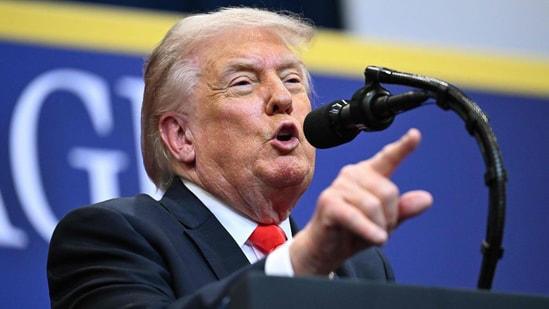
Tension on the global stage intensified sharply on Wednesday after President Donald Trump issued one of his most forceful warnings yet regarding the ongoing conflict between the United States and Iran, declaring that any failure to finalize a peace agreement would trigger what he described as a significantly escalated military response. His remarks, delivered through his Truth Social platform, have added fresh volatility to already delicate negotiations that many officials believed were approaching a breakthrough.
In his statement, President Trump suggested that while diplomatic discussions have made meaningful progress, the window for compromise is rapidly closing. He warned that if Iranian leadership refuses to sign off on the current terms being discussed, the United States is prepared to launch what he called a “much higher level” of aerial bombardment. According to him, any renewed military action would not resemble previous strikes but would instead involve a broader and more intense campaign targeting remaining strategic infrastructure across Iran.
The President’s language, particularly his reference to the phrase “the bombing starts,” has drawn immediate global attention, signaling a shift in tone that contrasts sharply with recent diplomatic optimism. While he acknowledged that progress had been made toward a structured agreement, he stressed that the consequences of failure would be severe and far reaching.
This development follows a separate confirmation from U.S. Secretary of State Marco Rubio, who stated that the earlier military phase known as Operation Epic Fury has officially concluded its primary objectives. According to Rubio, that operation significantly degraded Iran’s naval and missile capabilities, weakening key military assets and creating what U.S. officials describe as favorable conditions for diplomatic leverage. The administration has repeatedly pointed to these outcomes as evidence that continued pressure has been effective in bringing Iran closer to negotiations.
Read more on: Tension Rises as El Rufai Appears in Court Over New Charges
Despite the aggressive rhetoric, diplomatic efforts have not stalled. On the contrary, sources involved in the talks suggest that both sides are now considering a detailed framework consisting of 14 key points that could serve as the foundation for a formal peace agreement. This proposed memorandum, though still under negotiation, is said to represent one of the most structured attempts yet to end hostilities and stabilize relations between the two nations.
Among the central provisions being discussed is Iran’s potential agreement to suspend all uranium enrichment activities under strict international monitoring. In exchange, the United States would consider lifting a series of long standing economic sanctions that have placed significant strain on Iran’s economy. These sanctions have impacted multiple sectors, including energy exports, international banking access, and foreign investment inflows.
Another major component of the proposed agreement involves restoring safe and unrestricted access to the Strait of Hormuz, one of the world’s most critical maritime trade routes. The waterway has been largely disrupted since late February 2026, when escalating tensions led to a near complete halt in commercial shipping activity. The closure of the Strait has had immediate global consequences, contributing to instability in energy markets and driving up fuel prices across multiple continents.
In a related announcement, President Trump confirmed a temporary suspension of what the administration has called Project Freedom, a naval initiative designed to escort commercial vessels through the contested waters of the Strait. The program had been introduced to ensure the safe passage of international shipping amid rising threats in the region. According to the President, the decision to pause the operation was made in response to requests from regional allies, including Pakistan and Saudi Arabia, both of whom have played active roles in mediating discussions between Washington and Tehran.
Read more on: Major Shakeup in the House of Representatives as 17 Lawmakers Leave ADC for NDC
While the escort mission has been paused, U.S. naval forces continue to enforce a blockade of Iranian ports. Officials have made it clear that this measure will remain in place until a formal agreement is signed and implemented. The continuation of the blockade, combined with the suspension of escort operations, reflects the complex balancing act between maintaining pressure and allowing space for diplomacy to proceed.
The economic impact of the crisis is already being felt globally. Energy analysts have reported that disruptions in the Strait of Hormuz have contributed to a sharp increase in fuel prices, with average gasoline prices in the United States approaching 4.50 dollars per gallon. Similar price fluctuations have been observed in Europe and parts of Asia, underscoring the global dependency on stable energy transit routes through the region.
Meanwhile, reactions from Iran have remained firm but cautious. Foreign Minister Abbas Araghchi, currently in China as part of ongoing diplomatic engagements, reiterated that Iran remains open to a comprehensive and fair agreement but will not accept terms that compromise national sovereignty. He emphasized that Iran’s position is rooted in its right to peaceful nuclear development and its demand for the removal of what it considers unjust economic restrictions.
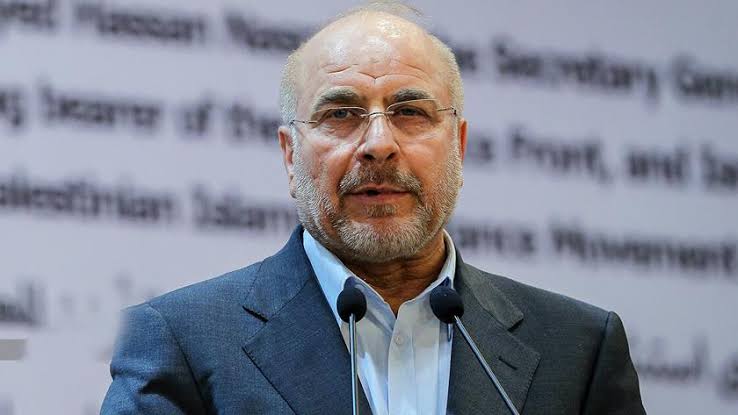
In Tehran, political rhetoric has also intensified. Parliament Speaker Mohammad Bagher Ghalibaf described the current situation in the Strait of Hormuz as part of a “new equation” in regional politics, warning that the existing status quo is unsustainable. His comments suggested that Iran views the ongoing blockade and military pressure as unacceptable, while also signaling that the country may consider further strategic responses if negotiations fail.
Read more on: Zenith Bank Chairman Jim Ovia retires, marking historic transition
China has emerged as a key diplomatic actor in the evolving situation. Beijing has urged Iran to consider reopening the Strait of Hormuz as soon as possible, emphasizing the importance of maintaining global energy stability. At the same time, Chinese officials have reiterated support for Iran’s right to pursue peaceful nuclear energy, reflecting a broader effort to balance strategic interests while encouraging de escalation.
As negotiations continue behind closed doors, international observers are closely monitoring every development. The proposed 14 point framework is seen by some analysts as the most promising path toward ending the conflict, yet the sharply contrasting tone coming from Washington has raised concerns about whether diplomacy and military pressure can remain aligned for much longer.
The situation is further complicated by the speed at which events are unfolding. While diplomatic teams work toward finalizing the memorandum, military forces remain on high alert, and political leaders on both sides continue to issue statements that reflect deep mistrust. This combination of negotiation and escalation has created a highly unstable environment in which even minor setbacks could trigger significant consequences.
For now, the world remains in a state of cautious anticipation. The possibility of a comprehensive agreement still exists, but so does the risk of renewed military action on a larger scale than previously seen. With global markets, energy supplies, and regional stability all hanging in the balance, the coming days are expected to be decisive in determining whether the United States and Iran move toward peace or further confrontation.
Read more on: