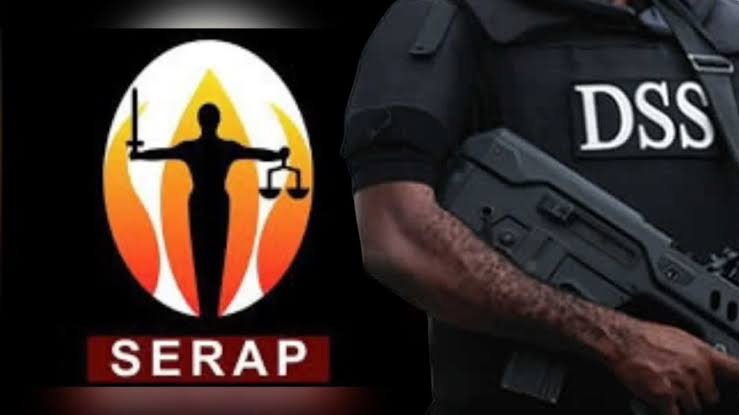
In a significant judgment delivered in Abuja, the Federal Capital Territory High Court has ruled against the Socio-Economic Rights and Accountability Project (SERAP), finding the organization liable for defamation against the Department of State Services (DSS) and two of its operatives. The court, presided over by Justice Yusuf Halilu, ordered SERAP to pay ₦100 million in damages, bringing an intense legal dispute between the civil society group and Nigeria’s secret police to a decisive end.
The case stems from events that unfolded in September 2024, when SERAP published allegations accusing DSS operatives of unlawfully invading its Abuja office. The report, which quickly circulated across social media platforms and drew public attention, described the visit as an aggressive and unjustified action allegedly carried out in response to SERAP’s criticism of government policies. At the time, the organization had recently issued a statement calling on President Bola Tinubu to reverse a fuel price increase and investigate alleged corruption within the Nigerian National Petroleum Company Limited.
However, the DSS strongly denied the interpretation presented by SERAP. According to the agency, its officers did visit the organization’s office, but the interaction was described as a routine and professional engagement. The DSS maintained that the visit was part of normal administrative duties, including introducing new leadership and maintaining institutional communication with relevant stakeholders. It insisted that no invasion, intimidation, or misconduct occurred during the visit.
Read more on: Tinubu Reportedly Pushes Back Against Lobbyists Seeking Fourth Term for Desmond Elliot
The disagreement escalated into a formal legal battle in October 2024 when the DSS filed a defamation suit against SERAP and its Deputy Director, Kolawole Oluwadare. The agency argued that the claims made in SERAP’s publication were false, misleading, and damaging to its reputation. It also included two operatives, Sarah John and Gabriel Ogundele, as plaintiffs in the case, stating that they were personally affected by the allegations, which portrayed them as having acted unlawfully in the course of their duties.
The plaintiffs initially demanded ₦5 billion in damages, arguing that the publication not only tarnished their individual reputations but also exposed the DSS to public ridicule both within Nigeria and internationally. They maintained that the statements circulated by SERAP had no factual basis and were published without proper verification or consultation with the agency involved.
In his ruling delivered on Tuesday, Justice Halilu sided with the plaintiffs, holding that SERAP was indeed responsible for publishing defamatory content. The judge stated that the evidence presented before the court clearly showed that the organization had disseminated statements that were both false and injurious to the reputation of the DSS and its officers. He emphasized that the law of defamation becomes applicable once a false statement is published and shown to have caused reputational harm, whether the publication is written, spoken, or shared through digital platforms.
Read more on: Peter Obi Reveals Why He Left ADC for NDC Partnership with Kwankwaso
The court also highlighted that SERAP’s claims were widely circulated online, increasing their potential impact. Justice Halilu noted that the defendants did not sufficiently challenge the evidence provided by the plaintiffs, particularly the documentation showing how the statements were published and shared. He further stated that the burden of proof required in such cases had been met by the DSS and its operatives.
A significant aspect of the judgment centered on testimony provided during the trial. SERAP’s Deputy Director, Kolawole Oluwadare, admitted under cross-examination that some of the language used in the organization’s publication, including terms such as “intimidation” and “harassment,” may have been overly harsh. He acknowledged that these descriptions implied a level of aggression that was not supported by verified facts. His testimony also revealed that the publication was made based on information received from a front-desk staff member, without direct confirmation from the DSS before it was released publicly.
The court further noted that no evidence was presented showing that DSS operatives engaged in violence, seized property, or physically harmed anyone during their visit. Instead, the evidence suggested that the interaction was peaceful and did not involve any form of force or disruption. This finding played a crucial role in the judge’s conclusion that the allegations of an “unlawful invasion” were not supported by facts.
Read more on: China Rejects U.S. Sanctions on Iranian Oil Trade
SERAP, however, maintained its position throughout the proceedings. The organization argued that its statements were made in the interest of public accountability and transparency, particularly in relation to the conduct of security agencies. Its legal team, which included Senior Advocates of Nigeria such as Tayo Oyetibo and Ebun-Olu Adegboruwa, contended that the DSS operatives were not specifically named in the publication and therefore could not claim personal defamation.
Despite this argument, the court applied the legal principle of innuendo, which allows defamation to be established even when individuals are not explicitly named, as long as they can reasonably be identified by those familiar with the context. Justice Halilu held that within the DSS and among those aware of the incident, the officers involved were clearly identifiable, thereby satisfying the requirements for defamation under the law.
The judgment also referenced the importance of responsible communication, particularly by organizations involved in advocacy and public interest reporting. The court stressed that while freedom of expression is a protected right, it must be exercised with caution and supported by verified facts, especially when making allegations against individuals or public institutions.
Read more on: 11 Killed as Bandits Carry Out Reprisal Attacks on Katsina Villages
Beyond the financial penalty of ₦100 million, the original suit had also requested that SERAP issue a formal apology. This apology was to be published on the organization’s official website as well as in major national newspapers such as Punch and Vanguard, and broadcast on television networks including Arise TV and Channels Television. While the court’s final ruling focused on damages, the broader implications of the case extend to how civil society organizations communicate allegations involving state institutions.
The ruling has sparked discussions within Nigeria’s legal and civic communities about the balance between accountability advocacy and legal responsibility. SERAP is widely known for its work on transparency, governance, and anti-corruption issues, often engaging government institutions through public reports and legal actions. However, this judgment introduces new scrutiny regarding how such organizations verify and present sensitive information.
As the dust settles on the decision, attention now turns to whether SERAP will appeal the ruling and how this case may influence future interactions between civil society groups and government agencies in Nigeria.
Read more on: