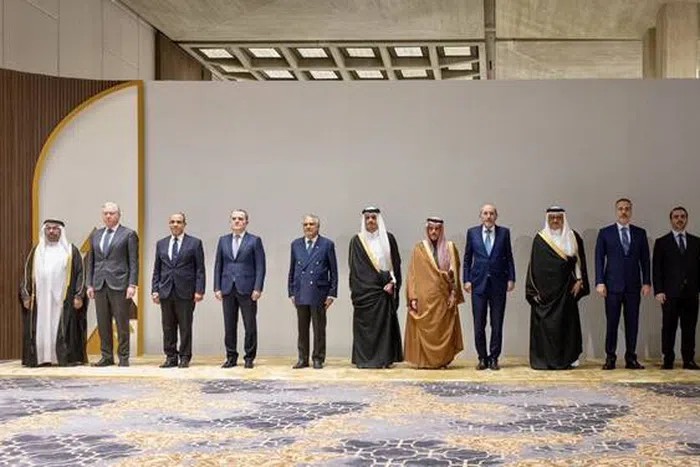
Arab and Islamic nations have called on Iran to immediately halt its attacks following a high-level meeting in Riyadh, warning that regional tensions are escalating.
Foreign ministers from across the Arab and Islamic world issued a strong statement demanding an end to Iran’s recent missile and drone strikes. The emergency meeting in Riyadh brought together senior diplomats from countries including Saudi Arabia, Qatar, Egypt, Turkey, the United Arab Emirates, Pakistan, and Jordan. Their joint statement reflects growing concern over the risk of a wider regional conflict.
The ministers condemned Iran’s strikes, which reportedly targeted critical infrastructure and civilian areas across multiple countries, including oil facilities, airports, residential zones, and diplomatic missions. They emphasised that such attacks jeopardise safety, economic stability, and violate international law.
Read more on: FG Makes UK University Education More Accessible to Nigerians, Ending the Need to “Japa” for Degrees
The coalition of nations made clear that Iran’s actions are unacceptable and urged an immediate cessation of military operations. They warned that ongoing aggression threatens regional security, global energy supplies, and key shipping routes, particularly around the Strait of Hormuz.
The ministers also stressed the importance of respecting national sovereignty and avoiding interference in other states’ internal affairs. They cautioned that continued attacks could further isolate Iran diplomatically and worsen relations with its neighbours.
Read more on: Recording Police on Duty Is a Constitutional Right, Federal High Court Rules
While the meeting highlighted a shared commitment to dialogue and de-escalation, there was a clear message that nations retain the right to defend themselves if provoked, signalling patience may be wearing thin.
This comes amid growing instability in the Middle East, with tensions involving Iran, Israel, and Western powers on the rise. Analysts say the unified stance from Arab and Islamic countries is significant, marking a rare moment of alignment on a sensitive geopolitical issue.
All eyes are now on Iran. Whether it chooses to scale back its actions or continue down its current path could determine whether the region moves toward diplomacy or further conflict.
Read more on:
- Nigeria Left Out as Pope Leo XIV Unveils Africa Visit Plans
- Planned Power Outage Sparks Backlash from Lagos Residents
- Tinubu Directs Ministers Planning to Run in 2027 to Resign
- Tinubu Sends Security Chiefs to Maiduguri Following Deadly Bomb Attack
- Court Drama as Sowore’s Lawyer Rejects Judge’s Order to Kneel
- Four Arrested in Oyo Over Alleged Cattle Thef