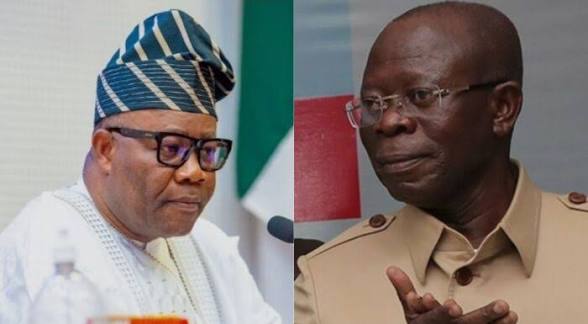
The Nigerian Senate witnessed a dramatic and highly charged session as Senate President Godswill Akpabio and Senator Adams Oshiomhole openly clashed over newly amended rules that could significantly reshape the future leadership of the upper legislative chamber. What began as a procedural matter quickly escalated into a heated confrontation, exposing deeper political tensions and raising questions about fairness, inclusiveness, and power dynamics within the Senate.
The disagreement stems from a set of amendments to the Senate Standing Orders that were passed just a day earlier after a lengthy closed door meeting among lawmakers. These changes introduce stricter eligibility criteria for senators aspiring to occupy top leadership positions such as Senate President and Deputy Senate President. The new rules reinforce the long standing tradition of prioritizing ranking senators, but they go further by setting clearer and more demanding requirements that effectively narrow the field of potential candidates.
Under the revised provisions, any senator seeking to contest for a presiding office must now have completed at least two consecutive terms in the Senate, which amounts to a minimum of eight years of uninterrupted legislative experience. In addition, at least one of those terms must be the immediate term preceding the election into leadership. This means that only senators with sustained and recent experience in the chamber can be considered eligible.
Read more on: Trump Warns of “Higher Level” Bombing on Iran if No Deal Is Reached
The amendment also establishes a clear hierarchy for nominations, prioritizing former Senate Presidents, followed by former Deputy Senate Presidents, then former principal officers, and subsequently returning senators who have served at least one full term. First time senators are placed at the bottom of this order and can only be considered if no candidates emerge from the higher ranked categories. This structure significantly limits the chances of newcomers rising quickly into top leadership roles, regardless of their political influence or experience outside the Senate.
One of the immediate consequences of this change is its impact on Senator Adams Oshiomhole, who is currently serving his first term representing Edo North. Despite his extensive political background, which includes serving as a state governor and national chairman of a major political party, the new rules effectively disqualify him from contesting for Senate leadership positions in the current assembly. This outcome has fueled controversy and intensified the debate over whether the amendments are aimed at promoting institutional stability or excluding potential rivals.
The tension surrounding the issue reached a boiling point during Wednesday’s plenary session. As proceedings began, Senate President Akpabio moved to confirm the Votes and Proceedings from the previous day, a routine process that typically proceeds without interruption. However, Senator Oshiomhole attempted to raise a point of order, seeking to challenge aspects of the earlier decision.
When his request was not immediately recognized, Oshiomhole persisted, repeatedly calling out for attention on the Senate floor. His insistence disrupted the session, drawing the attention of other lawmakers and creating an atmosphere of visible tension. Even after his microphone was turned off, he continued to press his point, raising his voice in protest and refusing to back down.
Read more on: Tension Rises as El Rufai Appears in Court Over New Charges
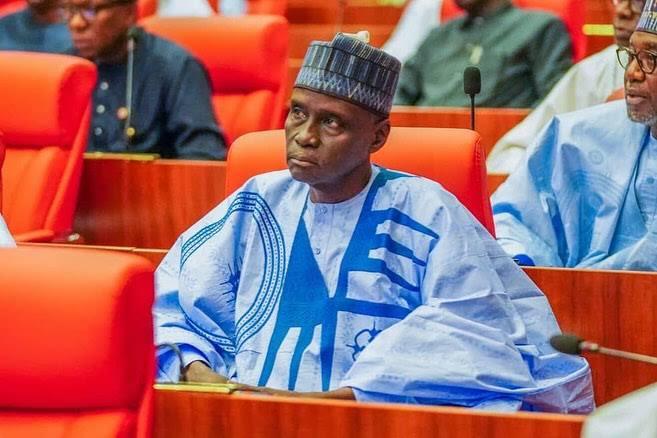
In response, Senate Chief Whip Mohammed Monguno stepped in, invoking his authority to restore order and instructing Oshiomhole to return to his seat. The situation, however, continued to escalate as Oshiomhole stood his ground. At this point, Senate President Akpabio issued a firm warning, cautioning that any further disruption would result in disciplinary action in line with the Senate’s rules.
Akpabio defended his decision to deny the point of order by referencing the Senate’s procedural guidelines, specifically Order 20(F), which prohibits interruptions during the confirmation of Votes and Proceedings. He emphasized the importance of adhering to established rules and urged lawmakers to familiarize themselves with legislative procedures before attempting to challenge them during sessions.
The exchange highlighted a deeper divide within the Senate over the purpose and implications of the newly introduced rules. While Akpabio and his supporters argue that the amendments are necessary to ensure experienced leadership and maintain institutional continuity, critics see them as restrictive measures that limit democratic participation and prevent capable individuals from advancing.
Oshiomhole’s reaction reflects this opposing viewpoint. He has expressed concern that the rules create an uneven playing field by excluding first term senators from meaningful participation in leadership contests. According to him, such restrictions undermine the principles of fairness and inclusiveness that should guide a democratic institution like the Senate.
Read more on: Major Shakeup in the House of Representatives as 17 Lawmakers Leave ADC for NDC
Beyond the immediate confrontation, political analysts believe the amendments may have broader implications for future power struggles within the chamber. There is growing speculation that the changes are part of a strategic effort to shape the leadership landscape ahead of the next Senate cycle, particularly in relation to the period after 2027. By tightening eligibility requirements, the current leadership may be positioning itself to retain control while limiting the emergence of new challengers.
The mention of other political figures, including those who may consider a return to the Senate in the future, has further fueled these discussions. The new rules could potentially affect a wide range of politicians, not just current members, making the debate more significant in the context of long term political planning.
Amid the tension and heated exchanges, the Senate also moved forward with other legislative activities. In a notable development, lawmakers approved a change to the legislative calendar, increasing the number of plenary sitting days from three to five per week. This adjustment is aimed at improving productivity and ensuring that more legislative business is addressed within a shorter timeframe.
The Senate also carried out its constitutional duty of confirming ministerial nominees, including Ambassador Tegbe and Enikanolaye, signaling that despite the internal disagreements, the chamber continues to function and fulfill its responsibilities.
Read more on: Zenith Bank Chairman Jim Ovia retires, marking historic transition
The events of the day have underscored the complex interplay between procedure, politics, and power within Nigeria’s legislative system. What might appear as a technical amendment to internal rules has revealed deeper concerns about representation, ambition, and control within the Senate.
As reactions continue to emerge from lawmakers, political observers, and the public, the controversy surrounding the new rules is unlikely to fade quickly. The clash between Akpabio and Oshiomhole has brought the issue into sharp focus, turning what could have been a quiet procedural adjustment into a major political talking point.
Moving forward, the Senate may face increased scrutiny over how its rules are shaped and applied, especially in relation to leadership selection. Whether the amendments will strengthen the institution or deepen divisions within it remains to be seen, but for now, the tension they have created is a clear reflection of the high stakes involved in Nigeria’s political landscape.
Read more on: