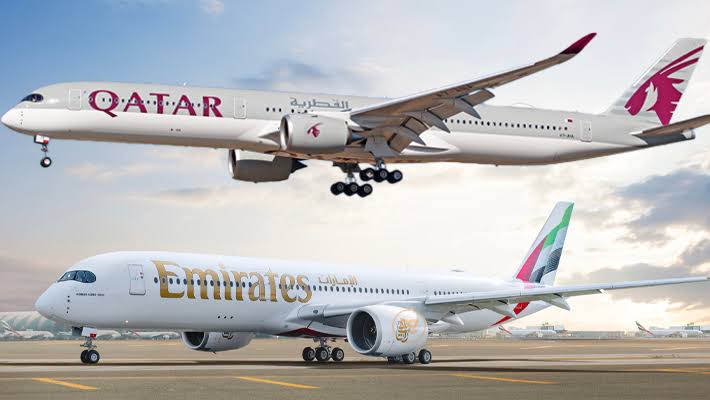
After weeks of disruption across the Middle East, air travel is finally beginning to stabilise. As of Sunday, March 22, 2026, leading carriers Qatar Airways and Emirates have started restoring their flight schedules in phases, signalling a major step forward for international travel in the region.
Although flights are resuming, operations have not fully returned to normal. Airlines are taking a careful and measured approach as they reopen key routes and manage ongoing safety concerns.
Gradual Return of Flight Networks
Both airlines are focusing on rebuilding connections through their busiest global hubs while delaying routes that still pose operational risks.
Emirates, based in Dubai, has restored about sixty percent of its network. Popular long distance destinations such as Los Angeles, London, and Sydney are back in operation. However, some regional routes, including Beirut, Tehran, and Baghdad, are still on hold while further safety checks continue.
At the same time, Doha is seeing increased activity again as Qatar Airways resumes flights through Hamad International Airport. The airline is currently prioritising major routes across Europe and Asia. It has also introduced flexible rebooking options for passengers whose travel plans were affected in recent weeks.
Read more on: Gucci’s Digital Shift: A New Era of Instant Fashion in 2026
Why Flights Were Disrupted
The earlier shutdown of airspace was linked to rising tensions in the region, including missile and drone activity that made flying conditions unsafe. Aviation regulators such as European Union Aviation Safety Agency have since released updated guidance for airlines operating in or around sensitive zones.
Even now, some flights are taking longer than usual. Airlines are using adjusted flight paths that avoid high risk areas, instead routing aircraft through safer corridors over the Mediterranean and parts of the Arabian Peninsula.
A More Digital Travel Experience
Passengers travelling during this period are being encouraged to rely heavily on digital tools. Flight schedules, boarding gates, and departure times may change at short notice as airlines continue to manage a high volume of traffic.
Using airline mobile apps for real time updates has become essential. Digital boarding passes and biometric check in systems are also being promoted to reduce congestion at busy terminals like Hamad International Airport and Dubai International Airport.
Read more on: The Rise of Invisible Diagnostics
Impact on Ticket Prices
With fewer flights available and demand rising quickly, ticket prices have increased, especially for last minute bookings. However, analysts expect fares to gradually stabilise as more routes reopen in the coming weeks.
What Travelers Should Expect
Passengers passing through major hubs like Doha or Dubai are advised to plan for longer transit times. A layover of at least three hours is recommended due to increased security checks and the large number of travellers rescheduling trips.
The Bigger Picture
The reopening of airspace marks a welcome development for global travel. While the situation is still evolving, the return of major airlines like Qatar Airways and Emirates offers hope to thousands of passengers who have been affected by recent disruptions.
For now, travel is back on track, even if it comes with a few adjustments along the way.
Read more on: