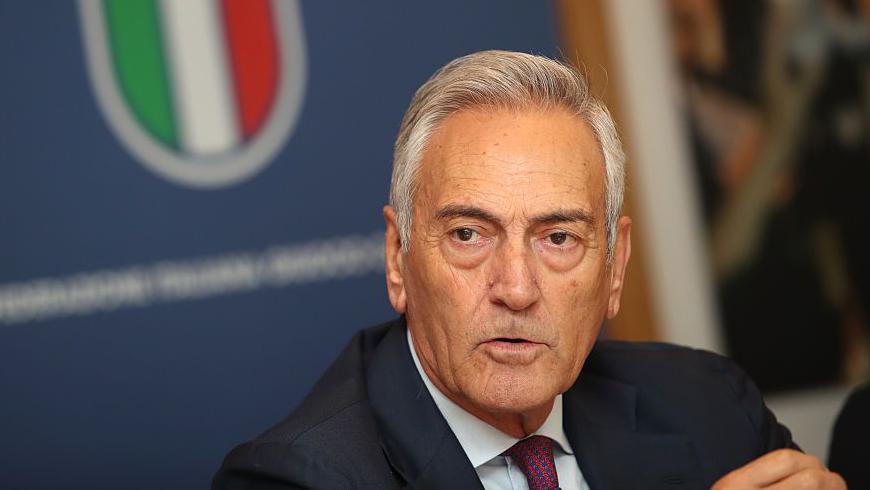
The repercussions of Italy’s humiliating night in Zenica have now fully reached the highest levels of the country’s football leadership. After the national team’s stunning failure to qualify for the 2026 FIFA World Cup, Gabriele Gravina has stepped down from his role as President of the Italian Football Federation. This marks a dramatic turning point for a footballing nation that once dominated the global stage but now finds itself grappling with repeated disappointment.
Gravina Steps Down Amid Mounting Pressure
Gravina officially submitted his resignation on Thursday at the federation’s headquarters in Rome, bringing an end to an eight-year spell in charge that was filled with both triumph and turmoil. His departure signals what many are calling a complete reset for Italian football, a moment insiders have described as a “Year Zero” that could shape the future of the sport in the country.
At 72, Gravina had initially planned to wait until an upcoming board meeting to decide his future. However, the scale of public outrage following Italy’s elimination made that position untenable. Criticism came from every direction, including fans, media voices, and former players. Italy’s Sports Minister Andrea Abodi also made his stance clear by calling for immediate leadership change. Faced with this pressure, Gravina chose to resign earlier than expected.
During a subdued press conference, he accepted full responsibility for the team’s failure. He admitted that Italian football is currently facing a deep crisis and acknowledged that the path under his leadership had reached its limit. His tone reflected both resignation and realism, recognizing that new leadership is necessary to begin rebuilding.
A Legacy of Highs and Historic Failures
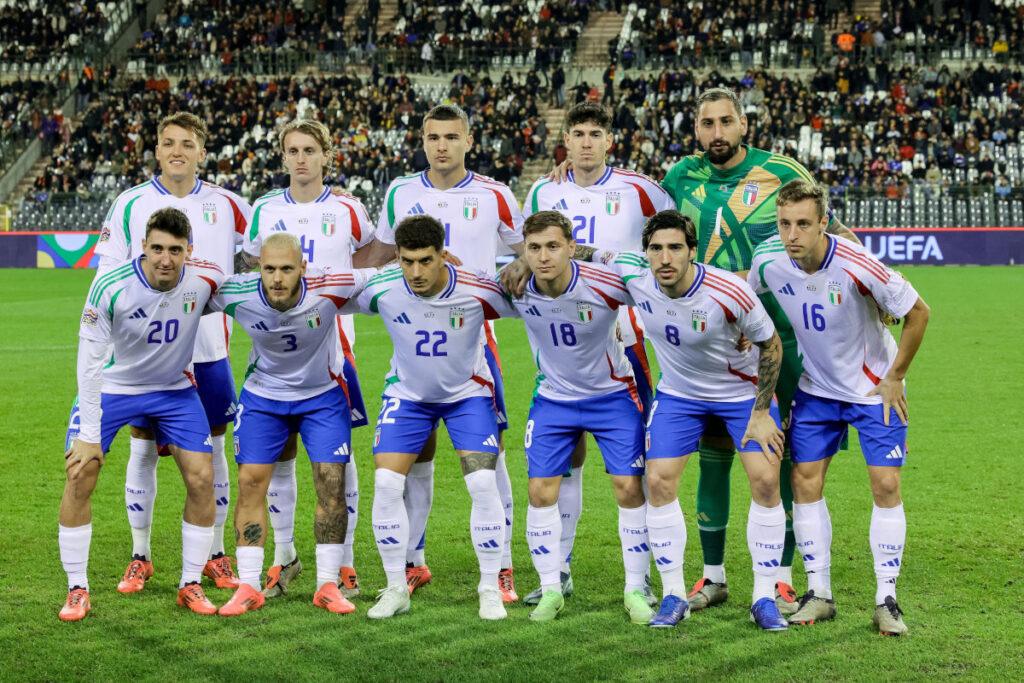
Gravina’s tenure cannot be described in simple terms. On one hand, he oversaw Italy’s triumphant Euro 2020 campaign, a moment that briefly restored national pride and reminded the world of the country’s footballing pedigree. On the other hand, that success now feels distant when weighed against the failures that followed.
Italy’s inability to qualify for the 2022 and 2026 World Cups stands as a historic low point. For a nation that has won the tournament four times, missing out on consecutive editions is almost unthinkable. Beyond results on the pitch, critics have also pointed to a lack of structural reform within domestic football, especially in Serie A, where outdated systems and limited investment in youth development have been recurring concerns.
Gravina’s resignation also raises questions about his role within UEFA, where he served as First Vice President. His exit from Italian football could have ripple effects at the European level, although his immediate future in that position remains uncertain.
Read more on: “I Felt Like a Dead Man”Kylian Mbappé Opens Up: Racism, Heritage, and the Journey Beyond Football
The Night in Zenica That Changed Everything
The defining moment of this crisis came during the playoff clash against Bosnia and Herzegovina. It was a match filled with early promise but ultimately defined by collapse. Italy started strongly, taking the lead through Moise Kean and appearing to be on course for a long-awaited return to the World Cup.
However, the game shifted dramatically when Alessandro Bastoni received a red card, forcing Italy to play with ten men for a significant portion of the match. From that point onward, the team retreated into a defensive approach, struggling to cope with increasing pressure.
Bosnia and Herzegovina capitalized on their advantage and eventually found an equalizer, pushing the game into a penalty shootout. What followed was a painful conclusion. Young striker Pio Esposito missed his attempt by sending the ball over the bar, while Bryan Cristante struck the woodwork. Bosnia and Herzegovina, by contrast, remained composed and converted four of their five penalties, securing qualification and leaving Italy in shock.
Buffon’s Emotional Exit Signals End of an Era
The fallout from the defeat extended beyond Gravina. Gianluigi Buffon, one of the most respected figures in Italian football history, also announced his resignation as the national team’s Delegation Chief. His departure carries deep emotional significance, as he represents one of the last remaining links to Italy’s World Cup-winning squad of 2006.
In a heartfelt message shared on social media, Buffon acknowledged that the primary objective of returning Italy to the World Cup had not been achieved. He stated that stepping aside would allow new leadership the freedom to make their own decisions and chart a fresh course for the team.
His exit symbolizes more than just a change in personnel. It reflects the closing of a chapter in Italian football history and reinforces the sense that a complete transformation is now unavoidable.
Read more on: Osimhen Leads Super Eagles Against Ronaldo and Lewandowski in High-Stakes June Friendlies
What Comes Next for Italian Football
With Gravina’s resignation confirmed, the federation has already begun outlining the next steps. An election to choose a new president has been scheduled for June 22, 2026, just days after the World Cup begins without Italy’s participation. The timing adds further weight to the moment, as the tournament will serve as a constant reminder of the team’s absence.
Several names have emerged as potential successors. Giovanni Malagò, the former head of the Italian National Olympic Committee, is being discussed as a stabilizing figure who could restore order and credibility. Meanwhile, there is growing support among fans for Paolo Maldini to take on a significant role, particularly in shaping the development of young players and modernizing the football structure.
Attention is also turning to the national team bench. Head coach Gennaro Gattuso is widely expected to step down in the coming weeks. Reports suggest he has already informed players of his intention to leave once a transitional management team is established. If confirmed, his departure would mark yet another major change in a period of upheaval.
A Lost Generation of Italian Football
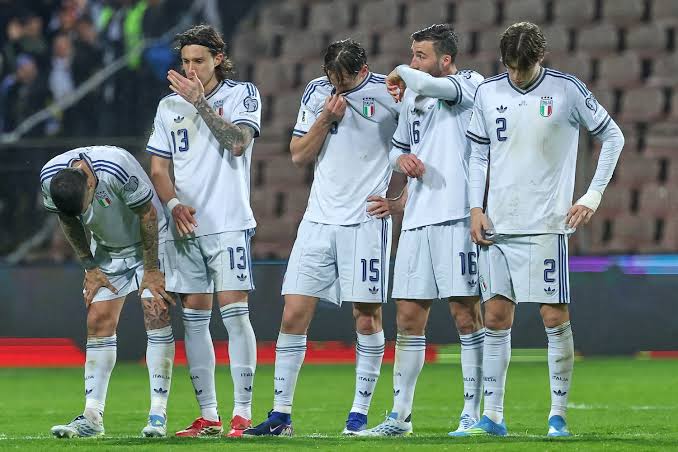
Perhaps the most striking consequence of Italy’s repeated failures is the emergence of what many are calling a lost generation. The last time Italy played a match at the World Cup was in June 2014. By the time the 2026 tournament begins, twelve years will have passed without the Azzurri appearing on football’s biggest stage.
This means that an entire generation of teenagers in Italy has grown up without witnessing their national team compete at a World Cup. For a country where football is deeply woven into cultural identity, this absence represents more than just a sporting failure. It is being described by analysts as a national disappointment with long-term implications for fan engagement, talent development, and global reputation.
As the expanded 48-team World Cup prepares to feature emerging nations such as Curaçao, Uzbekistan, and DR Congo, Italy’s absence becomes even more glaring. The silence left by one of football’s most historic teams will be impossible to ignore, serving as a constant reminder of how far the Azzurri have fallen and how much work lies ahead to restore their place among the elite.
Read more on:
- Salah’s Saudi Shock, Osimhen’s Comeback, and Chelsea’s Heartbreak: A Night of Football Turning Points
- Ceballos Faces Summer Showdown as Betis Return Hangs by €15m
- New Era Unleashed: Iraq and DR Congo Seal Historic World Cup Returns as Giants Fall
- Infantino Shuts Down Iran World Cup Exit Rumors Amid Rising Tensions
- Salah Set to Leave Liverpool as Egypt Warns Against MLS Move