A disturbing new pattern of insecurity is unfolding in parts of Northwest Nigeria, where criminal groups are no longer relying solely on sporadic attacks or kidnappings for ransom. Instead, they appear to be experimenting with a more structured and deeply unsettling form of control. In several rural communities within Kankia Local Government Area of Katsina State, residents have been thrown into panic after receiving written ultimatums demanding an enormous number of livestock as a so called protection levy.
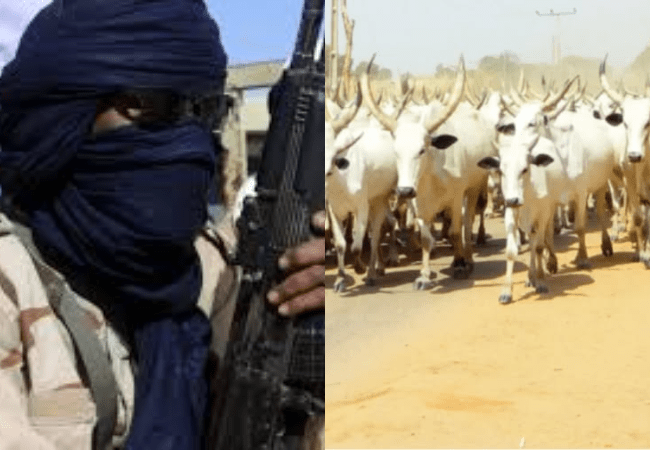
The demand is staggering in both scale and implication. Community members in affected villages were ordered to provide a total of 700 cows and 1,000 sheep within a strict deadline. The warning was clear and frightening. Failure to comply would result in a full scale attack, one that could wipe out entire settlements and leave devastation in its wake. As the deadline passed on Friday, April 10, fear reached a breaking point, forcing hundreds of villagers to abandon their homes in search of safety.
A New Method of Intimidation Emerges
The crisis began earlier in the week when unknown couriers delivered handwritten letters to leaders in the communities of Rimaye and Sukunturi. Unlike previous threats, which were often communicated verbally during raids or through intermediaries, these messages were deliberate and calculated. They were written in clear English and outlined precise expectations.
This shift in communication has raised concern among observers and security analysts. The use of written notices suggests a level of organization that goes beyond spontaneous criminal activity. It reflects a system that is attempting to formalize extortion, almost like a parallel authority imposing its own rules on vulnerable populations.
The contents of the letters left no room for negotiation. The communities were instructed to jointly gather 700 cows and 1,000 sheep. These were not random figures but carefully chosen quantities that would require collective participation from multiple villages. The implication was that no single community could meet the demand alone, forcing cooperation under pressure.
The threat attached to the demand was equally alarming. The groups warned that failure to deliver the livestock within the specified time frame would lead to a coordinated invasion. This would involve widespread violence, destruction of property, and likely loss of life. For communities that have already endured years of attacks, the message carried a heavy weight.
Although the letters were specifically addressed to Rimaye and Sukunturi, the fear quickly spread beyond those locations. Neighboring villages such as Kunduru, Tsa, and Magam began to feel equally threatened. Residents in these areas did not wait for direct communication before taking action. Many chose to flee immediately, unwilling to risk being caught in what could become a large scale assault.
Read more on: Boko Haram Attack Claims Senior Nigerian General in Borno
Mass Displacement and Scenes of Desperation
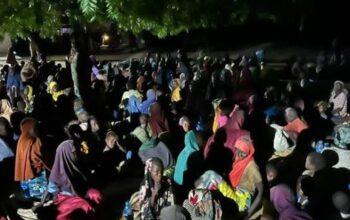
By midweek, the situation had escalated into a humanitarian concern. Roads leading into Kankia town became crowded with displaced residents carrying whatever belongings they could manage. Families moved in groups, often on foot, with no clear destination in mind. The urgency of their departure reflected the seriousness of the threat.
The Muslim Rights Concern, also known as MURIC, issued a public statement describing the unfolding crisis. According to the group’s leader, Professor Ishaq Akintola, the scenes were deeply distressing. He spoke of large numbers of people, including children and elderly individuals, walking aimlessly in search of safety. Many appeared exhausted and emotionally drained, uncertain about what the future held.
The statement painted a grim picture of communities in collapse. Homes were left behind, farms abandoned, and livelihoods disrupted. The phrase “trekking to nowhere” captured the sense of displacement and confusion among those affected. It was not just a physical movement but also a psychological one, as people struggled to come to terms with the loss of stability.
In addition to the exodus, there were reports of frantic economic activity in the final hours before departure. Some villagers attempted to sell their livestock at local markets, often accepting very low prices. This was a desperate effort to convert assets into cash that could be used during their displacement. For many, it was better to leave with something rather than risk losing everything to looting or destruction.
Economic Impact and Hidden Costs
The scale of the demanded livestock highlights the economic burden placed on these communities. Cows and sheep are not just animals in this context. They represent wealth, savings, and a means of survival. Losing them would have long term consequences that extend far beyond the immediate crisis.
Estimates suggest that the total value of the demanded livestock could run into hundreds of millions of naira. For rural communities that depend heavily on agriculture and livestock rearing, such a loss would be devastating. It would undermine food security, reduce income, and increase poverty levels.
Even for those who managed to sell their animals before fleeing, the financial outcome was far from favorable. Selling under pressure often leads to significant losses, as buyers take advantage of the situation. This creates a cycle where victims of insecurity are further weakened economically, making it even harder for them to recover.
Read more on: U.S. Marks Plateau, Kano and 21 Other States as High-Risk Travel Zones
Questions Around Security Agreements
The timing of this incident has raised serious questions about recent efforts by the Katsina State Government to negotiate peace with armed groups. In previous months, officials had announced agreements with individuals described as repentant bandits. These arrangements were said to have contributed to the release of hundreds of kidnapped victims and a temporary reduction in violence.
However, developments on the ground suggest that these agreements may not have achieved their intended goals. Instead of a lasting peace, there appears to be a shift in tactics. Armed groups are adapting their strategies, moving from direct confrontation to systems of control that resemble informal governance.
Reports from other parts of the state support this view. In areas around the Rugu Forest, farmers have been forced to pay fees before they can access their own land. These payments can be as high as fifty thousand naira per acre. Such practices indicate that the groups are not just seeking quick financial gains but are establishing ongoing sources of revenue.
At the same time, attacks have not completely stopped. Communities in Funtua and Kankara Local Government Areas have continued to experience raids. In some cases, these incidents have involved abductions, particularly of women. This combination of taxation and violence creates an environment where residents are constantly under threat.
Government Response and Public Reaction
In response to the latest threat, the Katsina State Government convened an emergency security meeting. Details of the discussions have not been made public, but there have been visible efforts to increase security presence in the affected areas. Military and police patrols have been deployed along key routes, particularly around the Kankia and Musawa axis.
While these measures may provide some level of reassurance, they have not been enough to convince displaced residents to return home. For many, the fear of another attack remains too strong. There is a growing demand for more permanent solutions, such as the establishment of security outposts within vulnerable communities.
The gap between official action and community expectations reflects a broader challenge. Security is not just about responding to threats but also about building trust. In areas where people have experienced repeated attacks, confidence in protective measures can be difficult to restore.
Read more on: Wike-Backed PDP Slams Makinde Over ADC Alliance Plans for 2027
A Shift Toward Parallel Authority
One of the most significant aspects of this situation is what it reveals about the evolving nature of insecurity in the region. The demand for livestock as a form of taxation suggests that these groups are attempting to position themselves as alternative authorities. They are not merely carrying out isolated acts of violence but are seeking to control resources and influence behavior.
This raises important questions about governance and state presence. When communities are forced to choose between compliance and destruction, the legitimacy of official institutions comes into question. The absence of effective protection creates space for non state actors to impose their own systems.
The concept of paying for protection is not new, but its scale and organization in this context are particularly concerning. It indicates a move toward more structured operations, where demands are calculated and enforced systematically.
Uncertain Future for Affected Communities
As the deadline for the ultimatum passes, uncertainty hangs over the affected areas. It remains unclear whether the threatened attack will take place or whether the show of force by security agencies will deter it. What is certain, however, is that the impact of the crisis will be felt long after this particular incident.
Displaced residents face an uphill task of rebuilding their lives. Even if they return home, they may find their communities changed. Infrastructure may be damaged, economic activities disrupted, and social cohesion weakened. The psychological toll of displacement and fear cannot be easily measured but is equally significant.
For policymakers and security experts, the situation serves as a critical reminder of the need for comprehensive strategies. Addressing the root causes of insecurity, strengthening local institutions, and ensuring consistent protection are essential steps in preventing similar crises in the future.
Read more on: Trump Administration Petitioned by U.S. Lobbyists Over INEC’s ADC Decision
Conclusion
The events in Kankia Local Government Area highlight a troubling evolution in the dynamics of insecurity in Northwest Nigeria. The demand for 700 cows and 1,000 sheep is not just an act of extortion but a signal of changing tactics. It reflects an attempt to establish control through organized and sustained pressure on communities.
As residents continue to flee and authorities work to respond, the broader implications remain a subject of concern. Whether this marks the beginning of a more entrenched system of parallel governance or a temporary escalation will depend on the actions taken in the coming weeks and months.
What is clear is that the stakes are high, not only for the affected communities but for the region as a whole. The challenge now lies in preventing this model of coercion from taking deeper root and ensuring that those who have been displaced can one day return to a place they can truly call safe.
Read more on:
- Atiku, Obi, Kwankwaso Lead Opposition Protest Claiming INEC Bias
- World Bank Stresses Policy Reforms as Essential for Smarter African Growth
- UNIJOS Lecturers Begin Strike Action Over Delayed March Pay
- Trump Announces Two-Week Halt to Military Strikes on Iran
- Dangote Petroleum Sparks Fuel Surge: Petrol at ₦1,275, Diesel at ₦1,950