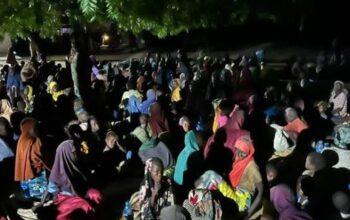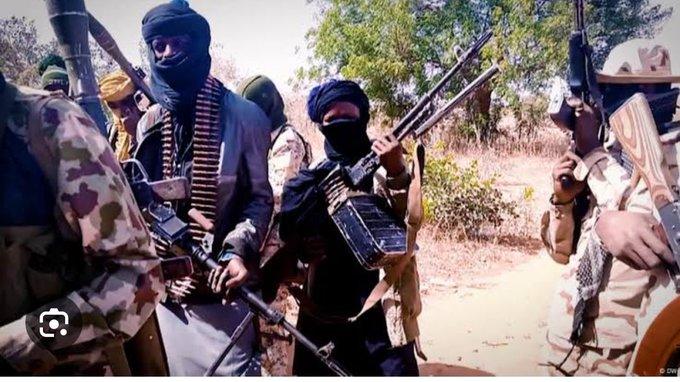
The uneasy calm that had briefly settled over parts of Plateau State has once again been violently disrupted. In the quiet hours of Thursday night, tragedy struck Mbwelle village in Bokkos Local Government Area, leaving behind a trail of grief, fear, and unanswered questions. By the early hours of Friday morning, confirmation had emerged that eight people, most of them from the same extended family, had been brutally killed in what residents have described as a calculated and deeply disturbing нападение.
This latest incident adds to a growing list of violent attacks that have plagued Plateau State in recent weeks. Despite repeated assurances from authorities and increased security presence in some areas, communities continue to experience deadly incursions that leave them vulnerable and shaken.
A Night of Horror in Mbwelle
According to eyewitness accounts, the attack began at around 11:00 p.m. on Thursday. Mbwelle, like many rural communities in Bokkos, had settled into the stillness of the night when the sound of gunfire suddenly shattered the silence. Residents reported that the attackers moved with a sense of purpose, navigating through the village as if they were familiar with the terrain.
The assailants reportedly headed straight for the home of an extended family, where multiple members were gathered. What followed was nearly an hour of sustained gunfire. The attackers carried out their assault with chilling precision, leaving little room for escape or resistance.
By the time the gunmen withdrew and disappeared into the darkness, eight individuals had been killed. The victims, identified by members of the community, include Elder Iliya Mangut Dakus, Luck Titus Dakus, Habila Istifanu Dakus, Hassan Istifanus Dakus, Hassan Moses Dakus, Biggie Lucky Dakus, Sunday Gideon Dakus, and Innocent Barnabas Makwin.
The loss has devastated not only the immediate family but the entire community. In places like Mbwelle, where social ties run deep and families are closely interconnected, such a tragedy reverberates far beyond the household directly affected.
Read more on: Bandits Trigger Panic, Demand 700 Cows and 1,000 Sheep
Injuries, Missing Persons, and Rising Fear
In addition to those who lost their lives, at least three other individuals sustained serious injuries during the attack. They are currently receiving medical treatment at a nearby facility, where healthcare workers are doing everything possible to stabilize their condition.
There are also growing concerns about several individuals who remain unaccounted for. In the aftermath of the нападение, some villagers fled into surrounding bushes in a desperate attempt to escape. As search efforts continue, fears are mounting that the number of casualties could increase.
The uncertainty surrounding the missing has added another layer of distress to an already traumatized community. Families are left waiting anxiously for news, unsure whether their loved ones will return or be added to the list of victims.
Condemnation from Local Authorities
The Chairman of Bokkos Local Government Area, Honorable Samuel Amalau, has strongly condemned the attack. In a statement released on Friday morning, he expressed deep sorrow over the loss of lives and described the incident as both senseless and unacceptable.
He emphasized that the нападение was not just an assault on a single family or community, but a direct attack on the principles of peaceful coexistence that the region has long struggled to maintain. His words reflected a mixture of grief and frustration, sentiments that are widely shared among residents.
Amalau also raised concerns about the effectiveness of existing security measures. Despite the presence of checkpoints and patrols in some areas, the attackers were able to enter the community, carry out their operation, and leave without being intercepted. This has led to renewed calls for a more proactive and sustained security strategy.
Read more on: Boko Haram Attack Claims Senior Nigerian General in Borno
A Pattern of Violence Across Plateau State
The events in Mbwelle are part of a broader pattern of violence that has intensified in Plateau State over the past two weeks. What began as isolated incidents has evolved into a series of coordinated attacks affecting multiple communities.
On March 29, a particularly deadly нападение in Angwan Rukuba, located in Jos North Local Government Area, resulted in the deaths of more than 33 people. Among the victims were two students from the University of Jos, an incident that sent shockwaves through the academic community.
In the days that followed, further violence erupted along Bauchi Road and nearby areas. These incidents led to additional casualties, including more students, and forced the university to suspend academic activities. Examinations were postponed as the institution grappled with the impact of the ongoing insecurity.
Another attack occurred on April 3 in the Jol community of Riyom Local Government Area, where a 51 year old man was killed. This incident took place just a day after President Bola Tinubu visited Jos to reassure residents and demonstrate the government’s commitment to restoring peace. The timing of the нападение raised questions about the effectiveness of high level interventions.
Military Operations and Limited Reassurance
Amid the growing crisis, the Nigerian Army has intensified its operations in affected areas. On Friday, military authorities announced that troops involved in Operation Wutan Daji had successfully neutralized ten suspected террористs during coordinated offensives in Wase and Kanam Local Government Areas.
While such developments indicate that security forces are actively engaging armed groups, they have done little to ease the fears of communities that continue to experience attacks. For residents of Mbwelle and other affected areas, the reality on the ground remains one of vulnerability and uncertainty.
There is a growing perception among locals that military successes in distant locations do not necessarily translate into immediate safety for their communities. This gap between strategic victories and everyday security has become a source of frustration.
Read more on: U.S. Marks Plateau, Kano and 21 Other States as High-Risk Travel Zones
Humanitarian and Psychological Impact
Beyond the immediate loss of life, the ongoing violence is having a profound humanitarian impact. Families are being displaced, livelihoods are being disrupted, and entire communities are living under constant threat.
The psychological toll is particularly significant. Fear has become a constant companion for many residents, affecting their ability to carry out daily activities. Children are growing up in an environment marked by uncertainty, while adults struggle to provide a sense of stability.
The Vice Chancellor of the University of Jos, Professor Tanko Ishaya, recently spoke about the broader implications of the crisis. In addition to mourning the loss of students Abel Joro Gershon and Adeyemo Oluwafemi Temitope, he highlighted the emotional strain that the situation is placing on young people.
Education, which is often seen as a pathway to a better future, has been disrupted. Students are unable to focus on their studies, and academic institutions are forced to adjust their schedules in response to security concerns.
Threats to Agriculture and Food Security
The impact of the violence extends beyond immediate safety concerns to the economic foundations of the region. Plateau State is known for its agricultural productivity, and communities in Bokkos and surrounding areas rely heavily on farming.
With the planting season approaching, many farmers are reluctant to return to their fields. The fear of нападение has made it difficult for them to carry out essential agricultural activities. This hesitation could have serious consequences for food production in the months ahead.
If the situation persists, it may lead to reduced harvests, higher food prices, and increased economic hardship. The ripple effects could be felt not only within the state but also in other parts of the country that depend on produce from the region.
Read more on: Wike-Backed PDP Slams Makinde Over ADC Alliance Plans for 2027
Calls for Stronger Security Measures
In the wake of the Mbwelle attack, there have been renewed calls for more effective security measures. Community leaders are urging the government to establish permanent security outposts in vulnerable areas. They argue that a sustained presence is necessary to deter attackers and respond quickly to threats.
There is also a growing emphasis on community based vigilance. Residents are being encouraged to remain alert and report suspicious activities. However, many believe that local efforts alone are not enough to address the scale of the problem.
The challenge lies in creating a comprehensive approach that combines military action, intelligence gathering, and community engagement. Without such a strategy, there is a risk that the cycle of violence will continue.
A Community in Mourning
As the people of Mbwelle come to terms with their loss, preparations are underway for a mass burial. The ceremony is expected to draw mourners from across the region, reflecting the widespread impact of the tragedy.
Funerals in such circumstances are not just about saying goodbye. They are also moments of collective reflection and solidarity. For many, they serve as a reminder of the urgent need for lasting solutions.
An Uncertain Road Ahead
The situation in Plateau State remains fragile. While efforts are being made to address the crisis, the path to lasting peace is far from clear. Each new attack deepens the sense of insecurity and makes recovery more challenging.
For now, communities like Mbwelle are left to navigate a difficult reality. They must find ways to cope with their grief while remaining vigilant against further threats. The resilience of these communities is evident, but resilience alone cannot replace the need for effective protection.
As the region mourns yet another tragedy, the question remains whether meaningful change will follow. The answer will depend on the actions taken in the days and weeks ahead, as well as the commitment of all stakeholders to restoring peace and stability.
Until then, the people of Plateau State continue to live with a painful uncertainty, caught between memories of what once was and fears of what might come next.
Read more on:
- Trump Administration Petitioned by U.S. Lobbyists Over INEC’s ADC Decision
- Atiku, Obi, Kwankwaso Lead Opposition Protest Claiming INEC Bias
- World Bank Stresses Policy Reforms as Essential for Smarter African Growth
- UNIJOS Lecturers Begin Strike Action Over Delayed March Pay
- Trump Announces Two-Week Halt to Military Strikes on Iran