Football at this level rarely offers simplicity. It is a theatre of nerve, structure, calculated risk, and moments that can redefine entire seasons. What unfolded at the City Ground between Nottingham Forest and Aston Villa was not just a semi final clash. It was a collision of philosophies, a test of discipline, and a reminder that European football often rewards patience over spectacle.
From the opening whistle, the atmosphere felt heavy with consequence. Every pass carried intent. Every defensive line held meaning. Every transition threatened to tilt the balance. Forest approached the contest like a side fully aware of its limitations yet confident in its structure. Villa, on the other hand, arrived with authority, control, and the tactical imprint of a manager synonymous with continental success.
The result may read as a narrow victory, but the story beneath that scoreline is layered. It is a story of resilience, of calculated defending, of missed opportunities, and of a single decisive moment that now shapes the trajectory of both teams.
This is not merely a match report. This is a deep tactical and performance analysis of a semi final that has set the stage for a compelling second act.
Read more on: La Liga Chief Shares Candid View on Mourinho’s Possible Return To Real Madrid
Match overview and tactical context
The contest ended with Nottingham Forest holding a slender one goal advantage over Aston Villa. On the surface, it appears straightforward. In reality, it was anything but.
Forest deliberately surrendered possession, finishing with a significantly lower share of the ball. This was not accidental. It was a strategic decision rooted in defensive compactness and spatial denial. Villa controlled large portions of the game but struggled to convert that dominance into clear scoring opportunities.
The numbers reflect this contrast.
| Statistic | Nottingham Forest | Aston Villa |
|---|---|---|
| Score | 1 | 0 |
| Possession | 42 percent | 58 percent |
| Shots on target | 4 | 3 |
| Saves | 3 | 3 |
| Yellow cards | 0 | 1 |
The data reveals balance despite contrasting styles. Villa had more of the ball. Forest had sharper defensive execution.
Read more on: UEFA Explains VAR Call as Eberechi Eze Penalty Is Overturned in Arsenal’s Draw with Atlético Madrid
Vitor Pereira against Unai Emery
This encounter was as much about the dugout as it was about the pitch.
Vitor Pereira’s disciplined defensive structure
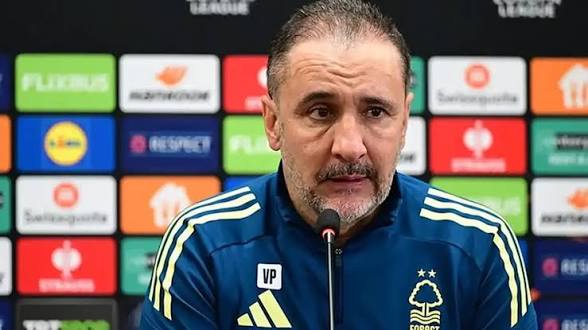
Vitor Pereira set his team up with a clear identity. Defensive solidity came first. Risk was minimized. Space was treated as a precious resource.
The central defensive pairing of Nikola Milenković and Morato played a crucial role. Their positioning was conservative yet intelligent. They rarely stepped out unnecessarily, ensuring that Ollie Watkins had little room to operate behind the line.
Forest’s defensive block operated in layers. The midfield shield dropped deep when required, compressing the central channels. Wide areas were protected by disciplined tracking, limiting Villa’s ability to stretch the game.
The result was frustration for Villa. They circulated possession but rarely penetrated the most dangerous zones.
Read more on: Cristiano Ronaldo Shines Again With Decisive Goal To Secure The Title
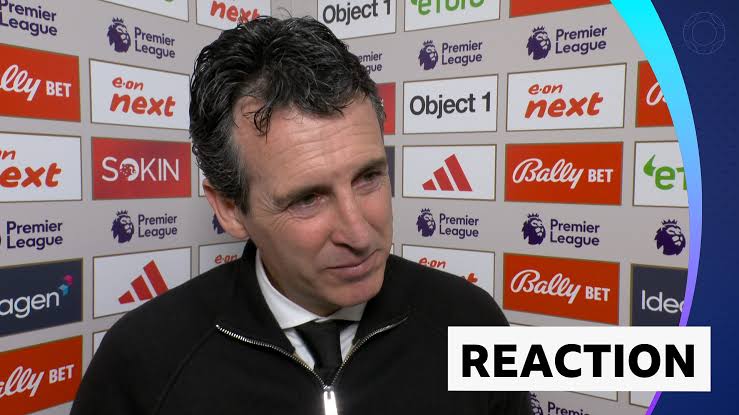
Unai Emery’s Controlled But Restricted Possession Game
Unai Emery is widely respected for his European expertise, and his team reflected his philosophy. Villa controlled tempo, recycled possession efficiently, and looked to create overloads in midfield.
Youri Tielemans and John McGinn dictated rhythm, moving the ball with intelligence. However, the final third proved problematic.
Forest’s compactness denied Villa the vertical passes they rely on. The lack of space meant that attacking movements became predictable. Crosses were often the only option, which played directly into Forest’s defensive strengths.
Penalty Drama And Composure Under Pressure
Matches of this magnitude are often decided by moments rather than patterns. This game followed that script.
The breakthrough came when Omari Hutchinson showed persistence on the flank. Chasing a seemingly lost ball, he managed to deliver a cross that struck the arm of Lucas Digne.
The referee initially waved play on, but video review intervened. The replays highlighted an unnatural arm position, leaving little room for debate.
Up stepped Chris Wood.
Penalty situations at this stage are psychological battles. The goalkeeper attempts to dominate. The crowd amplifies pressure. The taker must isolate the moment.
Wood executed with authority. Power, precision, and confidence combined as he drove the ball into the top corner, leaving Emiliano Martínez with no chance despite reading the direction.
That single action now defines the tie heading into the return leg.
Read more on: Read more on: Arsenal Hold Atlético Madrid to Draw in Tense Champions League Semi Final First Leg
A Duel Within The Battle
While the penalty decided the scoreline, the goalkeepers ensured the match remained finely balanced.
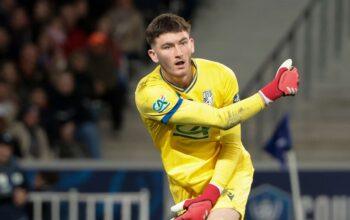
Stefan Ortega’s commanding presence
Stefan Ortega delivered a performance of composure and reflex brilliance. His shot stopping ability was particularly evident when denying Ollie Watkins from close range.
Beyond saves, his control of the penalty area stood out. During late pressure phases, he commanded crosses effectively, reducing second ball opportunities.
Emiliano Martínez’s resilience
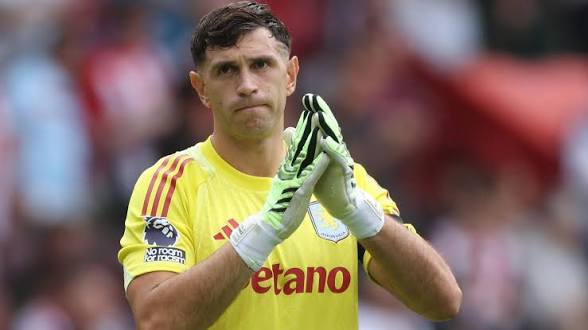
Emiliano Martínez once again demonstrated why he is regarded among the elite. His first half save from Igor Jesus was exceptional, showcasing sharp reflexes and positioning.
Even in the penalty situation, he made the correct decision. The execution simply surpassed the save attempt.
Read more on: Atlético Madrid vs Arsenal: Tactical Battle Set in Champions League Semi Final (UCL)
Key player performances and influence
Nikola Milenković as the defensive anchor
Nikola Milenković was dominant in aerial duels and clearances. His reading of the game allowed Forest to maintain structure under sustained pressure.
Morgan Rogers as Villa’s creative spark
Morgan Rogers carried attacking responsibility with energy. His driving runs disrupted Forest’s shape at times, but the lack of finishing support limited his impact.
Omari Hutchinson’s relentless work rate
Omari Hutchinson proved decisive without scoring. His determination created the penalty, underlining the value of persistence in high level football.
Strategic implications for the second leg
The tie remains finely poised despite the narrow advantage.
Forest’s approach going forward
Nottingham Forest will likely maintain their disciplined structure. Protecting the lead will require concentration, especially in an away environment where pressure will intensify.
Their challenge lies in balancing defence with counter attacking threat. Sitting too deep without outlet options could invite sustained pressure.
Read more on: Barcelona Open Talks for Osimhen in €100m+ Summer Transfer Move
Villa’s path to recovery
For Aston Villa, the task is clear but demanding. They must convert possession into penetration.
Unai Emery will need tactical adjustments. Faster ball progression, sharper movement in the final third, and improved support for Ollie Watkins will be critical.
Their strong home form suggests belief remains high.
Psychological dimension
Semi finals are as much mental as tactical. Forest carry confidence from their lead. Villa carry urgency.
The team that manages pressure more effectively will likely progress.
What To Watch In The Return Encounter
| Factor | Why it matters |
|---|---|
| Early goal | Could completely shift momentum and tactical approach |
| Midfield control | Determines tempo and attacking opportunities |
| Defensive discipline | Small errors can decide the tie |
| Goalkeeper performance | High pressure moments demand elite reactions |
| Tactical adjustments | Managerial decisions may redefine the contest |
A Tie Balanced On Precision And Nerve
This semi final is far from decided. The first leg offered a glimpse into two contrasting philosophies executed at a high level. One side prioritized structure and efficiency. The other emphasized control and patience.
The difference came down to a single moment of execution.
As the second leg approaches, the margins remain razor thin. Forest hold the advantage, but Villa possess the quality and experience to overturn it.
In European football, leads are fragile, momentum is fluid, and outcomes are often shaped by moments rather than dominance.
The stage is set for a decisive encounter where every pass, every tackle, and every decision could define who advances to the final.
Read more on:
- PSG Edge Bayern in Nine-Goal Champions League Classic
- Anthony Joshua Confirms Next Fight After Surviving Devastating Crash
- Premier League confirms new run-in dates for Arsenal, Man City, Chelsea
- Arsenal Receive Double Injury Lift Ahead of Atletico Semi-Final Clash
- Eze’s Moment of Magic Sends Against NewsArsenal Past Newcastle in Hard-Fought Emirates Victory