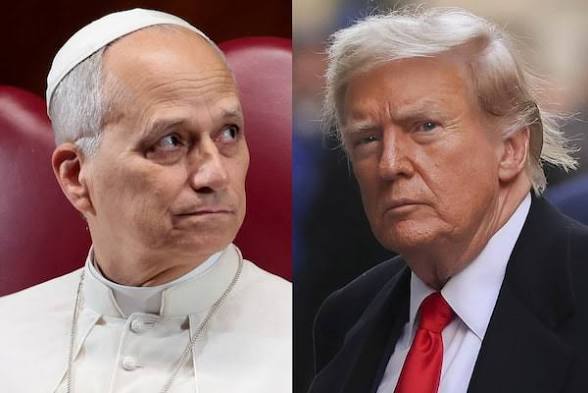
Tensions between the Vatican and the White House have intensified dramatically, marking what many observers are calling one of the most significant public disagreements between a sitting Pope and a United States president in modern history. The situation reached a new level on Monday, April 13, 2026, when Pope Leo XIV finally responded to a wave of sharp criticisms directed at him by President Donald Trump. The exchange has not only drawn global attention but has also exposed a deep divide between political authority and religious leadership on issues of global importance.
The confrontation began to escalate a day earlier when President Trump took to his social media platform, Truth Social, to express strong dissatisfaction with the Pope’s recent statements and actions. In a series of posts, the president openly criticized Pope Leo XIV’s stance on international conflicts and diplomacy, accusing the Pontiff of undermining strong global leadership with what he described as weak positions on security and governance.
Trump’s remarks were direct and unusually personal. He described the Pope as being weak on crime and ineffective in matters of foreign policy. He specifically referenced the Vatican’s opposition to United States backed military efforts in Iran and Venezuela, suggesting that such positions reflect a lack of understanding of the realities of global security. One of the most controversial claims made by the president was his assertion that he would not support a religious leader who, in his words, appears comfortable with the idea of Iran possessing nuclear capabilities. This statement has been widely disputed by Vatican officials, who have consistently emphasized their commitment to peace, diplomacy, and nuclear non proliferation.
In a surprising addition to his comments, Trump also suggested that Pope Leo XIV’s rise to the papacy was indirectly influenced by his own presidency. He argued that the global prominence of the United States during his administration played a role in the Catholic Church selecting an American as Pope. This claim has been met with skepticism and criticism from both political analysts and religious scholars, many of whom view the papal selection process as independent of external political influence.
Read more on: Commanding Officer and Six Troops Killed in Borno
The president’s remarks extended even further into personal territory when he referenced the Pope’s family. He made a comparison between Pope Leo XIV and his brother Louis, expressing a preference for the latter due to his perceived alignment with Trump’s political ideology. This comment added another layer of controversy to an already tense situation, raising concerns about the tone and direction of the discourse between the two figures.
For several hours after Trump’s comments gained widespread attention, the Vatican remained silent. However, that silence was broken on Monday when Pope Leo XIV addressed the issue while speaking to journalists aboard the papal aircraft en route to Algeria. The Pope’s response was measured yet firm, reflecting a deliberate effort to maintain dignity while addressing the seriousness of the accusations.
Speaking calmly, Pope Leo XIV made it clear that he does not feel intimidated by the criticism coming from the United States administration. He stated that his role as Pope is guided by a higher moral responsibility, one that requires him to speak openly about issues affecting humanity, regardless of political pressure or potential backlash. He emphasized that his primary duty is to uphold and communicate the teachings of the Gospel, particularly when it comes to promoting peace and justice.
The Pope addressed the broader implications of the criticism, suggesting that there is a growing tendency in global politics to misuse religious language for partisan purposes. He warned against turning spiritual teachings into tools for political gain, stressing that the message of the Gospel should not be distorted or selectively interpreted to support specific agendas. According to him, the Church’s mission is not aligned with any political ideology but is instead rooted in universal principles of compassion, reconciliation, and human dignity.
In response to suggestions that he was acting more like a politician than a religious leader, Pope Leo XIV firmly rejected the characterization. He explained that his statements on global issues are not politically motivated but are instead expressions of moral concern. He pointed out that advocating for peace, opposing violence, and defending the vulnerable are fundamental aspects of Christian teaching, not political strategies.
Read more on: NDLEA Nabs 93-Year-Old Man, Doctor in Shocking Nationwide Drug Crackdown
A central theme in the Pope’s response was the importance of peacemaking. He reiterated that his calls for dialogue and restraint in international conflicts are grounded in the teachings of Christ, particularly the principle that those who work for peace are blessed. He framed his position not as opposition to any specific government but as a commitment to principles that transcend national boundaries.
Beyond addressing the personal criticism from President Trump, Pope Leo XIV also used the opportunity to send a broader message to the United States government and the international community. He expressed concern about what he described as an emerging mindset of excessive power and unilateral decision making in global affairs. According to sources close to the Vatican, there is a growing unease within the Church about the direction of certain foreign policies, particularly those that prioritize military solutions over diplomatic engagement.
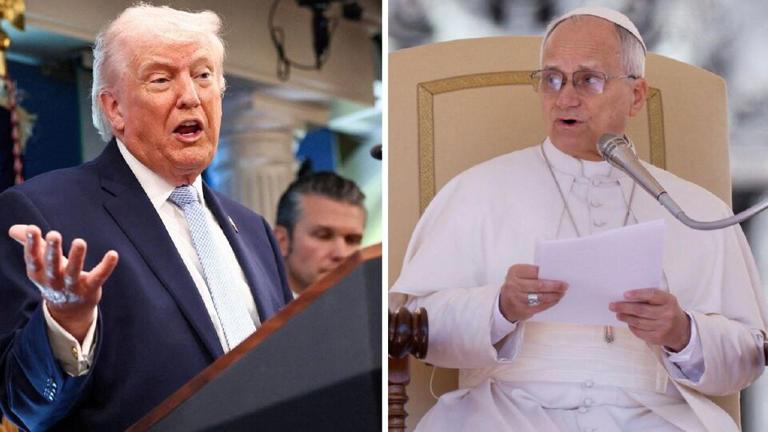
The Pope specifically highlighted ongoing conflicts involving Iran and Venezuela as areas of concern. He described military interventions in these regions as unjust and unacceptable, emphasizing the need for peaceful resolution and respect for international law. His remarks reflect a longstanding position held by the Vatican, which has consistently advocated for diplomacy and humanitarian considerations in conflict zones.
Immigration was another key issue addressed by the Pope. He called on governments, including the United States, to approach migration with compassion and a sense of shared humanity. He urged leaders to avoid policies that dehumanize migrants or treat them as threats rather than individuals in need of protection. His comments included a strong appeal for dignity and solidarity, values that he believes should guide all responses to migration challenges.
The Pope also emphasized the importance of upholding international law. He warned against allowing national interests or military ambitions to override established legal frameworks designed to maintain global order. In his view, adherence to these laws is essential for preventing conflict and ensuring fairness in international relations.
Read more on: Borno State Governor Addresses Military Strike in Border Market
The public disagreement between Pope Leo XIV and President Trump has sparked intense debate among Catholics, particularly in the United States. The situation has placed many believers in a difficult position, as they navigate the tension between religious loyalty and political alignment. Some Catholic leaders have called for restraint and reconciliation, while others have taken more defined stances on the issue.
Bishop Robert Barron, a prominent figure within the American Catholic community and a member of the president’s Religious Liberty Commission, has publicly urged President Trump to apologize for his remarks. He described the comments as inappropriate and called for a more respectful tone in discussions involving religious figures. At the same time, there are conservative groups within the Church that have expressed support for the president, arguing that his concerns about national security and sovereignty are valid.
As the situation continues to unfold, it is clear that the disagreement has broader implications beyond the individuals involved. It reflects a deeper conversation about the role of religion in public life, the limits of political authority, and the moral responsibilities of global leaders. The exchange has also highlighted the unique position of the Vatican as both a spiritual authority and a diplomatic entity capable of influencing international discourse.
Read more on: Six-Day Ultimatum as Bandits Demand 700 Cattle and 1,000 Sheep from Residents
Meanwhile, Pope Leo XIV has proceeded with his planned visit to Algeria, marking the first time he will travel to the country since assuming the papacy. The trip is expected to focus on interfaith dialogue, regional stability, and humanitarian issues. Despite the controversy surrounding his comments, the Pope appears committed to continuing his mission without distraction.
Observers note that the way he has handled the situation has reinforced his image as a leader guided by principle rather than politics. By framing his response in terms of moral duty and religious teaching, he has sought to elevate the discussion above personal conflict and redirect attention to the issues at hand.
As of April 13, 2026, the situation remains fluid, with reactions continuing to emerge from political leaders, religious figures, and the public. Whether the tension between the Vatican and the White House will escalate further or eventually give way to dialogue remains uncertain. What is clear, however, is that this moment represents a significant chapter in the relationship between religious authority and political power in the modern world.
Read more on:
- Another Top Legislator Passes Away as Circumstances Unfold
- Atiku Criticizes Tinubu Over Nigeria and Kenya Fuel Price Comparison
- 16 Residents Killed as Security Forces Neutralize 110 Bandits in Niger State
- Court Sentences Former Senatorial Candidate
- Court Schedules April 14 Hearing in ADC Leadership Rift