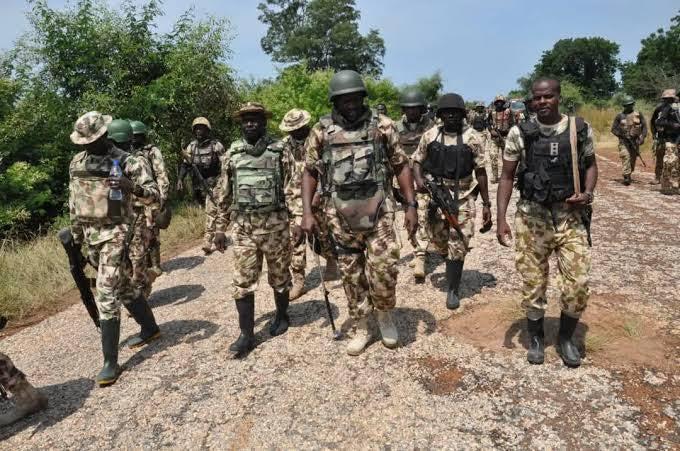
A major security development has emerged from Nigeria’s North East, where coordinated military operations involving the Nigerian Armed Forces and the United States military have reportedly resulted in the neutralization of 175 Islamic State fighters, including senior commanders. The multi day offensive, described by security observers as one of the most significant counterterrorism achievements in recent years, targeted insurgent strongholds across Borno State and parts of the Lake Chad Basin.
Military officials confirmed that the operation, which began over the weekend, involved a combination of airstrikes, ground assaults, and intelligence driven raids. The mission focused on dismantling fortified terrorist positions, destroying weapons storage sites, and disrupting logistical and financial networks that have long supported insurgent activity in the region.
According to initial reports released by defense authorities, the strikes significantly weakened the operational capacity of the Islamic State West Africa Province and its associated cells operating within the broader Lake Chad axis.
Key Leadership Targeted in Coordinated Strikes
One of the most notable outcomes of the operation was the reported elimination of several high ranking insurgent figures believed to be central to the group’s command structure.
Among them was Abu Bilal al Minuki, identified by security sources as a senior global figure within the Islamic State network and considered one of its top operational coordinators. Intelligence reports suggest that he had established a heavily fortified base in the Metele area of Borno State, near Nigeria’s border with Chad.
From this location, he was allegedly responsible for coordinating external funding channels, directing recruitment operations, and overseeing strategic planning for attacks targeting both civilian and military locations. His death is being viewed by analysts as a major disruption to the group’s broader international coordination efforts, particularly as the organization has increasingly shifted its operational focus toward West Africa.
Security officials believe that the region has become a critical hub for the group following sustained pressure in the Middle East, making this strike particularly significant in degrading its African command structure.
Read more on: Waiver Granted as PDP Clears Jonathan for Presidential Primary
Collapse of a Command Network
In addition to Abu Bilal al Minuki, several other senior operatives were also confirmed killed during the operation. These include Abu Bakr al Mainuki, who served as a deputy leader within the regional structure, and Abd al Wahhab, who was reportedly responsible for overseeing financial operations, logistics coordination, and resource distribution across insurgent cells.
Another key figure, Abu al Muthanna al Muhajir, was identified as a senior media and propaganda operative. He is believed to have played a major role in producing and distributing extremist content aimed at recruitment and radicalization, particularly targeting audiences outside the immediate conflict zone.
Military sources indicated that the coordinated nature of the strikes led to the collapse of a centralized command structure that had been operating in the area for an extended period. Intelligence gathered from surveillance and reconnaissance platforms was used to map insurgent movements and identify key targets before the strikes were executed.
Deepening Nigeria–U.S. Military Cooperation
The operation also highlights what appears to be a growing level of cooperation between Nigerian forces and the United States military in counterterrorism efforts across the region.
Earlier in the year, the United States deployed a contingent of specialized personnel to parts of northern Nigeria under a mission initially described as advisory and intelligence support. Over time, however, the scope of engagement has evolved into a more active operational partnership involving joint planning and coordinated field actions.
Military spokesperson Samaila Uba stated that the success of the mission was made possible through what he described as a synchronized air and ground strategy. This approach combined Nigerian field intelligence with United States surveillance and drone based reconnaissance systems, allowing forces to track insurgent movements and effectively contain them within identified locations.
According to defense officials, this integration of intelligence and strike capabilities played a key role in preventing escape routes and ensuring the success of the operation without major resistance.
United States Africa Command leadership also acknowledged the effectiveness of the joint effort. General Dagvin Anderson noted during a recent briefing that the operation was heavily supported by Nigerian intelligence contributions, emphasizing that local knowledge was essential to identifying targets and planning the mission.
He further explained that the success of the operation demonstrated the importance of collaboration between regional forces and international partners in addressing complex security threats.
Read more on: DSS Counsel Accuses El-Rufai Family of Media Attacks on Judiciary
No Reported Casualties Among Security Forces
Both Nigerian and United States military authorities confirmed that there were no reported casualties among their personnel during the course of the operation. This outcome has been described as a significant operational success, given the scale and intensity of the mission.
The strikes reportedly destroyed multiple insurgent facilities, including weapons storage depots, communication hubs, and logistical supply points. These facilities were believed to be critical in sustaining militant operations across the Lake Chad Basin region.
Following the main offensive, security forces have continued what they describe as mop up operations in surrounding forested and rural areas. These ongoing efforts are aimed at locating and neutralizing any remaining insurgent fighters who may have dispersed during the initial strikes.
Implications for Regional Stability
The Lake Chad Basin has remained one of the most persistent conflict zones in West Africa for more than a decade, with Boko Haram and Islamic State affiliated groups carrying out repeated attacks on civilian populations, security forces, and infrastructure.
The destruction of a major command hub and the reported elimination of senior leadership figures is expected to have a significant impact on the operational capabilities of these groups, at least in the short term. Analysts suggest that such disruptions can reduce the frequency of coordinated attacks and weaken recruitment and financing networks.
Communities in Borno State and surrounding regions, many of which have endured years of displacement and insecurity, may experience a temporary reduction in militant activity as security forces intensify their presence in cleared areas.
Read more on: Police Rescue 30 Malian Trafficking Ring In Nasarawa
Government Response and Strategic Outlook
President Bola Ahmed Tinubu has praised the operation, describing it as a strong example of effective international cooperation in the fight against terrorism. He emphasized the importance of continued collaboration between Nigeria and its global partners in addressing security threats that extend beyond national borders.
Military leadership has also indicated that the operation forms part of a broader strategy under Operation Hadin Kai, which continues to target remaining insurgent elements across the North East. Air and ground units remain active in surrounding areas as part of sustained efforts to stabilize the region and prevent regrouping by displaced fighters.
Ongoing Security Operations
Despite the success of the operation, military authorities have stressed that the security situation remains fluid. Intelligence units are continuing to monitor movement patterns in remote areas, while ground troops are conducting patrols to ensure that no remaining cells reorganize.
Officials have described the current phase as critical in consolidating gains made during the operation. The focus now is on maintaining pressure, securing liberated communities, and preventing the re establishment of insurgent networks.
As operations continue, authorities have called for vigilance among local populations and encouraged communities to cooperate with security agencies in reporting suspicious activity.
The situation in the North East remains dynamic, but officials say this latest breakthrough represents a significant step forward in long running efforts to restore stability to the region.
Read more on: