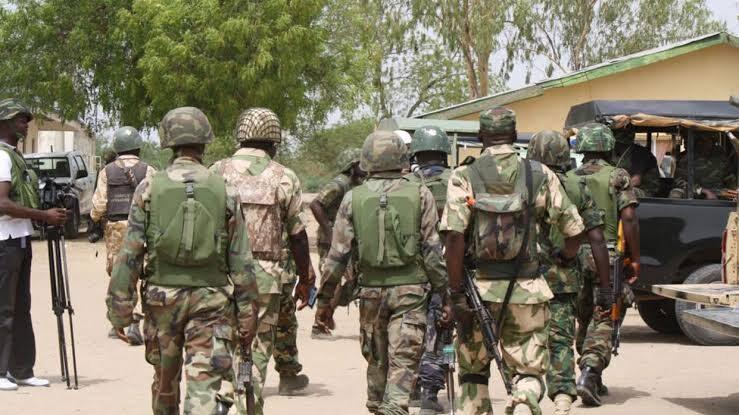
In what is now being described by security officials and government authorities as one of the most extensive and strategically successful rescue missions carried out in Nigeria’s North-East in recent years, troops of Operation Hadin Kai have succeeded in liberating 360 men, women, and children from a heavily fortified terrorist hideout located deep within the rugged Mandara Mountains in southern Borno State.
The development has been widely celebrated as a significant breakthrough in the ongoing counter-insurgency campaign against extremist elements operating in the region. The rescued individuals had been held captive under extremely harsh and inhumane conditions for weeks and, in some cases, months, after being abducted from various communities around Gwoza Local Government Area. However, shortly after the news of the operation became public, speculation began to circulate in certain media and online platforms suggesting that financial negotiations may have played a role in securing their release. In a swift and categorical response, the Borno State Government dismissed such claims, insisting that no ransom was paid at any point and that the entire operation was achieved strictly through intelligence-led military action.
The Background and Build-Up to the Operation
According to official accounts provided by military authorities, the rescue mission was the result of prolonged surveillance, coordinated intelligence gathering, and meticulous operational planning carried out under the framework of the Joint Task Force North East, Operation Hadin Kai. The operation specifically targeted a known insurgent enclave belonging to the Jama’atu Ahlis Sunna Lidda’awati wal-Jihad faction, commonly referred to as JAS, one of the most active breakaway groups associated with Boko Haram.
The insurgents had reportedly established a deeply concealed base within the Mandara Mountain range, a geographically complex and difficult-to-access area characterized by steep rock formations, narrow valleys, caves, and thick vegetation. This terrain has historically provided a natural defensive advantage for armed groups, making military access extremely challenging and dangerous.
The abductees were drawn from multiple villages and communities across the Gwoza axis. Many of them were taken during earlier violent raids, including a particularly devastating attack in March when insurgents overran a military outpost and simultaneously launched coordinated assaults on nearby settlements. During that period, several residents were killed, properties were destroyed, and hundreds of civilians were forcibly taken into the mountainous region, where they remained hidden under armed guard.
Read more on: Ex-Minister of Power Adelabu’s Sister and Her Two Children Rescued After Abduction
Execution of the Rescue Operation
Security sources revealed that the final rescue mission was executed after weeks of careful planning and confirmation of intelligence regarding the exact location of the hostages. The operation involved elite Special Forces units working in close collaboration with troops from Sector 1 under Operation Hadin Kai.
The assault was carried out in a highly coordinated manner, with ground troops advancing through multiple routes while supported by aerial surveillance to monitor insurgent movement and block possible escape paths. The objective was not only to neutralize resistance but also to ensure the safe extraction of all hostages with minimal collateral damage.
During the engagement, insurgent fighters were reportedly caught off guard by the speed, precision, and intensity of the military advance. Many of them abandoned their positions and fled deeper into the mountainous terrain, while others withdrew without engaging in prolonged confrontation. This rapid breakdown of resistance allowed the troops to gain full control of the enclave and begin the immediate evacuation of the captives.
The rescued individuals were carefully guided out of the area under military protection and transported to safer ground where emergency humanitarian assistance was provided. Food, water, and basic medical care were administered on-site to stabilize those who were in critical condition.
Official Response and Ransom Controversy
Following the announcement of the rescue, discussions quickly emerged in public spaces and on social media platforms suggesting that ransom payments might have been involved. These claims were firmly rejected by the Borno State Government, which described them as inaccurate and misleading.
Speaking during a live interview on Channels Television’s The Morning Brief, the Commissioner for Information and Internal Security, Professor Usman Tar, strongly refuted the allegations and challenged those spreading such narratives to present verifiable evidence. He reiterated that the operation was purely military in nature and relied entirely on intelligence coordination between the Nigerian Army and the Department of State Services.
According to him, there was no negotiation, no financial exchange, and no compromise of any kind with the insurgents. He further emphasized that engaging in ransom payments would only serve to strengthen criminal networks, enabling them to acquire more weapons and sustain their operations.
He also noted that the nature of Boko Haram and its splinter groups has evolved over time, stating that they now operate more like organized criminal enterprises focused on kidnapping, extortion, and illegal exploitation of resources rather than purely ideological warfare.
Read more on: Israeli Strike Kills Lebanese General and Two Soldiers in Southern Lebanon
Humanitarian Situation and Loss of Life
Despite the success of the rescue mission, authorities confirmed that the operation ended with a tragic development. Two infants reportedly lost their lives during the final stages of evacuation. According to military medical personnel, the infants had been severely weakened by prolonged malnutrition, dehydration, and exposure to harsh environmental conditions in the mountainous terrain.
Their fragile condition, combined with the physical stress of captivity and movement during evacuation, contributed to their inability to survive despite urgent medical attention. The incident has been described as a painful reminder of the humanitarian cost of prolonged insurgent captivity.
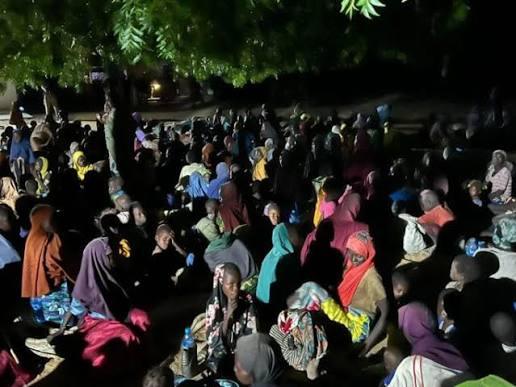
The remaining 358 rescued individuals were immediately moved to secure medical facilities where they are currently receiving comprehensive care. Many of them are suffering from varying degrees of malnutrition, dehydration, infections, and psychological trauma. Medical teams, alongside humanitarian organizations, are working to stabilize their condition through structured treatment plans that include physical rehabilitation, counseling, and nutritional support.
Authorities have also begun detailed identification and documentation processes to ensure that each survivor is properly traced and eventually reunited with their families in a safe and organized manner.
Reactions from Political Leaders and Stakeholders
The success of the operation has drawn widespread commendation from political leaders, security analysts, and community stakeholders across Nigeria. Borno State Governor, Professor Babagana Umara Zulum, through his media aide, praised the courage and professionalism of the troops involved in the mission, describing it as a clear demonstration of improved coordination and intelligence-led military capability in the region.
Former Senate Leader Senator Ali Ndume also expressed appreciation for the armed forces, noting that the rescue has brought immense relief to families who had endured months of uncertainty and emotional distress. He described the operation as a welcome development that reinforces hope for continued progress in the fight against insurgency.
Similarly, former presidential candidate Atiku Abubakar commended the military while urging security agencies to sustain the momentum. He called for similar urgent operations to locate and rescue other abducted citizens still being held in different parts of the country, including cases involving schoolchildren and teachers in recent kidnapping incidents.
Read more on: Iran Launches Missile Strikes in Gulf After US Hits Radar Sites
Strategic Implications and Ongoing Operations
Security analysts believe that the successful raid on the Mandara Mountain enclave represents a significant operational setback for Boko Haram and its affiliated factions. The loss of such a large group of captives, combined with the disruption of a long-established mountain base, is expected to weaken the group’s logistical and psychological hold in the region.
Military authorities have indicated that follow-up clearance operations are still ongoing across surrounding areas to ensure that fleeing insurgents do not regroup or establish new hideouts. Surveillance activities have also been intensified to prevent any retaliatory attacks or attempts to reassert control in nearby communities.
Conclusion
For the families of the 360 rescued individuals, the operation marks the end of a long and painful period of uncertainty, fear, and suffering. While the human cost of captivity remains deeply tragic, particularly with the loss of two infants, the broader outcome of the mission has been described as a major humanitarian and security achievement.
The liberation of the abductees from the Mandara Mountains stands as a powerful reminder of both the severity of the insurgency challenge and the ongoing efforts by Nigerian security forces to restore stability in the North-East. As recovery and rehabilitation efforts continue, attention now turns to sustaining security gains and preventing future mass abductions in the region.
Read more on:
- Over 1,000 Nigerians Complete Evacuation Registration Amid Rising Tensions in South Africa
- Peter Obi Criticizes Tinubu’s Approval of 1,000 Forest Guards for Oyo State
- Middle East Tensions Persist as Ceasefires Fail and Humanitarian Crisis Worsens
- Crisis in Oyo State as Massive Manhunt Intensifies as Kidnappers Demand ₦1 Billion and Push for Sharia Law