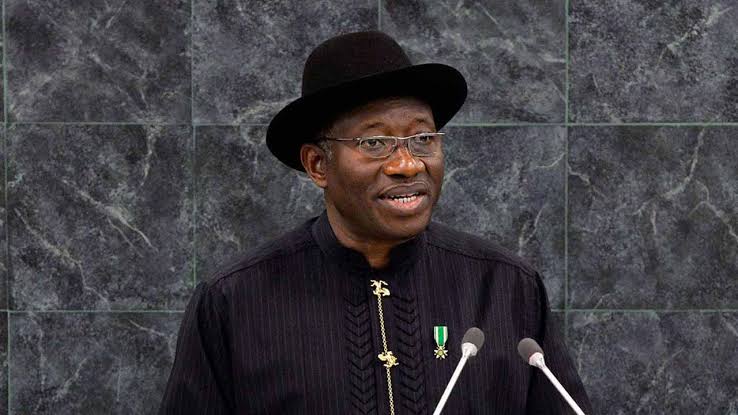
As Nigeria gradually moves closer to the 2027 general elections, the political atmosphere is becoming increasingly active, with alliances forming, consultations intensifying, and familiar names resurfacing in national conversations. Among those drawing renewed attention is former President Dr. Goodluck Ebele Jonathan. Although he has not made any formal declaration about a possible return to the presidential race, recent developments across legal, political, and civil society spaces have fueled widespread speculation that he may be seriously considering another bid for the country’s highest office.
This growing interest is not based on mere rumor or nostalgia. It is being shaped by a combination of legal clarity, strategic engagements with influential political actors, and mounting pressure from organized groups who believe his leadership style could offer an alternative direction for Nigeria at a critical time. For many observers, the situation presents a fascinating mix of history, opportunity, and uncertainty.
One of the most significant factors driving the conversation around Jonathan’s possible return is the question of his constitutional eligibility. For years, opinions have been divided on whether he could legally contest the presidency again, given his unique path to power. Jonathan first assumed office in 2010 following the death of President Umaru Musa Yar’Adua, completing the remainder of that administration before going on to win the 2011 presidential election in his own right. He later lost his re-election bid in 2015.
Read more on: Akpabio and Oshiomhole Clash in Senate Over Controversial New Leadership Rules
However, a legal interpretation that has gained renewed attention appears to have settled much of the debate. A Federal High Court judgment delivered in Yenagoa in 2022 affirmed that Jonathan remains eligible to run for president again. The reasoning behind this judgment rests on the argument that he was only elected once for a full four year term. His initial period in office, which began after Yar’Adua’s death, is not considered a separately elected term under the provisions of the 1999 Constitution.
Legal experts who support this interpretation argue that the constitution allows an individual to be elected president for a maximum of two terms. Since Jonathan has only completed one such elected term from 2011 to 2015, they maintain that he still has the right to seek another mandate from the Nigerian electorate. This clarification has removed a major barrier that once limited serious discussions about his potential comeback and has given political actors more confidence to consider him as a viable contender.
Beyond the legal framework, Jonathan’s recent engagements have added further weight to the speculation. Over the past few months, he has been involved in a series of high level meetings and consultations that suggest he remains actively connected to the country’s political landscape. While none of these interactions have been officially linked to any presidential ambition, their timing and nature have not gone unnoticed.
In late April 2026, Jonathan held private discussions with several prominent political figures from the South East, including Peter Obi, who was a major contender in the 2023 presidential election. Although the official explanation for the meeting centered on national issues and the need for unity, many analysts believe it could signal early efforts to build bridges across regional and party lines. Such consultations are often seen as preliminary steps in forming the kind of broad coalition that would be necessary for a successful presidential campaign in Nigeria’s complex political environment.
Read more on: Trump Warns of “Higher Level” Bombing on Iran if No Deal Is Reached
Another moment that attracted significant attention occurred on April 23, 2026, when President Bola Ahmed Tinubu hosted Jonathan at the State House in Abuja. Publicly, the meeting was described as a discussion focused on governance, regional stability, and national development. However, given the political context and the proximity to the next election cycle, it quickly sparked a wave of interpretations. Some viewed it as a routine engagement between a sitting president and a former leader, while others saw it as a strategic interaction with deeper political undertones.
Jonathan’s continued visibility through his foundation has also played a role in keeping him at the center of national discourse. The Goodluck Jonathan Foundation has remained active in promoting governance, democracy, and economic development across Africa. Recently, the foundation launched a comprehensive report in Abuja titled “The Democracy Dividend: Governance and Growth in Nigeria.” During the event, Jonathan emphasized the need for leaders to move beyond rhetoric and focus on delivering tangible improvements in the lives of citizens. While his remarks were framed in general terms, many observers interpreted them as a subtle reflection on the current state of governance and a possible indication of his readiness to re-enter the political arena.
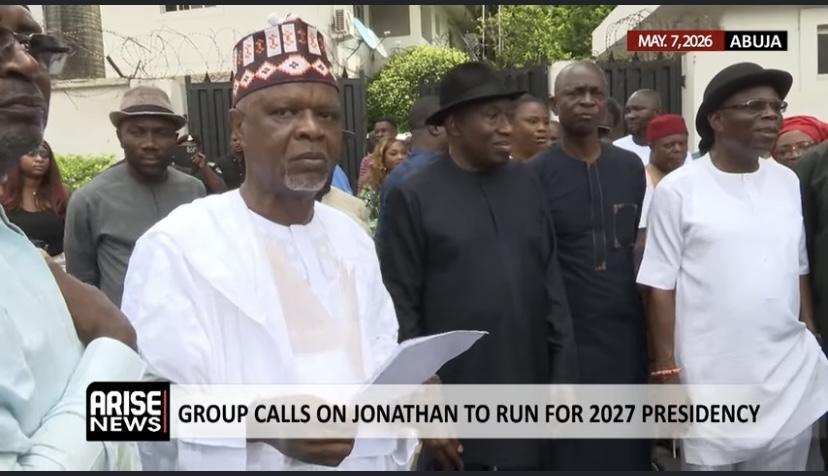
Perhaps the most striking aspect of the current situation is the level of grassroots and organizational support being mobilized in favor of a Jonathan candidacy. Various civil society organizations and youth groups have openly called on him to contest in 2027, arguing that his previous administration offered a degree of economic stability and relative calm compared to current challenges. These groups have organized rallies, issued public statements, and engaged in advocacy campaigns aimed at persuading him to reconsider his role in Nigeria’s political future.
One of the more visible initiatives is the GEJBAM Project, a political advocacy movement dedicated to promoting Jonathan as a unifying figure capable of addressing the country’s pressing issues. Supporters within this movement often highlight his reputation for humility, his peaceful concession of defeat in 2015, and his experience in managing a diverse nation. They argue that these qualities make him uniquely positioned to navigate the complexities of Nigeria’s current economic and security landscape.
Read more on: Tension Rises as El Rufai Appears in Court Over New Charges
Despite the growing momentum, the path to a possible Jonathan candidacy is far from straightforward. The political terrain ahead of the 2027 elections is already crowded and highly competitive. The ruling All Progressives Congress is expected to seek continuity, with strong indications that President Tinubu will pursue re-election. At the same time, the opposition space remains fluid, with ongoing discussions about potential alliances, mergers, and the formation of new political platforms.
In this context, one of the key questions surrounding Jonathan’s potential return is the platform he would choose. Would he seek the ticket of the Peoples Democratic Party, the party under which he previously served as president, or would he align himself with a broader coalition that cuts across existing party structures? There has been speculation about the possibility of a so called mega party, which could bring together influential figures such as Rabiu Kwankwaso and Peter Obi. Such an arrangement would aim to consolidate opposition strength and present a formidable challenge to the ruling party.
Another layer of complexity lies in personal and political considerations within Jonathan’s own circle. Reports that emerged in 2025 suggested that former First Lady Patience Jonathan might not support a move that would pit him against the incumbent president. While these reports remain unconfirmed, they highlight the delicate balance between personal relationships and political ambition, a factor that often plays a significant role in high level decision making.
At this stage, Jonathan himself has maintained a cautious and measured stance. He has neither confirmed nor denied any intention to run, choosing instead to focus on his work as a statesman and advocate for good governance. This approach has only added to his appeal in some quarters, as it reinforces the perception of a leader who is not overly eager for power but may be willing to serve if called upon.
Read more on: Major Shakeup in the House of Representatives as 17 Lawmakers Leave ADC for NDC
For many Nigerians, the idea of a Jonathan return evokes a mix of curiosity, hope, and skepticism. Supporters see an opportunity to revisit a period they associate with relative stability and international goodwill, while critics question whether a return to past leadership can effectively address present and future challenges. These differing perspectives are likely to shape the national conversation as the election approaches.
What remains clear is that Jonathan’s name carries significant weight in Nigerian politics. His legacy, defined in part by his decision to concede defeat in 2015 and ensure a peaceful transition of power, continues to influence how he is perceived both at home and abroad. Whether he ultimately decides to enter the race or remain on the sidelines, his role in the unfolding political landscape will be closely watched.
As the countdown to 2027 continues, the question is no longer whether Goodluck Jonathan is relevant to the conversation. It is whether he will choose to transform that relevance into a renewed bid for leadership. The answer to that question will likely emerge in the months ahead, shaped by ongoing consultations, shifting alliances, and the broader mood of a nation searching for direction.
Read more on: