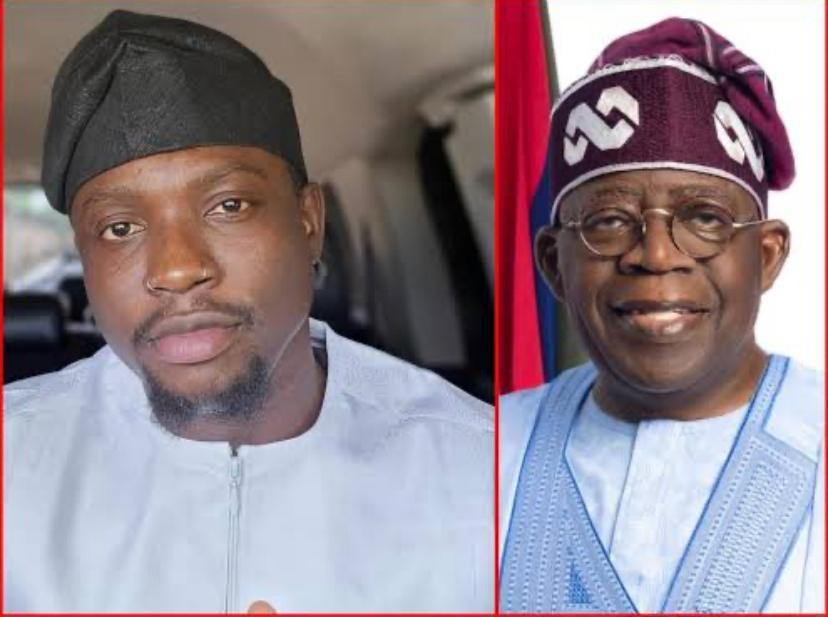
Nigeria’s online space has been thrown into intense debate following a heated confrontation between popular social media personality Martins Vincent Otse, widely known as VeryDarkMan (VDM), and the Nigerian Presidency. What began as the circulation of an alleged audio recording has now escalated into a public dispute involving accusations of misinformation, demands for legal action, and wider concerns about digital influence ahead of the 2027 general elections.
At the center of the controversy is a viral audio clip that VDM shared across his social media platforms. The recording reportedly contains a voice resembling that of President Bola Ahmed Tinubu and includes comments interpreted as highly sensitive. These include remarks linked to national security concerns, Nigeria’s economic relationship with international lenders such as the World Bank, and political considerations surrounding the 2027 elections.
VDM used the recording as a basis for criticism of the current administration. He encouraged Nigerians to critically reassess their political choices and openly questioned the President’s suitability for re-election in 2027. Given his large online following, the post spread rapidly and quickly became a topic of national discussion, drawing attention from both supporters and critics of the government.
Government Response and Allegations of Fake Content
The Federal Government reacted strongly to the viral audio. Bayo Onanuga, who serves as the Special Adviser to the President on Information and Strategy, publicly condemned the circulation of the clip. He called for legal consequences against VDM, insisting that the material being shared was false and misleading.
According to the Presidency’s position, the audio is not genuine and is being described as either a manipulated recording or a deepfake designed to misrepresent the President. Officials argue that its circulation poses a risk to national stability, particularly at a politically sensitive time leading up to the next election cycle.
Onanuga emphasized that the matter should not be treated lightly, stating that those responsible for spreading such content should be held accountable under cybercrime laws. From the government’s perspective, the issue is not just about misinformation but also about protecting public order and preventing potential political unrest.
Read more on: AMAs 2026: Tyla Makes History with Double Victory
VDM’s Response and Counterarguments
VeryDarkMan responded quickly and firmly to the government’s accusations. He rejected the idea that he should be held responsible for the creation of the audio, maintaining that he only reacted to content already circulating widely on the internet.
His argument is built around the claim that sharing or commenting on viral material does not automatically make someone the originator of that content. He insisted that attempts to target him legally are misplaced if the goal is to identify the original source of the recording.
VDM also challenged the authorities to go beyond public statements and instead rely on technical investigation. He called for proper forensic analysis of the audio to determine its authenticity, arguing that only scientific verification can settle the dispute. In his view, labeling the recording as fake without transparent evidence does not address public concerns.
Another key point in his response relates to freedom of expression. He maintained that he is within his rights to speak on issues affecting governance and public accountability. He also suggested that using threats of arrest or prosecution to silence commentary on political matters undermines democratic principles and discourages open discussion.
Read more on: Cubana Chief Priest Finally Speaks on Fallout with Burna Boy
Broader Implications for Politics and Digital Media
This dispute reflects a growing challenge in Nigeria’s political and digital environment, particularly the rise of manipulated media content and its influence on public perception. As technology advances, it is becoming increasingly difficult for ordinary users to distinguish between authentic recordings and AI-generated or edited material.
With the 2027 general elections approaching, concerns about misinformation, deepfakes, and online propaganda are becoming more pronounced. A situation like this highlights how quickly a single piece of viral content can evolve into a national controversy, especially when it involves high-profile political figures and influential online voices.
On one side, the Presidency insists that unchecked dissemination of potentially false material could destabilize the country and damage trust in leadership. On the other side, commentators like VDM argue that public accountability requires open discussion, even when the content in question is controversial or unverified.
The disagreement also raises a broader question about how governments should respond to viral digital content. Should the focus be on prosecuting those who share it, or on identifying and exposing its origin and authenticity through transparent investigation?
Read more on: Drake Surpasses Michael Jackson for Most Billboard Hot 100 No. 1 Hits by a Solo Male Artist
What May Follow
VeryDarkMan is known for his outspoken approach and has previously faced legal threats and confrontations with authorities. His public persona is built around challenging institutions and speaking on social issues without restraint. However, this current situation represents a more serious escalation given that it directly involves the Presidency.
It remains uncertain whether law enforcement agencies such as the Department of State Services or the Nigeria Police Force will take formal action, or whether the matter will gradually fade into another unresolved online controversy.
What is clear, however, is that the incident has intensified discussions about digital responsibility, political communication, and the growing power of social media influencers in shaping national narratives.
Read more on: