Tension has reached an extraordinary level across the globe this Tuesday, April 7, 2026, as attention turns toward a looming deadline that many fear could mark a turning point in modern military history. With the clock steadily counting down to 8:00 PM Eastern Time, uncertainty hangs heavy in the air, and governments, analysts, and civilians alike are bracing for what could unfold in the coming hours.
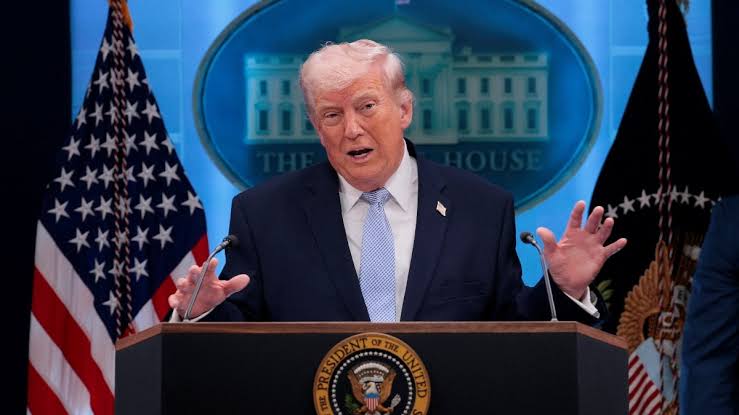
At the center of this growing crisis is a series of forceful and deeply unsettling statements from President Donald Trump, who has issued a stark warning to Iran’s leadership. According to the President, failure to comply with U.S. demands could lead to devastating consequences on a scale rarely seen in contemporary conflict. His remarks, shared through official channels and social media, have reverberated across international capitals and raised fears of an imminent and massive escalation.
In one of the most striking statements, Trump warned that an entire civilization could face destruction if Iran does not act before the deadline. While some observers view the language as exaggerated, others believe it reflects the seriousness of the current moment and the scale of military options being considered.
Read more on: Kebbi Assembly Speaker Muhammad Usman Zuru Dies in Cairo After Prolonged Illness
The Core Demand: Reopening the Strait of Hormuz
At the heart of the ultimatum lies a critical strategic and economic issue. The United States has demanded the immediate and unconditional reopening of the Strait of Hormuz, a narrow but immensely important waterway through which a significant portion of the world’s oil supply passes. Any disruption in this corridor has far-reaching implications not only for the Middle East but also for global energy markets and economic stability.
For weeks, tensions in the region have steadily escalated, and control over the strait has become a focal point of confrontation. Washington views unrestricted access as non-negotiable, while Tehran has used it as leverage amid ongoing hostilities.
The 8:00 PM deadline has therefore become more than just a symbolic marker. It represents a critical juncture at which diplomacy could give way entirely to intensified military action.
A Shift Toward Total War Concerns
The current conflict, now entering its thirty-ninth day, has already evolved significantly from its early stages. What began as targeted strikes and limited engagements has gradually expanded into a broader and more destructive campaign. Recent developments suggest that the situation may be approaching what some analysts describe as a tipping point.
Earlier in the day, reports confirmed that U.S. forces carried out extensive strikes on Kharg Island, a vital hub for Iran’s oil exports. The site is often described as the backbone of Iran’s energy economy, and any damage there carries serious financial implications for the country.
Initial assessments indicate that dozens of targets were hit during the operation, potentially crippling Iran’s ability to export oil in the short term. While official damage reports remain limited, the strategic significance of the strike is clear. It signals a willingness to directly target economic infrastructure rather than focusing solely on military assets.
Even more concerning is the growing discussion around potential strikes on civilian infrastructure. Officials in Washington have suggested that if Iran does not meet the stated demands, key elements of the country’s internal systems could be targeted. These include power plants, transportation networks, and other facilities essential to daily life.
The idea of deliberately disabling such infrastructure has drawn widespread criticism and raised serious ethical and legal questions. Iranian leaders have already condemned these threats, arguing that they indicate an intent to inflict widespread harm on civilian populations.
Read more on: FG Sets Aside ₦135 Billion for 2027 Election Legal Disputes
Signals from the Ground
As the deadline approaches, conditions inside Iran appear increasingly tense and uncertain. The country has been experiencing a near-total internet blackout for more than a month, leaving millions of people with limited access to information and communication.
This prolonged disruption has made it difficult for citizens to stay informed about developments or coordinate responses. It has also complicated efforts by international organizations to assess the humanitarian situation on the ground.
Reports from within Iran suggest that authorities have taken unusual measures to prepare for potential strikes. In some areas, citizens have reportedly been encouraged to gather around key infrastructure sites in an effort to deter attacks. This strategy, often referred to as the use of human shields, highlights the level of desperation and determination within the country.
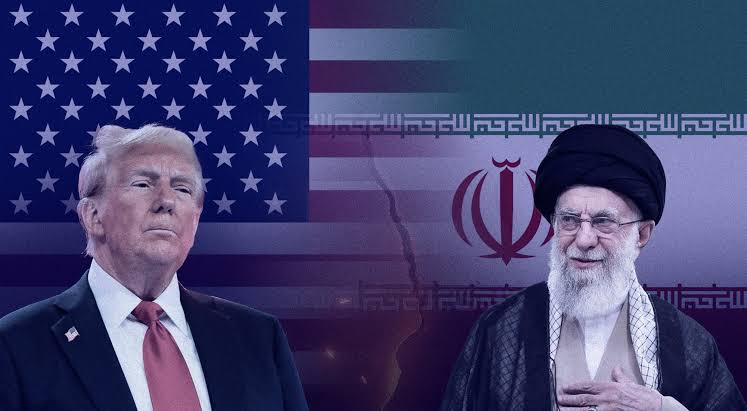
Despite the mounting pressure, Iran’s leadership has remained defiant. Officials have dismissed the ultimatum as unrealistic and have insisted that external threats will not influence their decisions. Statements from Tehran emphasize a commitment to defending national sovereignty, even in the face of overwhelming force.
Regional and Global Repercussions
The implications of the current standoff extend far beyond the borders of Iran. Across the Middle East, neighboring countries are watching developments with growing concern. Many fear that a large-scale escalation could destabilize the entire region, drawing in additional actors and triggering a broader conflict.
There have already been signs that the impact is spreading. Infrastructure incidents in nearby countries, as well as heightened military activity across the Gulf, suggest that the situation is becoming increasingly interconnected.
On the global stage, diplomatic efforts appear to be struggling to keep pace with the rapid escalation. The United Nations has expressed serious concern about the potential consequences of the current trajectory. Secretary-General António Guterres has reportedly warned that certain actions being discussed could violate international law and lead to catastrophic humanitarian outcomes.
At the same time, there are indications that behind-the-scenes negotiations may still be ongoing. Reports suggest that Iran may have put forward proposals in recent days that were viewed by some observers as a step toward compromise. However, these efforts have not yet produced a breakthrough.
Within the United States, officials have signaled confidence that a decisive outcome will emerge by the time the deadline arrives. Whether that outcome takes the form of a negotiated agreement or military action remains unclear.
Read more on: ADC Faces Existential Crisis as INEC Issues 72-Hour Ultimatum
A Moment of Uncertainty
As evening approaches in Washington and Tehran, the sense of anticipation continues to build. Military assets have reportedly been positioned in preparation for possible action, and analysts are closely monitoring any signs of movement.
Despite the strong rhetoric, there is still a possibility that last-minute diplomacy could avert the worst-case scenario. History has shown that even in moments of extreme tension, unexpected agreements can emerge.
At the same time, the risks have rarely been higher. The scale of force being discussed, combined with the strategic importance of the region, means that any miscalculation could have far-reaching consequences.
President Trump himself has hinted at the possibility of an alternative outcome, suggesting that under different circumstances, a positive resolution could still be achieved. However, such optimism appears overshadowed by the immediate reality of the situation.
Waiting for the Hour
With only hours remaining until the deadline, the world finds itself in a state of collective suspense. Governments are on alert, markets are volatile, and ordinary people across the region are preparing for what may come.
The question now is whether the coming hours will bring a breakthrough or a breakdown. Will there be a last-minute agreement that defuses tensions, or will the deadline pass without resolution, triggering a new and more dangerous phase of conflict?
For now, there are no clear answers. What is certain is that the decisions made in this narrow window of time will have lasting consequences, shaping not only the future of the region but also the broader course of global affairs.
As the clock continues to tick toward 8:00 PM Eastern Time, the world watches closely, aware that it may be witnessing the unfolding of a moment that will be remembered for years to come.
Read more on:
- Bloodshed on Easter Sunday as Gunmen Strike Kaduna Community
- Man Arrested for Burning His Father Alive in Kazaure
- Minister of State for Labour Onyejeocha Nkeiruka Exits Tinubu Cabinet
- INEC’s Voter Revalidation Plan Sparks Nationwide Political Tension
- 11 Killed, Dozens of Homes Destroyed in Deadly Reprisal Attack