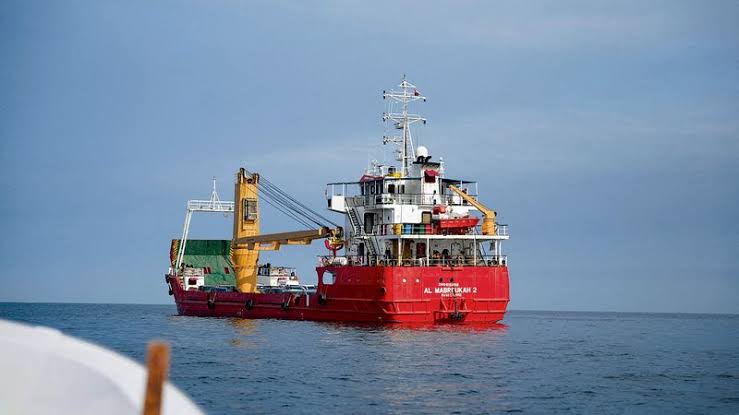
In a development that has immediately reshaped global energy expectations and geopolitical calculations, the Iranian government announced on Friday, April 17, 2026, that the Strait of Hormuz is now fully open for commercial shipping. The declaration comes after weeks of tension in one of the world’s most strategically important waterways and follows closely on the heels of a recently brokered 10 day ceasefire agreement in Lebanon.
The announcement has already produced a dramatic reaction across international oil markets, where prices fell sharply within hours. The Strait of Hormuz, which handles a significant share of global crude oil exports, had been under severe disruption since late February due to escalating regional conflict, naval confrontations, and repeated threats against commercial vessels. Iran’s statement marks a sudden and unexpected easing of that pressure, even though broader political tensions in the region remain unresolved.
Iran’s Announcement and Its Immediate Implications
Iranian Foreign Minister Abbas Araghchi confirmed the decision through a public statement shared on social media, explaining that maritime movement through the strait would now resume for all commercial vessels during the period covered by the Lebanon ceasefire. According to his message, the passage is considered fully open, provided shipping operations are coordinated with Iran’s Ports and Maritime Organisation.
He stated that the decision aligns with recent diplomatic progress in Lebanon and reflects a temporary stabilization of the wider regional environment. He also clarified that vessels from all countries, including those from the United States, may pass through the waterway as long as they comply with the coordination procedures established by Iranian maritime authorities.
The announcement is significant because the Strait of Hormuz is not just a regional shipping route but one of the most critical global energy corridors. Roughly a fifth of the world’s oil supply passes through it, meaning even minor disruptions tend to have immediate global consequences.
For weeks, shipping companies and governments had treated the waterway as a high risk zone, with many commercial operators diverting vessels or delaying shipments entirely. Insurance premiums had surged, and freight costs had risen sharply, adding to inflationary pressures in multiple economies.
Iran’s declaration therefore represents a major shift in tone, even if it is framed as temporary and tied to the ongoing ceasefire arrangement in Lebanon.
Read more on: Two UTME Candidates Escape Kidnappers in Benue, Police Report
Global Oil Markets React Sharply
The response from global financial markets was almost immediate and severe. Oil prices, which had remained elevated for weeks due to what analysts were calling the Hormuz risk premium, fell sharply within a single trading session.
At one point during the recent crisis, Brent crude had approached 120 dollars per barrel, driven largely by fears that the Strait of Hormuz could be partially or fully closed. Traders had been pricing in supply disruptions, possible military escalation, and uncertainty over maritime security.
Following Iran’s announcement, that risk premium quickly evaporated.
By the end of trading on April 17, Brent crude had dropped to 90.33 dollars per barrel, reflecting a daily decline of more than nine percent. West Texas Intermediate also experienced a steep fall, settling at 84.38 dollars per barrel after losing more than ten percent in value.
The scale of the drop reflects how sensitive global oil markets remain to geopolitical developments in the Middle East. Analysts noted that the decline was not just a reaction to increased supply confidence but also a rapid unwinding of speculative positions that had been built up during the crisis period.
In consumer markets, early signs of relief have already begun to appear. In the United States, data from AAA indicated that average gasoline prices have begun to decline, reaching 4.08 dollars per gallon compared to recent highs of around 4.17 dollars. In Nigeria and other oil dependent economies, observers expect a gradual easing of fuel import costs if the trend continues.
Energy analysts at firms such as Nairametrics described the shift as the lowest level crude oil has traded in several weeks, although they warned that volatility is likely to continue as geopolitical conditions remain uncertain.
Read more on: President Tinubu Approves 2026 Appropriation, Pushes 2025 Budget Deadline
A Fragile Diplomatic Context
Despite the positive market reaction, the broader political context remains complicated. Iran’s decision to reopen the Strait of Hormuz is tied directly to the temporary ceasefire agreement in Lebanon, which was only recently concluded after intense negotiations involving multiple regional and international actors.
This means the current stability is not the result of a comprehensive peace agreement but rather a limited pause in hostilities. The language used by Iranian officials suggests that the reopening of the strait is conditional and may be subject to change depending on developments in the ceasefire arrangement.
At the same time, the United States has maintained a cautious and somewhat divided response. President Donald Trump addressed the announcement through his Truth Social platform, acknowledging the reopening of the waterway for general commercial traffic but reiterating that Washington’s stance toward Iran remains unchanged.
According to his statement, the United States will continue to enforce restrictions specifically targeting Iranian vessels. He emphasized that the US Navy blockade affecting Iranian maritime activity remains active and will only be lifted once ongoing diplomatic and security negotiations are fully concluded.
Trump also referred to what he called a broader transaction with Iran, a term interpreted by analysts as referring to ongoing discussions involving nuclear policy, sanctions, and regional security guarantees. He insisted that any final agreement must be completely finalized before restrictions are lifted.
Although the United States is not directly participating in the current UK and France led maritime monitoring mission in the region, American naval forces are still operating in the area. Their focus, according to defense sources, has shifted toward mine clearance operations and ensuring the safety of non Iranian commercial vessels passing through the strait.
Read more on: Ex-Humanitarian Minister, Others Declared Wanted
The Crisis That Led Here
To fully understand the significance of this development, it is necessary to revisit the events of the past several weeks, which saw one of the most serious disruptions to global maritime trade in recent years.
Tensions in the Strait of Hormuz escalated dramatically at the end of February 2026. Following a series of regional military incidents, maritime traffic through the strait began to decline sharply. Within a matter of weeks, tanker traffic had reportedly fallen by as much as 70 percent.
Shipping companies became increasingly reluctant to send vessels through the area due to repeated threats, missile activity, and drone incidents targeting commercial shipping lanes. In total, more than 150 ships were left waiting outside the strait, unable to proceed due to safety concerns.
The human and economic costs of the disruption were also significant. At least 12 seafarers were confirmed dead or missing during the period of heightened tension, while 16 merchant vessels sustained varying degrees of damage. Some ships were forced to turn back entirely, while others required military escort to complete their journeys.
The economic impact quickly spread beyond the immediate region. Europe faced concerns about potential fuel shortages, particularly for industries dependent on steady oil and gas supplies. In Asia, several long haul flight operations were disrupted due to concerns about jet fuel availability and rising operational costs.
Global shipping insurance rates also surged, adding further pressure to supply chains already strained by inflation and post pandemic recovery challenges.
Read more on: 10-Day Israel–Lebanon Ceasefire Begins
What the Reopening Means for Global Trade
The reopening of the Strait of Hormuz, even on a conditional basis, is expected to bring immediate relief to global shipping markets. Large shipping companies such as Maersk and MSC have welcomed the development, but they remain cautious in their response.
Industry leaders have made it clear that while the announcement is positive, they are still seeking absolute clarity regarding maritime security conditions in the region. The presence of naval mines, the risk of renewed escalation, and the uncertainty surrounding enforcement mechanisms remain key concerns.
Many operators are expected to take a gradual approach, initially resuming limited operations while monitoring the situation closely. Full normalization of shipping activity may take weeks or even months, depending on how stable the ceasefire and diplomatic environment remain.
For global energy markets, however, the psychological impact is already clear. The sharp drop in oil prices reflects renewed confidence that supply chains will not be severely disrupted in the near term. If the strait remains open and secure, analysts expect further stabilization in prices, though not necessarily a return to pre crisis levels given ongoing global demand pressures.
Read more on: Trump Makes Major Announcement on Nuclear Agreement With Iran
The Bottom Line
The declaration by Iran that the Strait of Hormuz is fully open for commercial shipping represents one of the most significant geopolitical and economic developments of 2026 so far. It has immediately eased fears of a prolonged energy crisis and triggered a sharp correction in global oil prices.
However, the situation remains far from fully resolved. The reopening is tied to a temporary ceasefire in Lebanon, and key political tensions between Iran and the United States remain in place. The continued US naval blockade targeting Iranian vessels further highlights the fact that while commercial shipping may resume, strategic rivalry in the region is still active.
For now, global markets are responding with relief, but also with caution. The Strait of Hormuz may be open, but it is not yet fully stable, and its future will likely depend on the outcome of ongoing diplomatic negotiations and the fragile balance of power in the Middle East.
Read more on:
- Tinubu: I Won’t Be Scared by Opposition or Shirk Nigeria’s Challenges
- Gunmen Abduct UTME Candidates on Benue Highway
- Security Report Warns of Planned Terrorists Attacks on Airports and Prisons in Two States
- Trump says Israel and Lebanon leaders will hold talks for the first time in 34 years
- APC Dismisses Implosion Claims as Defections Strengthen Its Grip Ahead of 2027 Election