Arsenal climbed back to the summit of the Premier League after a tense and physically demanding 1-0 win over Newcastle United at the Emirates Stadium, a result that carried as much emotional weight as it did mathematical significance in the closing stretch of the season.
It was not a comfortable afternoon for Mikel Arteta’s side. Coming into the match on the back of consecutive setbacks against Bournemouth and Manchester City, Arsenal were under pressure to respond immediately if they were to keep their title hopes alive. What followed was a performance built less on attacking fluency and more on resilience, organisation, and one moment of outstanding individual quality that ultimately separated both teams.
The decisive moment arrived early, but the contest that followed lasted until the final whistle and beyond, with Newcastle pushing hard for an equaliser and Arsenal forced into a disciplined defensive effort to protect a narrow lead that could prove crucial in the title race.
A Stunning Strike Sets the Tone Early
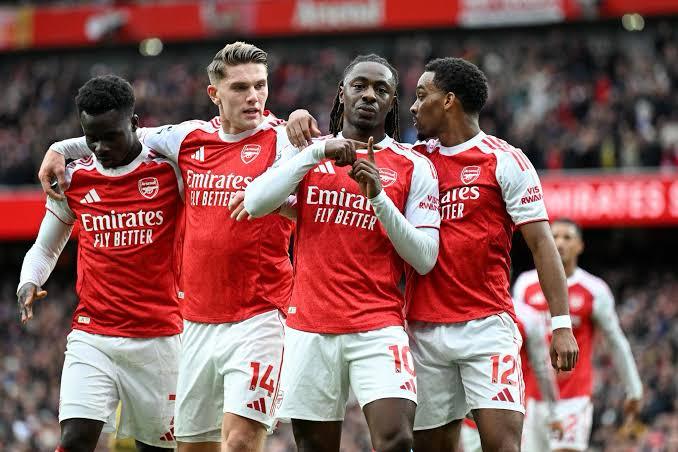
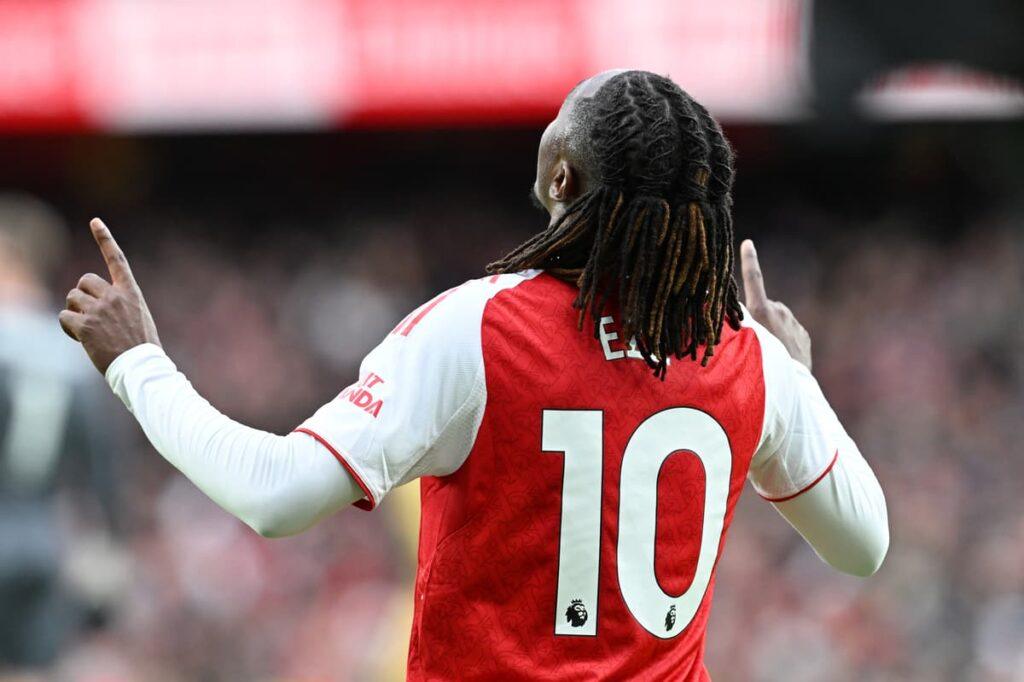
The Emirates Stadium was charged with anticipation from the opening whistle, and Arsenal wasted little time in giving their supporters something to celebrate. Just ten minutes into the contest, Eberechi Eze produced a piece of brilliance that would define the entire match.
The goal originated from a well-rehearsed corner routine that caught Newcastle slightly off guard. Arsenal worked the ball cleverly on the edge of the penalty area, drawing defenders out of position before it was laid off to Eze in space. With confidence and precision, the England international struck a powerful, curling effort that soared beyond Nick Pope’s reach and into the top corner of the net. It was clean, decisive, and technically exquisite, leaving the Newcastle goalkeeper rooted as the ball rippled the net.
The strike marked Eze’s tenth goal of the season for Arsenal and arguably his most significant since joining the club. It not only settled the early nerves inside the stadium but also forced Newcastle to adjust their approach, knowing they would need to chase the game away from home against a side notoriously difficult to break down once ahead.
Despite falling behind, Newcastle did not lose structure. Instead, they gradually grew into the contest, particularly in midfield where Sandro Tonali and Bruno Guimarães began to dictate spells of possession. Arsenal, meanwhile, appeared content to manage their advantage, dropping into a more compact shape and relying on quick transitions when opportunities arose.
Read more on: West Ham Edge Everton in Intense London Stadium Battle
Newcastle Pressure and Arsenal’s Defensive Resolve
As the first half developed, Newcastle began to assert themselves territorially. They enjoyed slightly more possession in key phases and managed to generate more attempts on goal than the hosts, but their final execution repeatedly let them down.
David Raya was called into action several times, particularly to deny a dangerous curling effort from Tonali that looked destined for the far corner before being tipped away by a full-stretch save. Arsenal’s defensive line, marshalled by Gabriel and Ben White, had to remain alert as Newcastle pushed fullbacks higher and attempted to overload wide areas.
The physical intensity of the match increased as the half wore on. Declan Rice played a crucial role in shielding the back line, breaking up Newcastle’s rhythm and ensuring that dangerous passes into the final third were either intercepted or forced wide. Arsenal’s structure without the ball was disciplined, but they were clearly under sustained pressure for long stretches.
A significant turning point in the match came just before halftime when Arsenal were forced into an unexpected substitution. Kai Havertz went down after a challenge and was unable to continue, forcing Arteta to introduce Viktor Gyökeres earlier than planned. The change altered Arsenal’s attacking shape, with Gyökeres immediately offering a more direct physical presence up front.
By the end of the first half, Newcastle could point to the statistics in their favour. They had recorded more shots and spent longer spells in Arsenal’s half, yet the scoreboard remained unchanged. Arsenal’s single moment of quality remained the difference.
Read more on: Anfield Roars as Liverpool Beat Crystal Palace
Second Half Grit and Late Newcastle Pressure
The second half followed a similar pattern, with Newcastle attempting to increase the tempo and Arsenal gradually shifting into a more conservative approach. Bukayo Saka, returning from injury, provided occasional outlets on the right wing, but Arsenal’s priority was clearly game management rather than expansion of their lead.
Newcastle’s attacking trio worked tirelessly to find an opening, with Jacob Murphy and Will Osula attempting to stretch Arsenal’s defence, while Anthony Elanga added pace and directness after being introduced from the bench. However, the final pass or shot continued to lack precision at critical moments.
As the match entered its final quarter, Arsenal’s defensive discipline became even more pronounced. Martin Ødegaard dropped deeper to help circulate possession and slow the rhythm of the game, while Rice became increasingly influential in disrupting Newcastle’s attacking sequences. Ben White’s return to the starting lineup also proved valuable, as his positioning and anticipation helped neutralise several dangerous situations on the right side.
The closing stages were defined by tension. Newcastle increased their urgency, pushing more bodies forward in search of an equaliser that would have dramatically altered the title landscape. Arsenal, however, remained organised and committed to protecting their lead, clearing their lines when necessary and refusing to overcommit numbers forward.
The fourth official indicated seven minutes of added time, but stoppages extended that period further, heightening anxiety among the home supporters. Newcastle’s final opportunity came from a free kick earned in a dangerous position. Anthony Elanga stepped up but struck his effort into the defensive wall, a moment that summed up their afternoon of frustration.
When the referee finally brought proceedings to a close, relief swept through the Emirates Stadium as Arsenal secured three vital points in the most testing of circumstances.
Read more on: Real Madrid Drop Points in La Liga After Draw with Betis
League Implications and Tactical Takeaways
The victory ensured Arsenal returned to the top of the Premier League table, although the margin remains razor thin. Manchester City sit level on points with a game in hand, while Liverpool remain within striking distance. With only four matches left for Arsenal, every result now carries title-defining significance.
Premier League Top Three Standings
| Position | Team | Games Played | Points | Goal Difference |
| 1 | Arsenal | 34 | 73 | +44 |
| 2 | Manchester City | 33 | 73 | +42 |
| 3 | Liverpool | 34 | 70 | +38 |
From a tactical perspective, this match highlighted Arsenal’s evolving ability to win in different ways. Earlier in the season, their success was built on fluid attacking combinations and sustained dominance of possession. Against Newcastle, however, they demonstrated an ability to absorb pressure, defend deep when required, and rely on moments of individual brilliance rather than prolonged attacking sequences.
Declan Rice stood out as one of the most influential players on the pitch, particularly in the second half, where his interceptions and physical presence helped Arsenal withstand Newcastle’s growing pressure. Eze’s decisive goal naturally defined the narrative, but Arsenal’s defensive collective effort was equally important in securing the win.
Newcastle, on the other hand, will reflect on missed opportunities. Despite controlling large phases of the match and generating more attempts on goal, their inability to convert pressure into goals ultimately cost them. Their struggles at the Emirates continue, extending a winless run at the ground that dates back well over a decade.
Read more on: Super Eagles Confirm Death of Ex-Striker Michael Eneramo
Lineups, Performances, and What Comes Next
Arsenal lined up in a 4-3-3 formation featuring David Raya in goal, a defensive line of Ben White, Josh Tahou, Gabriel, and Oleksandr Zinchenko. The midfield trio consisted of Declan Rice, Martin Ødegaard, and Eberechi Eze, while the attack was led by Leandro Trossard, Kai Havertz, and Bukayo Saka. Gyökeres replaced Havertz after his first-half injury.
Newcastle also deployed a 4-3-3 setup with Nick Pope in goal. Their defence included Pedro Lima, Santiago Bueno, Toti Gomes, and Matt Doherty. In midfield were Sandro Tonali, Bruno Guimarães, and Joelinton, while their attack featured Jacob Murphy, Will Osula, and Anthony Elanga.
Looking ahead, Arsenal now shift focus to Europe with a crucial Champions League semi-final first leg against Atletico Madrid scheduled for April 29. The result against Newcastle provides momentum and belief, but also raises the physical demands on a squad already managing a congested fixture list.
Newcastle’s season, meanwhile, continues to unravel. Sitting in 14th place and already eliminated from European competition after a heavy aggregate defeat to Barcelona earlier in the year, attention is now turning toward rebuilding and stabilisation ahead of the next campaign.
For Arsenal, this was not a performance of dominance, but one of determination. In tight title races, moments like Eze’s strike and the collective defensive effort that followed often prove just as valuable as convincing victories.
Read more on:
- Capello Warns England “Play With Fear” as He Assesses Their Trophy Chances
- Fenerbahçe Prepare Formal Complaint Over Osimhen’s hand Protective
- US Envoy Urges FIFA to Replace Iran for 2026 World Cup
- Barcelona Edge Celta Vigo to Extend La Liga Lead
- Man City Edge Burnley to Reclaim Premier League Summit as Haaland Ends Drought
- Chelsea Dismiss Liam Rosenior Following Poor Run of Results