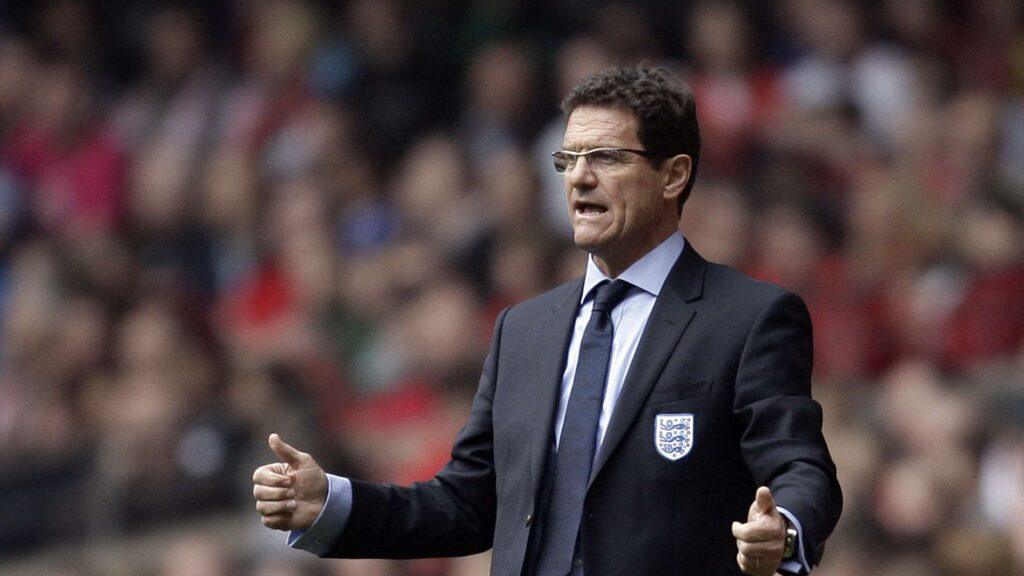
With the 2026 FIFA World Cup in the United States, Canada, and Mexico drawing closer, expectations around England’s national team are once again rising, but not everyone is convinced that optimism is justified. Former England manager Fabio Capello has stepped into the conversation with a blunt and critical assessment of the Three Lions, warning that Thomas Tuchel’s side may struggle to deliver on their promise if long-standing psychological and physical issues are not addressed.
Capello, who once managed England between 2007 and 2012, believes the current generation of players remains burdened by a combination of mental fragility and physical exhaustion. Despite England’s impressive form in qualifying and the arrival of Tuchel, a manager widely respected for his tactical intelligence and disciplined approach, Capello argues that the same underlying weaknesses that have historically plagued England at major tournaments are still present.
Speaking in an interview with BBC Sport, the Italian coach did not hesitate to express his concerns. He suggested that England’s problem is not simply tactical or technical, but deeply psychological. According to him, the team continues to carry an invisible weight whenever they enter the decisive stages of major competitions, a pressure that often leads them to lose control of matches at critical moments.
Capello pointed specifically to England’s Euro 2020 final defeat against Italy as an example of this recurring issue. In that match, England took an early lead but gradually retreated into a defensive and cautious approach as the game progressed, eventually allowing Italy to recover and go on to win the trophy. For Capello, that match was not an isolated incident but a clear illustration of a pattern that has followed England for decades.
Read more on: Fenerbahçe Prepare Formal Complaint Over Osimhen’s hand Protective
He described it as a problem rooted in fear, suggesting that players become overly cautious once they are in a winning position. Instead of maintaining their intensity and attacking rhythm, they begin to protect their lead in a way that invites pressure from the opposition. In his view, this mindset has cost England in several major tournaments, preventing them from converting strong positions into victories.
Capello also linked this issue to the broader historical weight carried by the national team. England’s last major international trophy remains the 1966 World Cup, and the long wait has created an atmosphere where expectations often turn into pressure rather than motivation. He suggested that players are aware of this history and that it influences their decision making on the pitch, particularly in high stakes knockout matches.
Beyond the psychological concerns, Capello also revisited a long standing criticism of English football, which is the physical toll of the Premier League season. He argued that players entering international tournaments are often already fatigued due to the intensity of domestic and European competitions. With England’s top players regularly involved in deep runs in the UEFA Champions League and domestic cup competitions, Capello believes they arrive at major tournaments with significant physical strain.
He pointed out that England’s lack of a traditional winter break places additional pressure on players compared to their international counterparts. While leagues such as those in Spain, Germany, and Italy offer mid season rest periods, the English calendar remains packed, leaving little recovery time. According to Capello, this contributes to what he described as “heavy legs” by the time major tournaments begin.
Read more on: US Envoy Urges FIFA to Replace Iran for 2026 World Cup
He recalled similar concerns during his own time as England manager, particularly during the 2010 World Cup in South Africa. On that occasion, England struggled to perform at their best and were eventually eliminated in the round of 16 after a heavy defeat to Germany. Capello had previously attributed part of that failure to fatigue, arguing that the players arrived at the tournament physically drained after a demanding club season.
Looking ahead to 2026, he warned that a similar situation could unfold. With the tournament scheduled at the end of another long European season, he believes players such as Jude Bellingham, Bukayo Saka, Phil Foden, and others will again be operating under extreme physical pressure. Even though these players are widely regarded as some of the best in the world, Capello insists that talent alone may not be enough if they are not fully fresh and mentally sharp.
He also referenced England’s recent international friendlies against Uruguay and Japan in March, matches which ended without victories for the Three Lions. While these games were not competitive fixtures, Capello suggested they revealed signs of inconsistency and a slight drop in intensity as the season progressed. In his opinion, such indicators should not be ignored, as they may reflect deeper issues related to fatigue and concentration.
Despite these concerns, England enters the 2026 World Cup with one of its strongest squads in recent memory and a manager who has a reputation for maximizing team structure and discipline. Thomas Tuchel, who took over following Gareth Southgate’s departure, has overseen a flawless qualifying campaign, with England winning all their matches while maintaining an impressive defensive record, including no goals conceded throughout the group stage.
Read more on: Barcelona Edge Celta Vigo to Extend La Liga Lead
Tuchel’s system has been praised for its organization and tactical clarity, with the team scoring freely while maintaining balance at the back. However, Capello’s remarks suggest that the true test will not come during qualification or friendly matches, but on the biggest stage where pressure intensifies and margins become extremely thin.
England’s group stage draw places them in Group L alongside Croatia, Ghana, and Panama, a combination that presents both technical and psychological challenges. Their opening match against Croatia carries particular significance, not only because of the quality of the opposition but also due to history. Croatia eliminated England from the 2018 World Cup in the semi final, a match remembered for England’s inability to maintain control after taking early initiative.
That memory, according to Capello’s analysis, feeds directly into the psychological concern he describes as fear. He believes that until England learns to manage these moments better, they will continue to struggle when matches become tight or when they are forced to defend a lead under pressure.
The second group match against Ghana introduces a different type of challenge, one built around physicality and pace, while the final group fixture against Panama is expected to be a test of patience and consistency. On paper, England are expected to progress from the group, but Capello’s warning is not about early exits alone. His concern is that deeper issues may surface in the knockout rounds, where one mistake can end an entire campaign.
Read more on: Man City Edge Burnley to Reclaim Premier League Summit as Haaland Ends Drought
Within England, there is confidence that Tuchel’s experience in high pressure club environments, particularly in the Champions League, will help him manage the squad effectively. His ability to rotate players, adjust tactics, and maintain intensity over a long tournament will be crucial. However, Capello’s comments place additional scrutiny on the mental side of preparation, suggesting that tactical brilliance alone may not resolve long standing issues.
As the tournament approaches, the debate surrounding England’s chances continues to grow. Some view Capello’s remarks as overly pessimistic, rooted in his own difficult tenure as England manager. Others believe his experience gives weight to his observations, especially given England’s history of near misses and unfulfilled potential at major tournaments.
Ultimately, his message is straightforward. England may possess one of the most talented squads in world football, but talent has never been their problem. According to Capello, the real challenge lies in overcoming fear when it matters most and ensuring that physical exhaustion does not undermine performance at critical stages.
Whether Thomas Tuchel can address both concerns in time for the 2026 World Cup remains one of the most closely watched questions in international football.
Read more on:
- Chelsea Dismiss Liam Rosenior Following Poor Run of Results
- Mbappe Scores as Real Madrid Secure 2-1 Win Over Alaves in La Liga
- European Hopes Are Dealt a Blow as Chelsea Lose 3-0 to Brighton
- European Giants Man City, Inter, Chelsea and Juventus Head to Hong Kong
- West Ham Earn Draw at Crystal Palace to Climb Two Points Clear of Relegation Zone