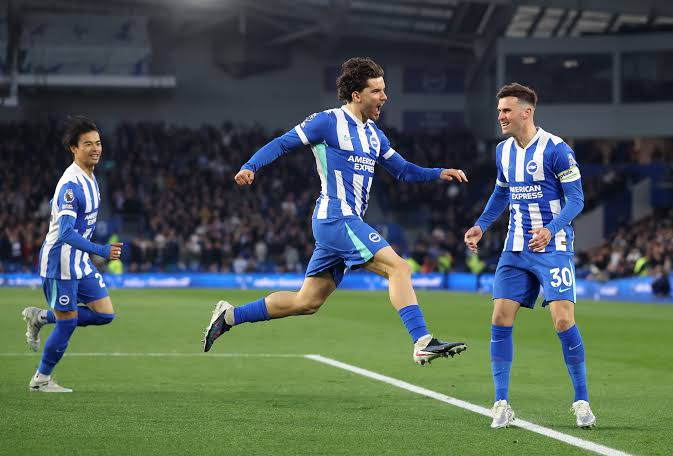
On a lively Tuesday evening at the American Express Stadium, Brighton and Hove Albion produced a performance full of confidence, structure, and attacking intent to comfortably defeat Chelsea by three goals to nil. The result felt significant beyond the scoreline, as it highlighted a growing gap in cohesion and identity between the two sides during a crucial phase of the Premier League season.
For Brighton, the victory was not just about three points. It completed a league double over Chelsea and strengthened their push for European football next season. For Chelsea, however, it marked another frustrating chapter in what has become an increasingly inconsistent campaign, leaving their ambitions for a top six finish in serious doubt.
Chelsea travelled to the South Coast already dealing with several setbacks. Injuries had reduced their options, and the absence of their key attacking figure Cole Palmer came as a major surprise. Without his creativity and composure in the final third, the Blues struggled to produce any meaningful attacking threat. From the opening minutes, it became clear that Brighton were the more organized and purposeful side.
Read more on: European Giants Man City, Inter, Chelsea and Juventus Head to Hong Kong
A Clear Contrast in Style and Execution
From the first whistle, Brighton imposed themselves on the game with authority. Their pressing was coordinated, their passing sharp, and their movement off the ball consistently disrupted Chelsea’s attempts to build from the back. The home side played with a clarity of purpose that stood in stark contrast to Chelsea’s disjointed approach.
Brighton’s midfield unit, led by Pascal Groß alongside Carlos Baleba and Mats Wieffer, controlled the rhythm of the game. They pressed aggressively when out of possession and circulated the ball efficiently when in control. Chelsea’s midfield trio of Enzo Fernández, Roméo Lavia, and Moisés Caicedo struggled to find space or dictate play, often being forced into hurried decisions under pressure.
The early breakthrough came as a result of this relentless pressure. A defensive misunderstanding between Wesley Fofana and Trevoh Chalobah allowed Brighton to capitalize and take the lead. It was a moment that summed up Chelsea’s evening, as a lack of communication and sharpness at the back proved costly.
Once ahead, Brighton did not retreat. Instead, they continued to push forward, using the width of the pitch effectively and stretching Chelsea’s defensive structure. Their confidence grew with each passing minute, while Chelsea looked increasingly uncertain in their positioning and decision making.
By the time the first half ended, Brighton had established control of both the scoreboard and the flow of the game. Chelsea, on the other hand, had offered very little going forward and appeared short of ideas.
Read more on: West Ham Earn Draw at Crystal Palace to Climb Two Points Clear of Relegation Zone
Second Half Struggles for Chelsea
The second half followed a similar pattern, with Brighton maintaining their intensity and discipline. Chelsea attempted to respond by committing more players forward, eventually shifting into a more aggressive attacking shape in search of a way back into the match. However, this approach left them exposed at the back.
Brighton took full advantage of the spaces that began to open up. Kaoru Mitoma was particularly influential, using his pace and dribbling ability to stretch Chelsea’s defense. Georginio Rutter also played a key role, linking up play and creating opportunities in the final third.
As Chelsea pushed higher up the pitch, Brighton’s counterattacks became increasingly dangerous. The third goal arrived during one such moment, effectively sealing the match and sparking celebrations among the home supporters. It was a goal that reflected Brighton’s overall performance, combining quick thinking, intelligent movement, and clinical finishing.
When the final whistle was blown at 9:53 p.m., the scoreboard read 3-0 in favor of Brighton. It was a result that few could argue with, given the balance of play over the ninety minutes.
Read more on: Arteta accused of avoiding responsibility
Team Selection and Tactical Decisions
Chelsea’s lineup reflected the challenges they faced coming into the match. Injuries to key players forced adjustments, and the absence of attacking depth was evident. Liam Delap was tasked with leading the line, but he often found himself isolated against Brighton’s well organized defense.
The decision to deploy a back five, including young defender Jorrel Hato, suggested an intention to remain compact and hit Brighton on the counterattack. However, this plan did not unfold as intended. Brighton’s wing play consistently created overloads on the flanks, with players like Ferdi Kadioglu and Jack Hinshelwood pushing forward and delivering dangerous balls into the box.
Brighton, in contrast, appeared settled and confident in their approach. Their starting eleven combined experience and energy, and their tactical execution was precise. The balance between defense and attack allowed them to dominate key areas of the pitch without leaving themselves vulnerable.
Read more on: Manchester United Edge Chelsea at Stamford Bridge
Key Areas That Defined the Match
One of the most decisive aspects of the game was the midfield battle. Brighton’s trio worked tirelessly to close down space and limit Chelsea’s ability to progress the ball. Moisés Caicedo, facing his former club, endured a difficult evening as he struggled to influence the game in a meaningful way.
Chelsea’s lack of creativity was another major issue. Without a natural playmaker linking midfield and attack, their forward movements lacked cohesion. Pedro Neto showed glimpses of intent, but he received little support and was often forced to take on multiple defenders alone.
Defensively, Chelsea looked uncertain throughout the match. Chalobah’s return to the starting lineup came under difficult circumstances, and his lack of recent match fitness was evident. Brighton’s attackers exploited gaps in positioning and timing, creating several clear opportunities.
The depth of the squads also played a role. Brighton were able to introduce experienced players such as Danny Welbeck and Lewis Dunk from the bench, maintaining their level of performance. Chelsea, meanwhile, turned to younger and less experienced options, which highlighted the limitations in their current squad during a demanding period of the season.
Read more on: FC Barcelona Line Up Two Strikers Target to Replace Robert Lewandowsk
Implications for the League Standings
As the Premier League season approaches its final stages, every result carries significant weight. This victory allowed Brighton to move ahead of Chelsea in the standings, strengthening their position in the race for European qualification. With 50 points, they now occupy sixth place and have momentum on their side.
Chelsea, now on 48 points, have slipped to seventh and face increasing pressure from teams below them. The gap to the Champions League positions has widened considerably, making it increasingly unlikely that they will secure a place among Europe’s elite next season.
The psychological impact of this defeat could also be significant. Losing convincingly at such a crucial point in the campaign raises questions about confidence, consistency, and tactical direction.
Reactions After the Match
Following the game, attention quickly turned to Chelsea’s situation and the future of their manager. Despite growing speculation, Liam Rosenior maintained that he still has full support from the club’s ownership. However, reactions from supporters painted a different picture, with frustration evident across social media platforms.
Brighton’s camp, in contrast, was filled with optimism and pride. Midfielder Pascal Groß praised the team’s execution and commitment, emphasizing the importance of following their tactical plan. He highlighted the collective effort that went into securing such an emphatic victory against a club of Chelsea’s stature.
For Brighton supporters, the result represented more than just a win. It was a statement of progress and ambition, reinforcing their belief that the club belongs among the teams competing for European football.
Read more on: Tottenham’s Relegation Worries Continues After Brighton Draw
A Night That Reflects Two Different Journeys
This match served as a clear illustration of two teams heading in different directions. Brighton displayed cohesion, discipline, and a clear identity, all of which have been key to their success this season. Their ability to execute a game plan and adapt to different situations has made them a formidable opponent.
Chelsea, on the other hand, continue to search for consistency and balance. Injuries have undoubtedly played a role, but the lack of fluidity and confidence in their performances suggests deeper issues that need to be addressed.
As the season enters its final stretch, Brighton will look to build on this result and secure their place in European competition. Chelsea must regroup quickly if they are to salvage their campaign and avoid slipping further down the table.
In the end, the night belonged entirely to Brighton. Their performance was not only convincing but also symbolic of their growth as a club. For Chelsea, it was a reminder of the challenges they still face in their pursuit of stability and success.
Read more on: