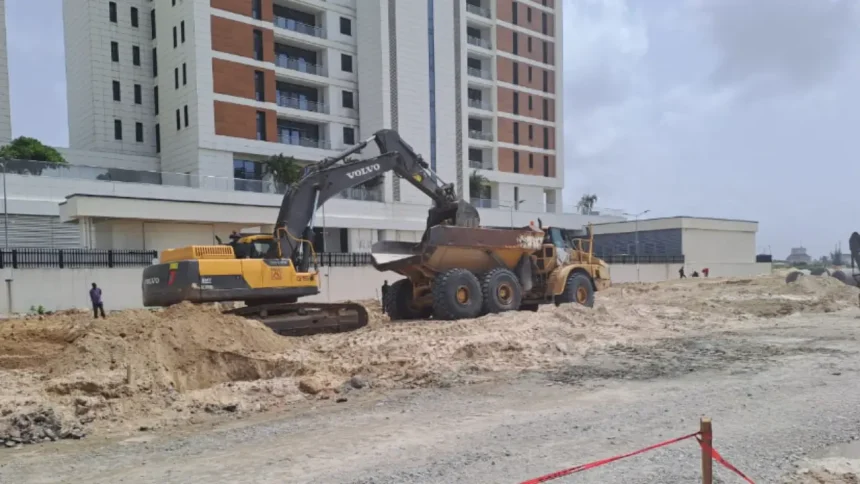
The Federal Government of Nigeria has officially announced that the demolition of buildings along the right of way of the Lagos–Calabar Coastal Road will begin this coming Saturday as part of preparations for the ambitious coastal highway project.
Read also: Lagos-Calabar coastal road projected to cost ₦4bn per kilometre
What Was Announced
At a press briefing held in Lagos on Thursday, Korede Keisha, the Federal Controller of Works in Lagos State, revealed that properties marked for demolition will be cleared starting Saturday. Keisha urged residents whose buildings fall within the project corridor to visit the Ministry of Works’ secretariat in Lagos before the deadline to address any outstanding issues and complete required procedures.
Keisha explained that the briefing was intended to create awareness and ensure that those affected have sufficient time to engage with authorities before demolition begins. The demolition team is expected to start with properties located within the first three kilometers of the route.
Residents Urged to Act Before Demolition
Affected property owners have been asked to visit the ministry’s secretariat between Thursday and Friday to raise concerns or complete any necessary documentation. Authorities have emphasized cooperation to avoid complications when demolition starts on Saturday.
Background: Lagos–Calabar Coastal Road Project
The Lagos–Calabar Coastal Road is one of Nigeria’s largest infrastructure initiatives, spanning approximately 700 kilometers from Lagos to Calabar, crossing several states including Ogun, Ondo, Delta, Bayelsa, Rivers, and Akwa Ibom.
According to previously disclosed details, the project is expected to take about eight years to complete and has been estimated to cost roughly ₦4 billion per kilometer, with a total budget of around ₦15 trillion.
Controversies and Wider Impact
The demolition for the coastal road has been controversial. Earlier phases of the project saw the demolition of parts of major properties along the route, including sections of the Landmark Beach Resort, a multimillion-dollar beachfront facility, to clear space for the highway.
These actions have drawn criticism from property owners and stakeholders, with some filing legal challenges and raising concerns about compensation, communication, and project transparency.
Communities in areas such as Ibeju-Lekki have also expressed alarm over fresh plans to extend demolition zones, warning that expanded setbacks could threaten ancestral homes and longstanding settlements.
Why This Matters
Once completed, the Lagos–Calabar Coastal Road is expected to transform regional connectivity by providing a continuous coastal highway linking the southwest to the southeast of Nigeria. It is anticipated to boost trade, transportation efficiency, and economic growth across the corridor.
However, the project’s scale, cost, and impact on communities and businesses continue to spark debate among residents, investors, and civil society groups.
Read also:
- “I Saw it Very Clear”: Nigerian Pastor Claims World Will End April 25th, Video Trends
- BBNaija star Tacha Calls Out Nigerians for Hypocrisy and Bullying
- Abuja British School: Father of Bullied Girl Namtira Makes 2 Demands from School
- Prison Break: Prisoners Escape as Rainstorm Destroys Facility in Niger
- Crossing the Line: Williams Uchemba Criticizes Ladies Over Their Gym Outfits, Tells Them to Pity Men
- Nigeria lost $706m to cybercrimes as EFCC closes 300 bank accounts
- VIDEO: Force PRO orders arrest of officers caught on video bashing driver’s car
- Very dark man unearths the truth about chinese supermaket in abuja
- Nigerian Air Force Strikes Down Terrorists, Eradicates Hideouts in Borno
- Eniola Badmus Flaunts Her Two Stunning Homes: Iyabo Ojo and Fans Share Excitement
- OAP Do2dtun Speaks Out on Viral Bullying clip, calls out Secondary School Bullies
- EFCC: Yahaya Bello withdrew $720k from Kogi State to pay children’s fees
- Student Bullied in Abuja British School Takes Legal Action As Activist, Deji Adeyanju Takes Up Case
- Nollywood Star Zulu Adigwe, Known for ‘Basi and Company’, Passes Away
- Hilda Baci Responds to Fraud Accusations by VeryDarkMan with Concrete Evidence
- How to identify when a child is being bullied