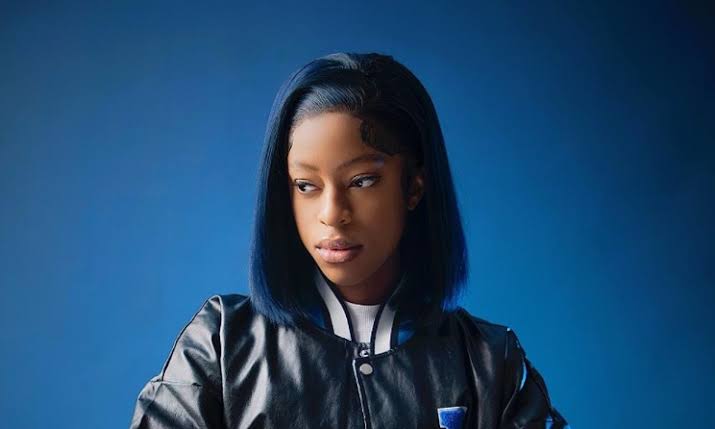
The Nigerian music industry has been thrown into fresh controversy following a heated dispute between rising Afrobeats star Chimamanda Pearl Chukwuma, popularly known as Qing Madi, and her former record label executive, Joy Tongo, who serves as CEO of JTon Music.
The situation escalated publicly after Qing Madi went live on TikTok to level serious allegations against her former label boss. In the emotional broadcast, the 19-year-old singer accused Tongo and her company of financial misconduct, forgery of her signature, and deliberate efforts to undermine her career at a critical stage of her growth in the music industry.
Tension reportedly intensified over the last 48 hours after fans noticed that several songs linked to her recently released project titled Barely Legal suddenly disappeared from major streaming platforms, including Spotify. The unexpected removals sparked widespread concern among listeners and industry observers, many of whom questioned the reason behind the takedowns.
Allegations of Forgery, Financial Disputes, and Legal Battles
During her livestream, Qing Madi made a series of allegations, claiming that her former label engaged in unethical practices during and after her time under contract. One of her most serious claims is that her signature was allegedly forged on key contractual documents when she was still a minor. According to her, this allowed the label to maintain significant control over her music and professional decisions.
She also referenced an ongoing financial dispute, stating that JTon Music previously initiated a $2 million lawsuit against her for alleged breach of contract after she exited the label. However, Qing Madi insisted that the case did not succeed, claiming that the label was unable to provide sufficient evidence to support their claims in court proceedings.
Another major concern raised during the livestream was the sudden removal of her songs from streaming services. She alleged that the label had used its access to distribution channels to restrict or pull down her music, despite ongoing disagreements over rights and ownership. She described the situation as a targeted effort to frustrate her progress and disrupt her connection with her audience.
Visibly emotional, the young artist appealed directly to her fanbase, urging them to pay attention to what she described as unfair treatment within the industry and to support her in addressing the dispute.
Read more on: “I’m an Explorer I Can’t Commit To One Woman” – Flavour
Response From Joy Tongo and JTon Music
In swift reaction, Joy Tongo responded through a series of posts shared on her Instagram Stories, firmly denying all allegations made by the singer. She dismissed the claims of forgery and financial misconduct, describing them as false and misleading statements intended to sway public opinion.
Tongo further clarified that the legal dispute between both parties has not reached a final conclusion, stating that there has been no completed trial or ruling that supports Qing Madi’s version of events. She maintained that the matter is still under legal consideration and should not be misrepresented on social media.
Addressing the issue of the removed tracks, Tongo explained that the takedown of songs from Barely Legal was carried out through legitimate legal processes. According to her, the action was backed by legal authorization linked to ongoing proceedings regarding ownership and contractual rights, rather than any personal decision to sabotage the artist.
She also issued a warning regarding public statements made online, stressing that reputational damage and misinformation would not be taken lightly. In her words, she stated that if false narratives continue to be circulated, she would pursue all available legal remedies. She added that age or public sympathy does not exempt anyone from legal responsibility.
Tongo also defended the label’s role in Qing Madi’s rise to fame, highlighting the commercial success of earlier releases such as American Love and Ole, which she said have collectively amassed over 100 million streams on Spotify under JTon Music’s management and distribution structure.
Read more on: Yinka Alaseyori Apologizes After Facing Backlash Over Comments on Oyo Kidnapping Incident
Comparisons to Past Industry Disputes
The controversy has drawn widespread attention across the Nigerian entertainment space, with many commentators drawing comparisons to past disputes involving artists and record labels. One of the most frequently referenced cases is that of Cynthia Morgan, whose highly publicized fallout with her former management has continued to be a cautionary example within the industry.
During her livestream, Qing Madi also referenced Cynthia Morgan directly, suggesting that her situation mirrors earlier patterns where female artists allegedly lost control over their careers after signing binding contracts at a young age.
Industry observers note that Qing Madi’s case highlights a recurring concern in Afrobeats, particularly the signing of teenage artists to long-term contractual agreements before they fully understand the implications. Critics argue that such arrangements can become complicated when disagreements arise over rights, royalties, and digital distribution control.
Current Status of the Dispute
At present, the conflict between Qing Madi and JTon Music remains unresolved. Legal proceedings are reportedly ongoing, while both sides continue to assert conflicting narratives in public and on social media.
Several tracks from the Barely Legal project remain unavailable on Spotify and other streaming platforms, while others are still accessible. This partial removal has added to confusion among fans, as both parties continue to engage in legal and public exchanges over ownership and distribution rights.
For now, the situation remains fluid, with both legal representatives and industry stakeholders closely watching how the dispute unfolds in the coming weeks.
Read more on: