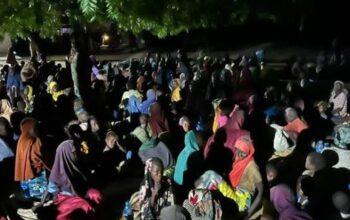
The Cross River State Police Command has strongly denied reports that its officers opened fire on protesting students of the University of Cross River State (UNICROSS) during a tense demonstration that rocked Calabar on Monday. According to the police, claims that live bullets were used are false and misleading, insisting that officers only deployed smoke canisters as part of standard crowd control measures to disperse an increasingly volatile situation.
The protest, which initially began as a peaceful demonstration, was triggered by grief and anger following a tragic road accident that occurred on Friday, May 1, 2026. The crash involved a coaster bus carrying 24 passengers, most of whom were members of the Students’ Union Government returning from an official engagement in Uyo. The vehicle reportedly collided with a truck along the busy Calabar–Itu highway in a devastating impact that left several casualties.
By the time emergency responders arrived, the damage had already been done. Three students and one staff member lost their lives in the crash, while several others sustained varying degrees of injuries. The tragedy immediately sparked outrage within the university community, with many students questioning the state of emergency response systems and the readiness of nearby medical facilities to handle such incidents.
Read more on: Major Legal Setback as Court Orders SERAP to Pay ₦100 Million for Defaming DSS
Tensions escalated further when survivors of the accident were rushed to the General Hospital in Calabar. Protesters alleged that the injured students were neglected or not promptly attended to upon arrival. Some even claimed that they were effectively turned away or left waiting without proper care, a situation that fueled widespread anger and became a rallying point for the protest movement.
Hospital authorities, however, have pushed back against these claims. Officials at the facility stated that there was no deliberate refusal to treat any patient. The Director of Nursing Services, Oguji Fabian, explained that the hospital was overwhelmed at the time of the incident. According to him, only one nurse was on duty when the victims were brought in, and the sudden influx of patients placed an immediate strain on available resources. He also clarified that no deaths occurred at the hospital itself, emphasizing that the fatalities resulted from the original highway crash and not from any neglect within the facility.
As news of the incident spread across campus, students organized a protest to express their frustration and demand accountability. What began as a peaceful march quickly grew in size as more students joined in solidarity. Dressed in black to symbolize mourning, the demonstrators moved through the streets of Calabar, singing protest songs and carrying placards calling for improved healthcare services, better emergency response systems, and justice for the victims of the crash.
Read more on: Tinubu Reportedly Pushes Back Against Lobbyists Seeking Fourth Term for Desmond Elliot
The procession initially headed toward the hospital before making its way to the Government House. Along the route, the atmosphere became increasingly tense as emotions ran high. Some reports indicated that parts of the protest turned unruly, with allegations of property damage at the hospital premises. Hospital officials claimed that windows were smashed, signposts were pulled down, and even a hospital bus was damaged during the unrest. These incidents added another layer of controversy to an already volatile situation.
As the protesters advanced toward the Government House, security operatives were deployed to prevent further escalation. Viral videos from the scene showed officers dispersing the crowd, with loud bangs and plumes of smoke visible in the background. This quickly led to speculation among witnesses and online observers that gunshots had been fired into the air or even directly at protesters.
The Cross River State Police Command has firmly rejected these claims. Police spokesperson Eitokpah Sunday stated that at no point did officers discharge live ammunition during the protest. He explained that the security personnel on ground used smoke canisters, commonly referred to as tear gas, to disperse the crowd after the demonstration became increasingly unruly and there were attempts to force entry into the Government House.
Read more on: Peter Obi Reveals Why He Left ADC for NDC Partnership with Kwankwaso
According to him, the use of non-lethal crowd control measures was necessary to restore order and prevent further breakdown of law and order. He maintained that the reports suggesting gunfire were either misinterpretations of the situation or deliberate misinformation circulating on social media. The police insist that their officers acted with restraint throughout the incident.
Despite this official position, confusion and concern remain among students and members of the public who witnessed the protest. Some individuals insist that what they heard sounded like gunshots, while others believe the chaos and echoing sounds of smoke canisters may have created the impression of live fire. The conflicting accounts have fueled debate and uncertainty about exactly what transpired during the confrontation.
Following the unrest, calm has gradually returned to Calabar. Security presence in key areas of the city remains visible, but there have been no further reports of violence. Authorities have also begun engaging with student representatives in an effort to address the grievances that led to the protest in the first place.
The Deputy Governor of Cross River State, Peter Odey, has reportedly met with leaders of the student body to discuss their concerns. These discussions are expected to focus on improving emergency healthcare response, reviewing hospital capacity during crisis situations, and ensuring better coordination between security agencies and civilian institutions during emergencies.
Read more on: China Rejects U.S. Sanctions on Iranian Oil Trade
While the immediate tension appears to have eased, the underlying issues that sparked the protest remain unresolved for many students. The loss of four lives in the highway accident continues to weigh heavily on the university community, and questions about healthcare preparedness and institutional response have become central points of discussion.
At the same time, the incident has also sparked broader conversations about how protests are managed in Nigeria, particularly when they involve young people and emotionally charged circumstances. For many observers, the events in Calabar highlight the fragile balance between maintaining public order and respecting the right to peaceful protest.
As investigations continue and different accounts of the incident circulate, both the police and the student community remain firm in their perspectives. What is clear, however, is that the tragedy on the Calabar–Itu highway and the events that followed have left a lasting impact on UNICROSS students and the wider Cross River community, raising urgent questions about safety, accountability, and trust in public institutions.
Read more on: