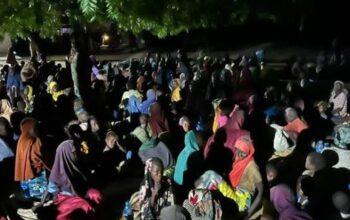
The Federal Government of Nigeria has announced an urgent intervention aimed at protecting its citizens living in South Africa, following a disturbing rise in violent attacks and xenophobic tensions across several parts of the country. In a move described as both decisive and humanitarian, authorities confirmed the commencement of free evacuation flights for Nigerians who wish to return home immediately.
This development comes after weeks of growing insecurity targeting foreign nationals, particularly African migrants, in various South African communities. The situation, which has steadily worsened throughout April 2026, has triggered widespread concern both within Nigeria and across the African continent. Many Nigerians residing in South Africa are now reportedly living in fear, with some abandoning their businesses and restricting movement due to safety concerns.
A Crisis That Has Been Building Over Weeks
The current wave of violence did not emerge suddenly. Reports indicate that tensions have been escalating over time, with increasing incidents of harassment, intimidation, and physical attacks against foreign nationals. Nigerians appear to have been among the most affected groups, alongside other African immigrants.
In recent weeks, the situation has reached what observers are describing as a dangerous tipping point. Verified reports suggest that at least two Nigerian citizens were killed in separate incidents during late April. These deaths have intensified outrage and fear within the diaspora community and prompted urgent diplomatic discussions between both governments.
Beyond the fatalities, there have been numerous accounts of targeted harassment. According to the Nigerians in Diaspora Commission, commonly known as NiDCOM, several Nigerian families have reported that their children are afraid to attend school due to threats and bullying linked to their nationality. In some communities, Nigerian-owned shops have reportedly been shut down as business owners attempt to avoid looting, intimidation, or further violence.
These developments have created a climate of uncertainty for thousands of Nigerians living in South Africa, many of whom are long term residents contributing to local economies and communities.
Read more on: UNICROSS Mourns Loss of Three Students and Staff in Tragic Highway Crash
Rising Concerns Over Vigilante Activity
One of the most alarming aspects of the current crisis is the reported involvement of vigilante groups. According to the African Commission on Human and Peoples’ Rights, there is growing concern that some of the attacks are being carried out by groups operating under the guise of targeting undocumented migrants.
The Commission has described the situation as deeply troubling, warning that such actions risk undermining human rights protections and could further destabilize already fragile communities. There are fears that these groups are acting with increasing boldness, emboldened by weak enforcement or insufficient intervention in some areas.
Human rights observers have also expressed concern that the line between law enforcement efforts and unlawful community action is becoming blurred, creating confusion and fear among foreign nationals who may already be vulnerable.
Nigeria Steps In With Emergency Evacuation Plan
In response to the deteriorating situation, the Nigerian government has shifted from diplomatic engagement to direct protective action. After earlier efforts to de-escalate tensions through bilateral discussions reportedly failed to yield significant results, authorities have now activated an emergency evacuation strategy.
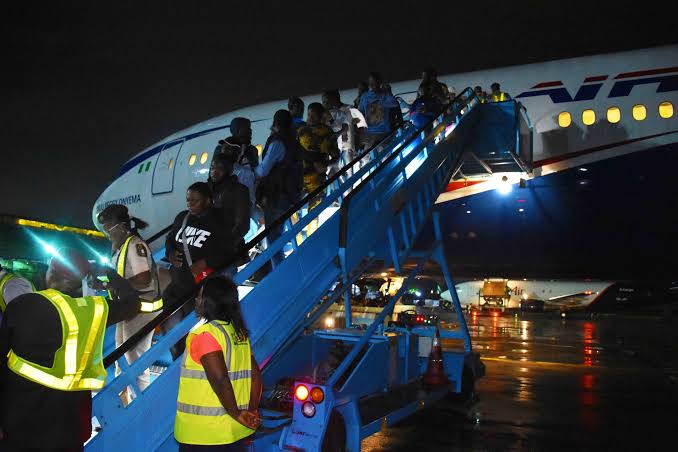
The Federal Government announced that it will provide free flights for Nigerian citizens in South Africa who wish to return home voluntarily. This initiative is aimed at ensuring that those who feel unsafe have a secure and cost free pathway back to Nigeria.
Officials confirmed that the Ministry of Foreign Affairs is working closely with the Nigerian High Commission in Pretoria and the Consulate in Johannesburg to coordinate the evacuation process. Private airline operators have also been engaged to assist with transportation logistics, as authorities prepare for a potentially large number of returnees.
Government representatives emphasized that the priority is the safety and dignity of Nigerian citizens abroad. The evacuation program is expected to be rolled out in phases, depending on demand and logistical capacity.
Read more on: President Tinubu Embarks on France, Kenya, Rwanda Trip for Strategic Summits
Official Position and Diplomatic Engagement
The Nigerians in Diaspora Commission has been at the forefront of communication with affected citizens. Its Chief Executive Officer, Abike Dabiri Erewa, has repeatedly called for calm while urging South African authorities to take stronger action to protect foreign nationals.
In a recent statement, she expressed concern that the situation on the ground is worsening despite earlier diplomatic engagements between both countries. According to her, many Nigerians had hoped that tensions would ease following discussions between officials, but recent developments have instead shown a troubling escalation.
She also stressed the importance of increased security presence in areas with high populations of foreign residents. In her remarks, she called on South African authorities to publicly condemn acts of profiling and discrimination and to ensure that perpetrators of violence are brought to justice.
Her message reflected a broader concern within the Nigerian government that without swift intervention, the crisis could deepen further and place more lives at risk.
A Continent Reflects on Broken Solidarity
The unfolding situation has also sparked broader conversations across Africa about unity, solidarity, and historical responsibility. Many commentators and citizens have drawn comparisons between the current crisis and the support African nations extended to South Africa during the apartheid era.
In several countries, including Nigeria and Ghana, images and documents from the past have resurfaced on social media. One widely shared example includes a historical financial contribution made in support of the anti apartheid struggle in the 1990s. These reminders have fueled emotional discussions about what some perceive as a fading sense of Pan African solidarity.
The idea of a shared African identity, built on mutual support during historical struggles, has become a central theme in public discourse. Many argue that the current violence against foreign nationals contradicts the ideals that once united African nations in their fight for freedom and equality.
Read more on: Silence in Wike Camp as APC Stakeholders Present Fubara with Re-election Forms
Political Voices and Regional Reactions
Political leaders and public figures across the continent have also weighed in on the situation. Some have strongly condemned the violence, calling for immediate action to protect vulnerable communities and restore peace.
Among the voices is South African politician Julius Malema, who has repeatedly warned against xenophobic attitudes and urged restraint. His comments reflect growing concern within South Africa itself, where civil society groups and activists are calling for stronger measures to prevent further attacks.
At the regional level, there is increasing pressure on both governments to find a lasting solution. Analysts suggest that while immediate evacuation may provide temporary relief, long term stability will require coordinated policy responses and stronger protection frameworks for migrants.
Life for Nigerians on the Ground
For many Nigerians currently living in South Africa, the situation remains uncertain and emotionally draining. Some have chosen to stay indoors, limiting their movements to essential activities only. Others have begun making arrangements to return to Nigeria under the evacuation program.
Business owners have been particularly affected, with reports of temporary closures in several communities. For many, years of hard work and investment now feel threatened by the rising insecurity. Families are also facing difficult decisions about whether to remain in South Africa or return home, especially those with children enrolled in schools.
Community leaders have urged calm while also encouraging citizens to register with the Nigerian High Commission for evacuation support. The hope is that organized coordination will help reduce panic and ensure that those most at risk are prioritized.
Read more on: INEC Sets June 20 for Bye-Elections Across Six States
Government Assurance and Ongoing Monitoring
The Nigerian government has assured citizens that it is closely monitoring the situation and will continue to engage South African authorities diplomatically. Officials have also emphasized that the evacuation program is voluntary, designed to support those who feel unsafe rather than enforce mandatory relocation.
Authorities have promised to provide regular updates as the situation develops and have encouraged Nigerians in South Africa to remain law abiding and avoid high risk areas. Citizens have also been advised to maintain contact with consular offices for verified information and assistance.
Looking Ahead
As evacuation flights prepare to begin, attention now turns to how both nations will manage the diplomatic and humanitarian dimensions of the crisis. Nigeria continues to push for accountability, including the prosecution of those responsible for violent attacks and the establishment of stronger protective mechanisms for foreign residents.
One proposal under discussion is the creation of a joint Nigeria South Africa safety forum, which would serve as a platform for addressing migration related tensions and preventing future outbreaks of violence.
For now, however, the immediate focus remains on safety and evacuation. Thousands of Nigerians are expected to be affected by the unfolding operation, as one of Africa’s largest diaspora communities begins a difficult and emotional return home.
The situation remains fluid, and while diplomatic efforts continue, the human impact of the crisis is already deeply felt across families, businesses, and communities on both sides.
Read more on:
- Atiku and Amaechi Meet David Mark as INEC Confirms ADC Leadership
- Oil Prices Surge to Four-Year High as Trump Weighs Military Action Against Iran
- Lagos 2027: Jandor Withdraws From APC Governorship Contest
- 2027 Elections: ADC and PDP Await Key Supreme Court Ruling Today
- Outrage in Ibadan After Motorcyclist Dies in Police Encounter, Two Officers Arrested