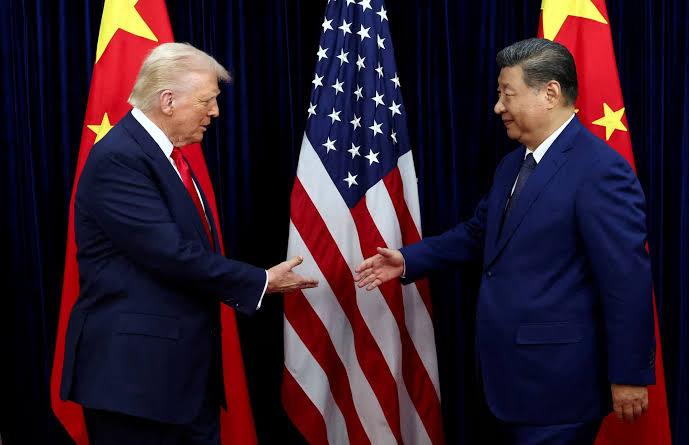
In a development that has drawn global attention and could reshape current geopolitical calculations, the United States and China have jointly declared that Iran must not be allowed to develop or obtain nuclear weapons. The agreement was announced following a high level two day summit held in Beijing between United States President Donald Trump and Chinese President Xi Jinping, marking one of the most notable moments of diplomatic alignment between the world’s two largest economies in recent years.
The White House confirmed the consensus in an official readout, stating that both leaders share a firm position that the proliferation of nuclear weapons to Iran would pose unacceptable risks to international peace and stability. The statement reflected an unusual moment of convergence on an issue that has historically seen Washington and Beijing approach from different strategic and ideological perspectives.
A Rare Alignment on a Longstanding Global Concern
For years, Iran’s nuclear programme has remained one of the most sensitive and contested issues in international diplomacy. Western governments, particularly the United States and its allies, have repeatedly accused Tehran of pursuing capabilities that could be used to develop nuclear weapons, while Iran has consistently maintained that its nuclear activities are for peaceful energy purposes.
China has traditionally taken a more cautious public stance, often emphasizing diplomatic engagement and opposing unilateral sanctions. However, the outcome of the Beijing summit suggests a shift toward a more unified position between Washington and Beijing on preventing nuclear escalation in the Middle East.
According to officials briefed on the discussions, both leaders agreed that the expansion of nuclear capabilities in Iran would significantly destabilize the already fragile security environment in the region. They also acknowledged that any nuclear breakout scenario could trigger a wider arms race involving other Middle Eastern states.
President Trump described the discussions as highly productive, noting that both sides were able to find common ground on what he called a critical issue for global safety. President Xi Jinping similarly emphasized the importance of preventing further escalation in regions already experiencing conflict and instability.
Read more on: Wike Fires at Makinde, Rejects PDP-APM Alliance and Questions His Presidential Ambition
Focus on Energy Security and the Strait of Hormuz
Beyond the nuclear question, a significant portion of the summit focused on energy security, particularly the strategic importance of the Strait of Hormuz. The narrow waterway, located between the Persian Gulf and the Gulf of Oman, remains one of the most important global shipping routes for crude oil and liquefied natural gas.
Both leaders reportedly agreed that the Strait of Hormuz must remain open and secure to ensure uninterrupted global energy flows. Any disruption in the passage, they noted, would have immediate consequences for global markets, potentially driving up energy prices and destabilizing economies dependent on imports.
The two sides also expressed opposition to the introduction of tolls or any form of restricted passage that could limit free navigation through the Strait. President Xi reportedly reiterated China’s position that energy corridors should remain open and free from excessive militarization or economic barriers that could affect global trade.
In a notable economic dimension to the discussions, President Xi also expressed interest in expanding China’s imports of United States oil. This move is seen as part of broader efforts to diversify China’s energy supply chain and reduce reliance on politically sensitive routes. American officials viewed the statement as a positive signal for future energy cooperation between the two countries.
Broader Economic Engagement and Trade Discussions
The Beijing summit also covered a wide range of economic and trade issues that have long defined the complex relationship between Washington and Beijing. Both leaders expressed cautious optimism about improving market access for businesses operating in each other’s economies.
According to officials familiar with the talks, discussions included the possibility of easing certain trade restrictions, increasing bilateral investment flows, and creating more predictable conditions for multinational corporations operating across both markets.
Several high profile business leaders, including technology executives Elon Musk and Jensen Huang, were present during portions of the summit. Their participation underscored the growing importance of private sector influence in shaping global economic policy, particularly in areas involving artificial intelligence, electric vehicles, and semiconductor development.
Agricultural trade was also a key topic, with the United States pushing for increased Chinese purchases of American farm products. This issue has been a recurring point in previous trade negotiations and remains important for American exporters, particularly in the Midwest.
Another major point of discussion involved efforts to combat the flow of fentanyl precursor chemicals. U.S. officials have long raised concerns about the role of chemical supply chains in China contributing to the production of synthetic opioids in North America. Both sides reportedly agreed to strengthen cooperation and enforcement measures aimed at disrupting illicit supply networks.
Read more on: Makinde Declares Presidential Ambition, Leads New PDP-APM Coalition
The Taiwan Question and Strategic Tensions
While the public statements following the summit emphasized cooperation, underlying strategic tensions remained visible, particularly regarding Taiwan. Chinese state media highlighted President Xi Jinping’s warning that the United States must handle the Taiwan issue with extreme caution.
According to reports from Beijing, Xi emphasized that any mismanagement of the situation could lead to severe consequences for regional stability. He reiterated China’s long standing position that Taiwan is a core national interest and warned against external interference.
The White House readout did not provide extensive commentary on Taiwan, instead focusing on areas of cooperation such as trade, energy, and the Iran issue. However, analysts note that the omission does not indicate resolution, but rather a deliberate effort to compartmentalize areas of disagreement while maintaining diplomatic engagement.
Shifting Geopolitical Calculations in the Middle East
The joint stance on Iran comes at a time of heightened tensions in the Middle East, where ongoing conflict dynamics have raised concerns about broader regional escalation. Earlier in the week, United States Secretary of State Marco Rubio indicated that Washington would welcome a more active role from China in addressing the crisis involving Iran.
China has historically maintained economic ties with Iran, including energy imports, while advocating for diplomatic solutions rather than military confrontation or sweeping sanctions. The new joint declaration suggests that Beijing may now be aligning more closely with international concerns about nuclear proliferation risks.
Intelligence assessments referenced by analysts suggest that China has been carefully monitoring the conflict in Iran and evaluating how shifts in regional power balances could affect its long term strategic interests, particularly in relation to energy security and global trade routes.
Read more on: Trillions in the Ground, Still Searching for Bars As NCC Reveals Telcos’ N2.5tn Infrastructure Gamble
United Nations and Future Diplomatic Engagement
Attention is now expected to shift to the United Nations, where diplomatic activity surrounding Iran is likely to intensify in the coming days. China, as a permanent member of the United Nations Security Council, is expected to play a key role in shaping any potential resolutions or coordinated international responses.
Diplomatic sources indicate that discussions may focus on measures aimed at preventing further nuclear escalation while also addressing broader regional security concerns, including maritime safety in the Persian Gulf.
However, reaching consensus within the international community remains challenging, as member states continue to hold differing views on sanctions, military involvement, and diplomatic engagement strategies.
Domestic Political Pressures in the United States
In the United States, the administration faces a divided political environment regarding Middle East policy. The Senate recently narrowly rejected a proposal aimed at ending military involvement in Iran without formal Congressional authorization, reflecting ongoing tensions between legislative and executive branches over war powers.
These domestic debates add another layer of complexity to the administration’s foreign policy approach, particularly as it seeks to balance international diplomacy with internal political pressures.
Read more on: Iran Carries Out Execution of 32-Year-Old Accused of Spying for Israel
A Fragile but Significant Moment of Cooperation
Despite the broader context of strategic competition between Washington and Beijing, the Beijing summit represents a rare moment of alignment on a major global security issue. The agreement that Iran must not be allowed to obtain nuclear weapons signals a shared recognition of the potential consequences of nuclear proliferation in an already unstable region.
At the same time, significant differences remain unresolved, particularly on issues such as Taiwan, technological competition, and long term geopolitical influence.
Nevertheless, the summit has opened a new phase of cautious engagement between the two powers, suggesting that even amid rivalry, cooperation on existential global threats remains possible when mutual interests converge.
Read more on: