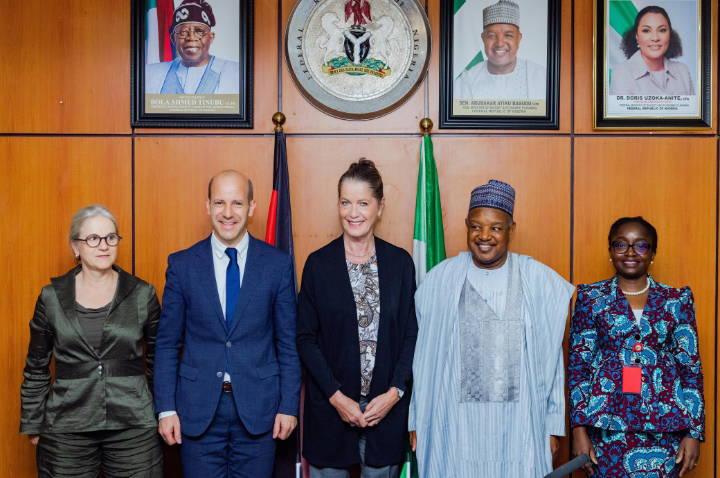
Nigeria and Germany have taken a major step forward in their bilateral relationship with the signing of a €365 million development and investment partnership agreement. The deal, formalized at the German Embassy in Abuja, reflects a renewed commitment by both nations to deepen cooperation in critical sectors such as energy, agriculture, and private sector development.
This latest agreement is widely seen as a strategic move to support Nigeria’s ongoing economic transformation efforts. Under the leadership of President Bola Tinubu, the country has embarked on a series of reforms aimed at stabilizing the economy, attracting foreign investment, and creating sustainable growth opportunities. The partnership with Germany is expected to play a key role in advancing these objectives by combining financial support, technical expertise, and private sector engagement.
A Comprehensive Financial Structure
The €365 million agreement is structured to deliver both immediate developmental support and long-term economic impact. It is divided into two main financial components, each designed to address different aspects of Nigeria’s growth agenda.
The first component is a €65 million commitment provided through Germany’s Federal Ministry for Economic Cooperation and Development. This portion focuses on direct development assistance and technical cooperation. It is targeted at improving key areas such as healthcare delivery, governance systems, and skills development. By strengthening institutional capacity and human capital, this funding aims to lay the groundwork for sustainable national progress.
The second and significantly larger component is a €300 million export credit guarantee framework approved by Germany’s Ministry for Economic Affairs and Energy. This mechanism is designed to encourage private sector participation by reducing financial risks for investors. It effectively creates a pathway for German and Nigerian businesses to collaborate on large-scale projects, particularly in infrastructure and industrial development. Through this approach, the partnership seeks to mobilize additional capital beyond government funding, thereby expanding its overall economic impact.
Read more on: US and China Agree Iran Must Never Obtain Nuclear Weapons
Aligning with Nigeria’s Long-Term Development Goals
The agreement is closely aligned with Nigeria’s broader economic strategy, including the National Development Plan for 2026 to 2030 and the long-term Agenda 2050 framework. These policy blueprints emphasize the need for structural transformation, industrial expansion, and improved living standards for citizens.
Speaking at the signing ceremony, the Minister of State for Finance, Doris Uzoka-Anite, stressed that the partnership goes beyond routine diplomatic engagement. She described it as a meaningful and practical collaboration that reflects shared priorities between Nigeria and Germany. According to her, the agreement represents a clear commitment to delivering tangible outcomes that will positively impact the lives of Nigerians.
Uzoka-Anite highlighted that the partnership would support efforts to diversify the economy away from overreliance on oil revenues. By focusing on sectors such as agriculture, manufacturing, and digital technology, Nigeria aims to build a more resilient and inclusive economic system.
Energy Sector at the Core of Cooperation
One of the most prominent areas of focus in the partnership is the energy sector. Reliable electricity remains a critical challenge for Nigeria, and addressing this issue is central to unlocking industrial growth and improving quality of life.
Germany has reaffirmed its support for Nigeria’s Presidential Power Initiative, a major project being implemented in collaboration with Siemens. The initiative aims to significantly expand the country’s electricity generation and distribution capacity, with a target of reaching 25 gigawatts. Achieving this goal would mark a transformative shift in Nigeria’s energy landscape, enabling businesses to operate more efficiently and reducing dependence on costly alternative power sources.
The partnership is also expected to support renewable energy projects, particularly in rural areas where access to electricity remains limited. Mini-grid solutions and off-grid technologies will play an important role in extending power supply to underserved communities, thereby promoting inclusive development.
Read more on: Wike Fires at Makinde, Rejects PDP-APM Alliance and Questions His Presidential Ambition
Boosting Agricultural Productivity and Food Security
Agriculture is another key pillar of the Nigeria-Germany partnership. With a large portion of Nigeria’s population engaged in farming, improving agricultural productivity is essential for both economic growth and food security.
The agreement includes initiatives aimed at modernizing farming practices through mechanization, training, and access to improved inputs. Smallholder farmers, who form the backbone of the agricultural sector, are expected to benefit from capacity-building programs designed to enhance their efficiency and profitability.
Previous collaborations between the two countries have already yielded positive results, with hundreds of thousands of farming households receiving training and support. The new agreement seeks to build on these successes by scaling up interventions and reaching more communities across the country.
By strengthening the agricultural value chain, the partnership also aims to reduce post-harvest losses, improve market access, and increase exports of agricultural products. This, in turn, will contribute to job creation and rural development.
Advancing Digital Innovation and Workforce Development
In an increasingly digital global economy, technology and innovation have become essential drivers of growth. Recognizing this, the Nigeria-Germany partnership places strong emphasis on digital transformation.
German technology companies, including SAP, are exploring opportunities to expand their presence in Nigeria. These collaborations are expected to focus on areas such as cloud computing, data management, and digital skills training. By equipping the workforce with relevant technological skills, the partnership aims to prepare Nigerians for the demands of the modern economy.
Digital infrastructure development is also a priority, as it will enable businesses to operate more efficiently and connect with global markets. The integration of digital solutions across various sectors, including agriculture and finance, is expected to enhance productivity and transparency.
Read more on: Makinde Declares Presidential Ambition, Leads New PDP-APM Coalition
Supporting Small and Medium Enterprises
Small and medium-sized enterprises play a crucial role in Nigeria’s economy, contributing significantly to employment and innovation. The partnership includes measures to support the growth and sustainability of these businesses.
Building on previous initiatives that have already helped over 16,000 SMEs achieve income growth, the new agreement seeks to provide additional resources and opportunities for entrepreneurs. Access to financing, technical support, and market linkages will be key components of this effort.
By empowering SMEs, the partnership aims to stimulate economic activity at the grassroots level and create a more dynamic private sector. This approach aligns with the broader goal of fostering inclusive growth that benefits all segments of society.
Germany’s Perspective on Nigeria’s Potential
From Germany’s standpoint, Nigeria is viewed as a vital partner in Africa, not only because of its economic size but also due to its strategic importance in regional stability and development.
Philip Knill, Deputy Director General of Germany’s Federal Ministry for Economic Cooperation and Development, described Nigeria as a major force on the continent. He noted that the country’s ongoing reforms have created a more favorable environment for investment and collaboration.
Knill specifically pointed to recent changes in foreign exchange policy as a positive step toward improving market transparency and attracting long-term investors. He also highlighted tax reforms aimed at strengthening fiscal stability and enhancing Nigeria’s creditworthiness.
German companies are increasingly taking interest in opportunities within Nigeria, particularly in sectors such as agriculture, manufacturing, and renewable energy. Firms like Bayer and STIHL are already exploring ways to expand their operations and contribute to local economic development.
Read more on: Trillions in the Ground, Still Searching for Bars As NCC Reveals Telcos’ N2.5tn Infrastructure Gamble
Expected Impact and Future Prospects
The German Ambassador to Nigeria, Annett Günther, emphasized that the agreement is the result of extensive consultations and evaluations carried out by both countries. These efforts were aimed at identifying priority areas and ensuring that the partnership delivers measurable results.
The impact of previous collaborations provides a strong foundation for optimism. Hundreds of thousands of farmers have benefited from training programs, while tens of thousands of Nigerians have gained access to electricity through mini-grid projects supported by German initiatives.
With the new €365 million agreement, both nations are aiming to scale up these successes and extend their reach. The focus will be on delivering tangible improvements in key sectors, strengthening institutions, and creating opportunities for economic participation.
A Partnership Built for the Future
As global economic dynamics continue to evolve, partnerships like this one highlight the importance of collaboration in addressing shared challenges. For Nigeria, the agreement represents an opportunity to accelerate its development agenda and build a more diversified and resilient economy.
For Germany, it reinforces its commitment to supporting sustainable development in Africa while also creating opportunities for its businesses to expand into new markets.
Ultimately, the success of the partnership will depend on effective implementation and continued cooperation between both sides. If managed well, it has the potential to deliver lasting benefits and serve as a model for international collaboration in the years ahead.
Read more on: