
The 2027 presidential race in Nigeria has taken an early and dramatic shape as the African Democratic Congress (ADC) begins collating results from its nationwide direct presidential primaries. What is already emerging from initial declarations across several states points to a strong and commanding performance by former Vice President Atiku Abubakar, who has secured victories in at least five states in the early phase of the exercise.
Political observers say the unfolding results may signal a significant restructuring within Nigeria’s opposition politics, especially as the ADC positions itself as a potential third-force platform ahead of the 2027 general elections. With votes still being collated from many parts of the country, the early pattern suggests a candidate with deep organizational reach and long-standing political influence across multiple regions.
A High-Stakes Contest Shaping Nigeria’s Opposition Future
The ADC presidential primary is being conducted under a direct voting system that involves delegates and registered party members across all 774 local government areas of the federation. The process marks a departure from behind-the-scenes negotiations, as the party opted for a more participatory structure after efforts to reach a consensus candidate among top contenders failed.
Three prominent figures are contesting the party’s presidential ticket. They include Atiku Abubakar, former Vice President of Nigeria and a long-time presidential aspirant with extensive political experience; Chibuike Rotimi Amaechi, former Governor of Rivers State and ex-Minister of Transportation known for his strong political base in the South-South; and Mohammed Hayatu-Deen, an economist and former banking executive who has presented himself as a reform-driven alternative within the party.
The competition has been described as one of the most closely watched opposition primaries in recent Nigerian political history, largely due to the caliber of the contestants and the national spread of their support bases.
Read more on: Court Ruling Ends Disqualification Push Against Jonathan Ahead of 2027
Early Results Point to Strong Momentum for Atiku
Although the ADC national secretariat has stated that final results are still being verified, early certified returns from several states already show a clear advantage for Atiku Abubakar. His performance has been particularly strong in the northern region, where he has historically maintained political influence, but he has also recorded notable wins in parts of the South-East and South-West.
In Gombe State, Atiku delivered what analysts are describing as a landslide victory, securing 139,334 votes compared to just 1,150 votes for Rotimi Amaechi and 464 votes for Mohammed Hayatu-Deen. The margin of victory in the state reflects a dominant grassroots mobilization that overwhelmed his opponents.
A similar pattern emerged in Sokoto State, where Atiku secured 68,823 votes. In the same state, Hayatu-Deen polled 319 votes while Amaechi received 292 votes. Political analysts note that Sokoto has often served as a strong indicator of northern political alignment, making the result particularly significant.
In Zamfara State, Atiku again maintained a decisive lead with 60,500 votes. His closest challenger in the state, Hayatu-Deen, gathered 436 votes, while Amaechi trailed with 191 votes. The consistency of these results across multiple northern states has reinforced the perception of Atiku’s organizational strength in the region.
The former Vice President also recorded a strong showing in the South-East, winning Abia State with 25,153 votes. In that state, Amaechi followed with 18,339 votes, while Hayatu-Deen polled 3,264 votes. Though the margin was narrower compared to northern states, Atiku’s ability to secure victory outside his traditional strongholds has drawn attention from political analysts monitoring regional dynamics.
In the South-West, Atiku extended his early lead by winning Osun State, where he reportedly swept all 30 local government areas according to electoral officials. He secured 12,321 votes, ahead of Hayatu-Deen with 4,000 votes and Amaechi with 679 votes. The result further strengthens his multi-regional appeal in the early phase of the primary.
Amaechi Holds Ground in Select Strongholds
Despite Atiku’s strong start, the contest remains competitive in certain areas. Rotimi Amaechi has managed to secure a significant win in Ebonyi State, where he emerged ahead of both rivals with 6,050 votes. This result is seen as an important counterbalance to Atiku’s dominance in other eastern states and highlights Amaechi’s continued influence in parts of the South-East and South-South political landscape.
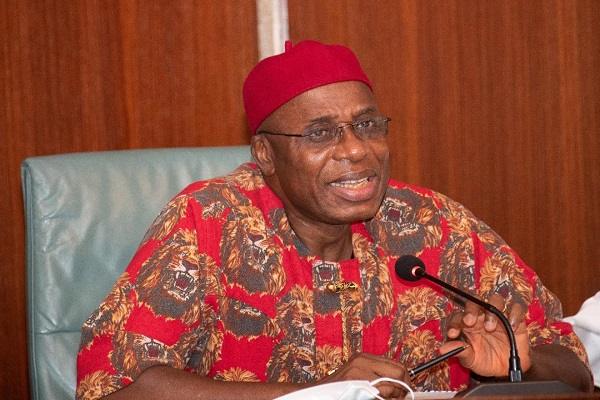
Party officials have emphasized that collation is still ongoing, and more results from other states could reshape the early picture. However, the current figures suggest that Amaechi will need stronger performances across additional states to close the gap with Atiku’s early lead.
Read more on: Rising Concern as Terrorist Expansion Edges Closer to Nigeria’s South-West
Ideological Tensions and Campaign Narratives
Beyond the numbers, the primary has also exposed ideological differences within the ADC. Mohammed Hayatu-Deen has positioned himself as a reformist voice within the contest, repeatedly warning against what he describes as recycled political leadership.
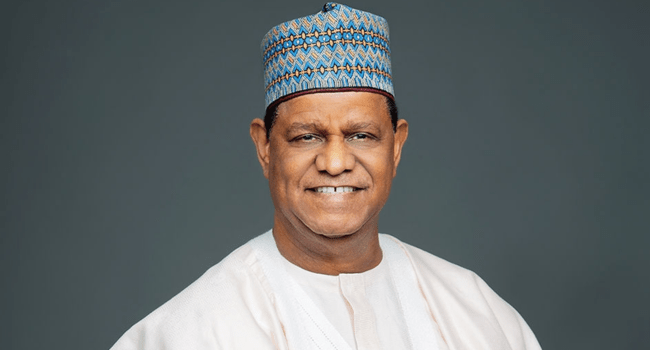
During one of his campaign engagements in the North-Central region, he argued that the primary represents a defining moment for the party’s future direction. According to him, the ADC must decide whether it wants to break away from traditional political patterns or continue along familiar paths dominated by established political figures.
His message has resonated with some younger party members and reform-minded delegates, although early results suggest that this narrative has not yet translated into widespread electoral support at the state level.
A Broader Political Shift in Motion
The scale and structure of the ADC primary highlight the party’s ambition to position itself as a major force in Nigeria’s evolving political landscape. With over half a million participants involved in various levels of the primary process across legislative and executive positions, the exercise is being closely watched as a potential blueprint for future party politics in the country.
If the current trend continues, Atiku Abubakar could emerge as the frontrunner for the party’s presidential ticket. However, political analysts caution that the race is still in its early stages, and the remaining results from other geopolitical zones could either consolidate or challenge his lead.
For now, the unfolding primary reflects a party in transition and a national political environment that remains fluid as Nigeria moves steadily toward the 2027 general elections.
Read more on: